

The Fault Line of Harm
Smoking no longer sketches a portrait of society as a whole. It marks the line between those shielded from harm and those left exposed to it.
The cigarette no longer occupies the center of social life as it did for decades. It has vanished from offices, lost its prestige, and retreated from public space. Today, it exists alongside a public-health consensus that, at least on the level of stated principle, almost no one disputes.
Its decline is real. But this shift was not merely epidemiological. It was also a change in the moral code. Smoking ceased to be a banal habit and came to signify a lack of self-command, a source of discomfort, a failure of self-discipline.
The mistake begins when this retreat is read as a uniform victory, as though the problem had diminished equally for everyone. It has not. What happened was something else: smoking ceased to be diffuse and became concentrated. And when harm becomes concentrated, its political character changes.
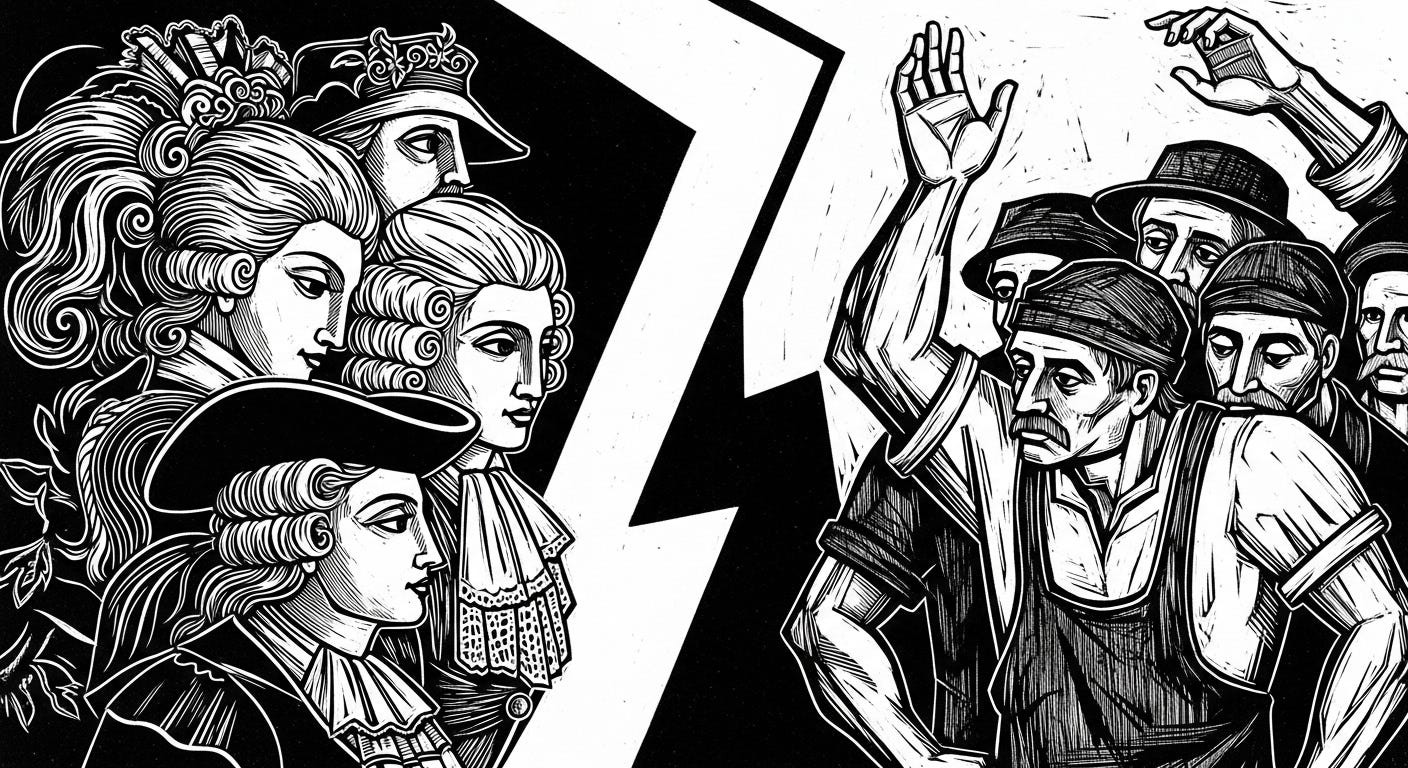
According to a study by Sarah Jackson, Sharon Cox, Jamie Brown, and Vera Buss, published in Nicotine & Tobacco Research and based on data from 2022 to 2024 for England, Scotland, and Wales, average consumption among smokers reaches 10.4 cigarettes per day —the equivalent of 28.6 billion cigarettes a year.
But the most important finding is not the sheer volume. It lies in the social pattern of consumption. Cigarettes are no longer distributed in a relatively even way across social strata. They are concentrated —and concentrated, above all, among the poor.
In the C2DE social grades, smoking prevalence stands at 18.8 percent, as against 10 percent among higher-income groups. Daily consumption is also higher: 11 cigarettes, compared with 9.4. On an annual basis, the gap becomes sharper still: 755 cigarettes per capita among the most vulnerable, versus 343 among the wealthiest segments.
These figures do more than measure consumption. They show how harm is distributed. In practice, that means smoking is no longer a habit spread across the social fabric; it has taken root in specific territories—neighborhoods, routines, and bodies in which quitting is not merely a decision, but a more remote possibility.
In this landscape, smoking can no longer be read simply as addiction, habit, or individual choice. It begins to function as a marker of class. Not because the cigarette has changed in nature or acquired some new sociological essence, but because its persistence tracks the line of inequality. When the better protected are able to exit first, and the most vulnerable are left behind, what emerges is not merely the persistence of a behavior, but the social concentration of harm—and, at the limit, a form of social triage.
This shift in the pattern demands a shift in language and in approach as well. Public debate about tobacco still speaks as though it were addressing an undifferentiated population: “the smoker,” “the user,” “the consumer.” They are convenient terms.
They erase low income, territory, interrupted schooling, precarious or exhausting work, psychic suffering, gender, ethnicity, the presence—or absence—of a support network, irregular access to treatment. In short, they erase the concrete intersections where vulnerability takes shape.
Those who continue to smoke are no longer a statistical abstraction. They are, increasingly, the point at which different forms of disadvantage converge. And policies that pretend not to see this end up treating as universal subjects people who have never lived under universal conditions.
Abstraction serves moral rhetoric well because individual blame is always easier to manage than structural inequality. It serves public policy badly.
For a long time, those who contest, occupy, and direct the state have learned to govern less through open prohibition than through the inducement to self-management. Health came to be demanded not only as a right, but also as a moral duty: proof of responsibility, a credential of active citizenship.
Within this regime, the good subject is one who calculates risks, corrects habits, manages the body, and lives up to what is expected of it. Whoever fails no longer appears as someone constrained by material limits, but as someone morally wanting: someone who has failed to govern himself.
It is here that the rhetoric of individual responsibility meets its limit. It can produce severe campaigns, effective slogans, and the appearance of moral firmness. But it does not explain why smoking recedes faster among the better protected and persists where life is more precarious. It does not explain why certain groups smoke more—and smoke more heavily. Nor does it explain why, when the habit loses social legitimacy, it does not disappear: it concentrates where protection is weakest.
Smoking does not vanish. It is pushed to the margins.
This displacement reveals something else: the consolidation of a way of seeing that Kirsten Bell and Hilary Graham help identify as a discursive hegemony. Certain public-health ideas no longer circulate merely as arguments; they circulate as common sense. The image of the smoker as someone who persists in error despite all the available information has become so intuitive that it scarcely needs defending anymore.
That is where the debate grows impoverished: when a worldview presents itself as a neutral description of reality. At that point, policy ceases to ask who still smokes, and under what conditions, and instead returns to the moral demand for individual self-correction.
But smoking does not distribute itself through the air. It concentrates where other forms of vulnerability have already piled up: in regions marked by deindustrialization, precarious work, overburdened public services, deteriorating housing, recurrent mental distress, and a narrower social horizon.
In these settings, the cigarette ceases to be merely a public-health risk. It begins to function as a symptom of social compression. It is not, of course, the only response to suffering—but it is one of the most visible. Smoke no longer appears simply as a private deviation; it becomes a record of collective wear and tear.
There is, then, an unavoidable political consequence. If the cigarette has become a marker of class, universal and morally abstract policies are no longer enough. Not because the state should downplay the harms of tobacco. Quite the reverse: to confront them seriously, it must recognize where they have become concentrated.
Measures designed for “the population” tend to fail when the problem has already taken hold in a specific segment—above all, a social segment historically pushed into invisibility. In such a case, universalism risks becoming, at best, a form of blindness posing as neutrality.
That is the point that ought to reorganize the debate. The problem of tobacco today lies not only in the product, though it begins there. It lies in the way harm is socially distributed.
When that harm is concentrated among the most vulnerable, public policy must abandon the fiction that warning, punishing, and taxing are enough to elicit equal responses from unequal lives. People do not respond in the same way because they do not live under the same conditions.
To treat the unequal as though they were equal may produce a tidy discourse. It produces, however, an unjust practice.
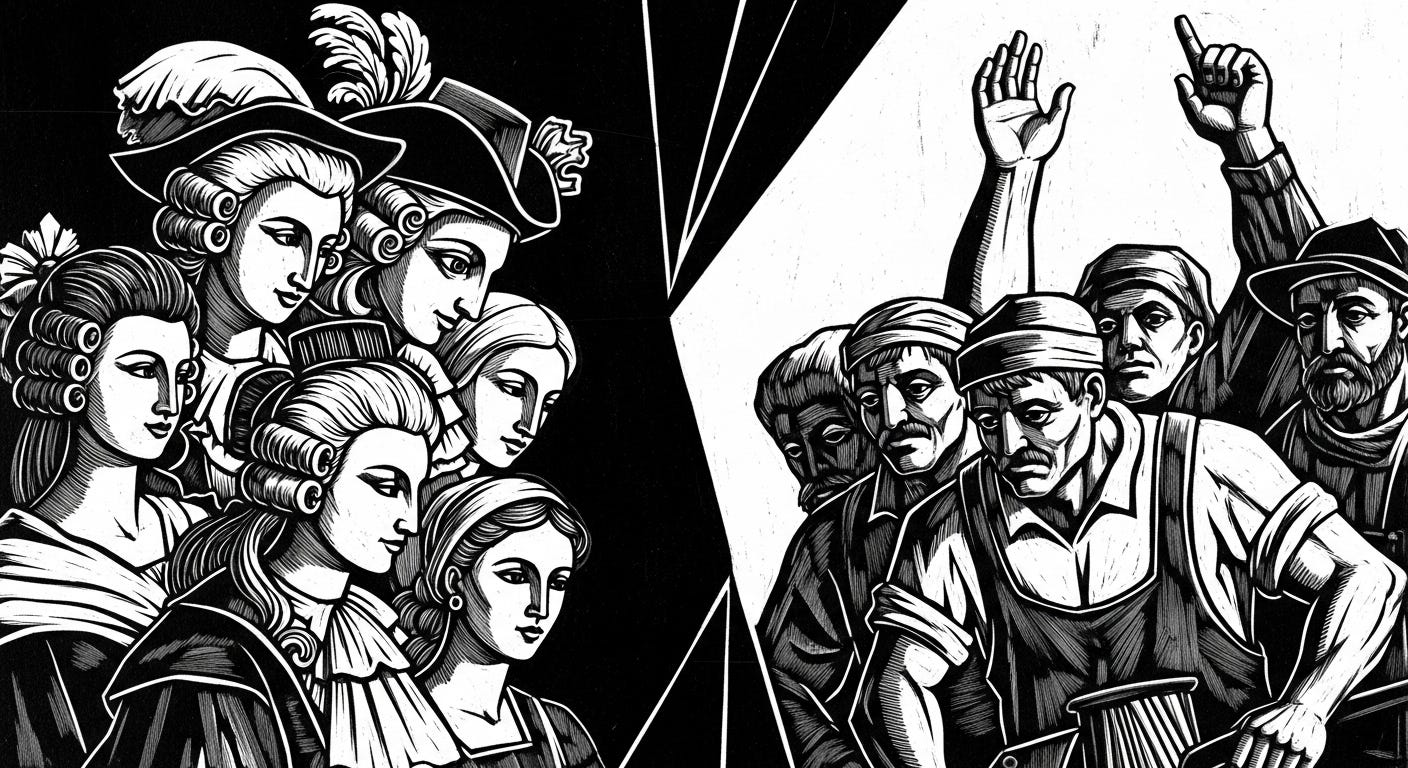
None of this absolves the tobacco industry or minimizes the toll of cigarettes on public health. Quite the opposite: it compels us to shift the question and expose the limits of a mindset that still dominates tobacco control—the mindset that reduces the problem to individual failure, insists on correcting behavior, and pushes to the margins the social conditions in which smoking persists.
It is not enough to ask why people still smoke. We must ask who continues to smoke, where, under what pressures, and with what real possibilities of escape.
That means reckoning, without caricature, with the harm-reduction paradigm. In many of the societies where most smokers are concentrated—above all in low- and middle-income countries—lower-risk alternatives remain blocked by regulatory uncertainty, illegality, criminalization, and stigma, as though any departure from the ideal of abstinence already amounted to a form of moral surrender.
The result is a politics that speaks in the language of protection yet often fails to offer a response proportionate to the risk faced by the very groups most exposed to combustion. And it does so in the name of an ideal of sanitary respectability, heavily marked by class values, that itself produces marginalization.
Smoking no longer sketches a general portrait of society. It draws a border. And, as Hilary Graham has shown, that border separates not so much smokers from non-smokers as those who were able to move away from harm and those who remained more exposed to it.

This is all true enough, but the problem lies in those who are paid to question and challenge come from the same university educated middle class that fills up the seats of public health and global network of NGO's. For those in the media, to question and challenge those in PH would be question their own values and social identity. The middle class is the class that wants to save the world. The working class need saving, but only from up on high, from a distance, so as not to be contaminated with the values and attitudes of the working class. Harm reduction wants to meet people where they are, but this gives the working class the power and autonomy to look after themselves. More importantly it does so without the help or direction of the middle class.
The whole tobacco control propaganda about the tremendous success in reducing smoking is basically the middle class patting themselves on the back for saving the world from the tobacco companies. It is a middle class myth that is shared across the university educated, public health, media, entertainment and government sectors. To question this is to question their own identities and values.