What Counting Misses
In conversation with Kurt Yeo on the stories public health still struggles to recognize as evidence
For years, Kurt tried to quit smoking in the most common way: by stopping.
It didn’t work. Not once, not twice, but often enough to begin to feel less like failure and more like a pattern.
He had grown up in a family where smoking was less a habit than an atmosphere.
His parents smoked. So did his uncles, his aunts, and his grandfather. As a child, he was sent to the corner store to buy cigarettes for the adults—and paid, sometimes, with the change.
He started smoking at twenty. By his late twenties, he was already smoking heavily.
His father died at fifty-three, of a heart attack, just before Kurt’s wedding.
What followed was not a decision, but a sequence: attempts, failures, returns.
What eventually worked did not look like a solution. It was an early, rudimentary vaping device with a small blue light at the tip. It helped him reduce. Not quit.
The shift came later, with a different device bought informally from someone selling equipment out of the boot of a car. Within days, he stopped smoking.
The result was immediate. The meaning was not.
“I tried to quit for years,” he says—the kind of sentence that usually closes a conversation rather than opens one.
Millions have said some version of it.
And yet these stories rarely cross the line that separates experience from evidence.
This interview begins at that boundary and asks what it takes to cross it.
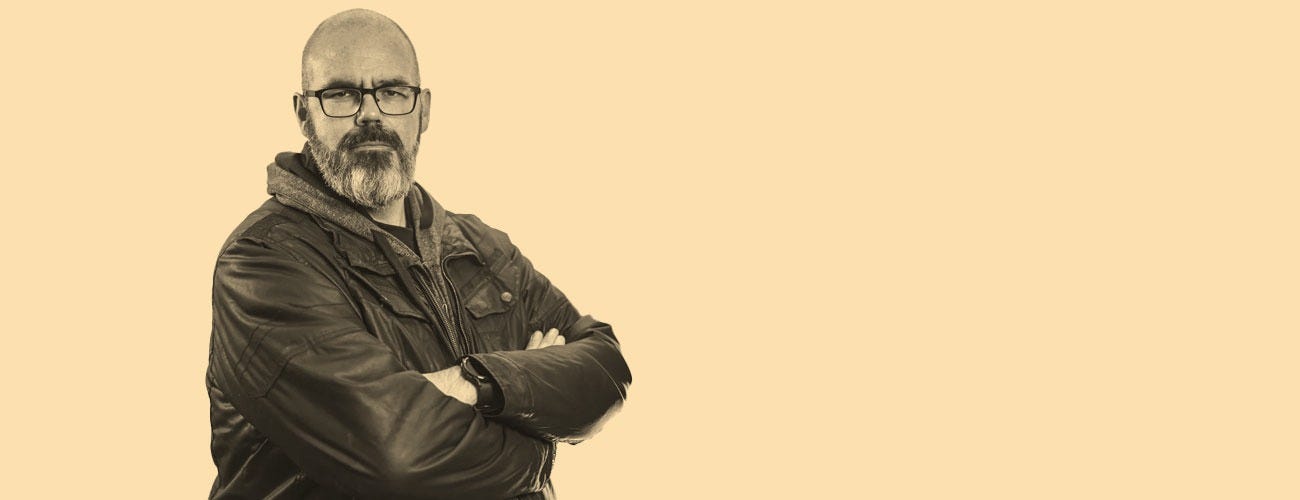
When did you first realize that the issue was not only quitting smoking, but the fact that this experience had almost no recognized place in public debate?
Kurt: That realization came gradually, but it became clear once I started speaking to more people who had successfully moved away from smoking, using alternatives like vaping or other reduced-risk products.
What stood out wasn’t just that people had quit smoking; it was how similar many of their experiences were — and yet how invisible those experiences were in any formal discussion.
People could tell you, quite clearly, how long they had smoked, how many cigarettes they used per day, what they switched to, how long they had been smoke-free, and whether they had tried to quit before.
These are not vague stories; they are structured, recallable pieces of information that align closely with the kinds of questions we ask in the THR Global testimonial form.
But outside of informal conversations, none of this seemed to have a recognized place.
In public debate, the focus is often either on clinical data or on population-level statistics.
The lived experience of switching — what actually happens between being a smoker and becoming smoke-free — tends to fall into a gap.
It’s often dismissed as anecdotal, even when thousands of people are describing very similar journeys.
That was the turning point for me.
It wasn’t just about quitting smoking anymore; it was about the fact that these real-world transitions, which are happening at scale, weren’t being captured in a way that could be meaningfully aggregated, understood, or even acknowledged in policy discussions.
THR Global is really a response to that gap.
Not to replace science, but to ensure that these experiences are collected in a structured, consistent way, so that they can at least exist alongside other forms of evidence, rather than being excluded entirely.
When did you understand that the issue was not a lack of stories but that even thousands of them still did not count as evidence?
Kurt: That became clear once the volume of stories stopped being the issue.
Early on, you assume that if enough people share similar experiences, that in itself will start to shift the conversation.
But what I began to see is that volume alone doesn’t change how something is treated.
You can have thousands of people describing very similar transitions, which they do, but it still doesn’t “count” in any formal sense.
The reason is structural.
These experiences exist, but they’re scattered, inconsistent in format, and not captured in a way that enables aggregation or comparison.
One person writes a paragraph on social media, another gives a quote in a news article, someone else shares a comment in a forum, and consumer groups like the one I founded in South Africa provide space to capture these stories.
Even if the underlying information is similar, it doesn’t accumulate into something that can be easily recognized or engaged with as a body of evidence.
That’s when it became obvious that the issue wasn’t a lack of stories; it was the lack of a consistent framework for capturing them.
With THR Global, the intention is to take what people already know about their own journeys and structure it in a simple, consistent way.
The same core questions are asked of everyone.
Individually, each story still matters.
But when that information is collected in a standardized format, it starts to do something different; it becomes possible to see patterns, to understand scale, and to at least present these experiences in a way that can be engaged with more seriously.
It doesn’t automatically turn them into clinical evidence, and it’s not trying to.
But it does move them out of being isolated anecdotes and into something more coherent, something that can no longer be dismissed simply because of how it’s presented.
When lived experiences are labeled as “anecdotes,” are we describing a methodological limit—or enforcing a boundary on what can be taken seriously?
Kurt: I think it’s a bit of both, but in practice, it often functions as a gatekeeping mechanism.
There is a legitimate methodological point; individual experiences, on their own, are not controlled studies. They can’t establish causality in the way clinical research is designed to.
That’s understood, and it’s important not to overstate what a single story can prove.
But what I’ve seen is that the label “anecdote” is applied very broadly, regardless of what the experience actually contains.
Many people can give quite specific, structured accounts of their journey: how many years they smoked, how many cigarettes per day, how many quit attempts they made, what they switched to, and how long they’ve remained smoke-free.
These are not just impressions or opinions; they are consistent data points that people can reliably report about themselves.
The problem is that when these experiences are not captured in a consistent format, they remain fragmented.
And once they are fragmented, it becomes easy to dismiss them collectively as anecdotal, even when thousands of them are describing very similar patterns.
So while there is a methodological limitation at the level of a single account, the way the term is often used prevents these experiences from even entering the conversation in a meaningful way.
It’s less about what the information is and more about how it is presented and whether it fits existing formats.
What THR Global tries to do is address that second part.
By asking the same core questions of every participant.
Alongside their written story, the aim is to bring consistency to these experiences.
That doesn’t turn them into clinical trials, but it does make them more comparable and more visible as a collective body of real-world transitions.
At the very least, it challenges the idea that all lived experience can be dismissed in the same way, simply because of the label that’s applied to it.
When did it become clear to you that the issue wasn’t the stories themselves, but the absence of a common structure to make them visible?
Kurt: That idea emerged once it became clear that the problem wasn’t what people were saying; it was how those experiences were being captured.
After seeing so many similar stories, the next step was trying to understand why they still weren’t being taken seriously.
And the answer was quite practical: there was no consistency.
The same underlying information was there, but it was scattered across different formats, different platforms, and different levels of detail.
That makes it very difficult for most to engage with it as a coherent body of information.
The shift in thinking came when I started looking at what people were actually able to report about themselves in a structured way.
Most people can answer the same core questions: how long they smoked, how much they smoked, when they started, how many times they tried to quit, what they switched to, whether they still use that product, and how long they’ve been smoke-free.
Alongside that, they can describe, in their own words, what that transition looked like.
Once you realize that, the gap becomes obvious.
The issue isn’t that the data doesn’t exist; it’s that it hasn’t been consistently collected.
That’s where the idea for THR Global took shape.
The written story still matters; it provides context and meaning, but the structured data points allow those experiences to be grouped, filtered, and understood at scale.
It doesn’t change the nature of the experience itself, but it does change how it can be seen.
Instead of isolated accounts, you begin to see patterns.
And once patterns become visible, it becomes much harder to dismiss the entire category of experience outright.
So the idea wasn’t about changing the stories; it was about changing how they are organized so they can actually be recognized for what they collectively show.
What is lost when a lived experience is translated into a standardized format?
Kurt: Something is definitely lost, and it’s important to be honest about that. When you standardize an experience, you inevitably compress it.
A person’s journey from smoking to being smoke-free is often complex.
It includes moments of relapse, personal motivations, social context, and even identity.
When you reduce that to structured fields like years smoked, cigarettes per day, number of quit attempts, product used, and years smoke-free, you’re selecting only certain aspects of that experience.
The nuance, the emotion, and the individuality don’t fully translate into those fields.
That’s why, for me, the written testimonial is not secondary; it’s essential.
It allows people to explain how and why the transition happened in their own words, which no structured format can fully capture.
But the trade-off is deliberate.
Without some level of standardization, those experiences remain difficult to compare or aggregate.
You can’t easily see patterns across thousands of people if every story exists in a completely different format.
So there’s a balance.
The structured questions (smoking history, quit attempts, product use, outcomes) provide a common framework that makes the experiences comparable.
The written story preserves the human context that would otherwise be lost.
THR Global doesn’t try to replace one with the other.
It’s about holding both at the same time: enough structure to make the information usable at scale, and enough openness to ensure that the individual experience isn’t reduced to just a set of data points.
Would you say that the problem today is not a lack of evidence, but the limits of what we are prepared to recognize as evidence?
Kurt: I think that’s a fair way to describe part of the problem. There isn’t a shortage of people who have successfully moved away from smoking and use safer alternatives.
You can see that in the consistency of what people report about themselves: that information exists and is repeated across many individuals.
The issue is that this type of information doesn’t always fit neatly into the formats that are typically recognized as evidence in formal settings.
If it’s not generated by a specific study design, it tends to fall outside the main body of what gets considered, regardless of how consistent or widespread it is.
At the same time, it’s important not to overstate what these experiences can do. They don’t replace clinical trials or population-level studies, and they’re not meant to. They can’t answer every question, particularly around causality or long-term risk.
What they can do is show, in a structured and consistent way, how people are actually transitioning in the real world. And that’s a dimension that isn’t always fully captured elsewhere.
So the gap isn’t simply about having more or less evidence; it’s about the types of evidence we’re set up to recognize.
THR Global is really about making sure that this particular type of information is at least visible and organized, so it can sit alongside other forms of evidence rather than being excluded because of how it’s presented.
To what extent does the exclusion of consumer experience shape not only public debate, but the very questions that scientific studies are built around?
Kurt: It has a real impact, because what gets discussed publicly often shapes what gets studied in the first place.
If consumer experience is largely absent from the conversation, then the research questions tend to be framed without that perspective.
Studies may focus on product characteristics, risks, or usage patterns in general, but they don’t always reflect the actual transition people go through.
We also see exaggerated claims based on the mere existence of a toxin, rather than on necessary levels based on how it is used in the real world.
What’s interesting is that many of these elements are things people can report quite consistently about themselves.
In the THR Global form, we ask straightforward questions, and when you start seeing that information across large numbers of people, you begin to get a clearer picture of the pathway, not just the endpoint.
If that kind of structured, real-world experience isn’t visible, it’s harder for it to inform study design.
The result is that certain aspects of the transition may be underexplored or treated as secondary, simply because they’re not part of the initial framing.
That doesn’t mean scientific studies are doing something wrong, as they rightly operate within established methodologies for good reason.
But it does mean that if a whole category of experience isn’t systematically captured and surfaced, it has a limited opportunity to influence what questions are asked or how studies are structured.
What THR Global aims to do is make that layer of experience more visible and more consistent.
Not to direct research, but to ensure that there is a clearer, organized account of what people are actually doing in the real world.
From there, it becomes easier for that perspective to at least be considered alongside other inputs when research questions are being shaped.
If this disconnect persists, where, if at all, does user experience enter the research process?
Kurt: At the moment, it tends to enter the process in quite indirect and inconsistent ways.
You might see it at the very beginning, where researchers draw on general observations or prior literature to frame a question.
It can also appear later, when studies include self-reported measures.
But even then, that input is usually tightly constrained by the study’s design, rather than coming from a broader, organized body of consumer experience.
Outside of formal studies, user experience often sits in the background, in surveys, small qualitative studies, or cited as context in discussions, but it’s not consistently structured or aggregated at scale.
That makes it difficult for it to play a more central role in shaping hypotheses or interpreting results.
What’s largely missing is a middle layer: a way to capture real-world transitions in a consistent, structured format for large numbers of people, without trying to turn that directly into a clinical study.
That’s where something like THR Global fits in.
By asking the same core questions and recording a written account, this approach creates a dataset of lived experience that is both human and structured.
It doesn’t replace formal research, but it can sit upstream of it.
In practical terms, that means user experience can start to inform the process earlier and more clearly, helping to highlight patterns, raise relevant questions, and provide context that might otherwise be missed.
So right now, user experience does enter the research process, but often in a fragmented way.
The aim here is simply to make that contribution more visible, more consistent, and easier to engage with, without overstating what it represents.
The platform does not replace science, but it suggests that certain dimensions of experience fall outside traditional models. Do you see that as a flaw or as a structural limitation?
Kurt: I would describe it more as a structural limitation than a flaw. Traditional scientific models are designed to answer specific types of questions, under controlled conditions, with a strong emphasis on isolating variables and establishing causality.
That’s exactly what they should be doing, and it’s why they are so important.
But because of that design, they don’t always capture the full shape of real-world behavior, particularly transitions from smoking to safer alternatives, which are often non-linear.
People don’t always switch in a single or consistent step.
They may try to quit multiple times, move between products, use more than one product for a period, or adjust their behavior over time before becoming fully smoke-free.
These are aspects of experience that people can describe quite clearly about themselves.
When you look at those responses collectively, you start to see patterns in how these transitions actually happen in practice.
The limitation is that traditional models are not always designed to capture such evolving, real-world pathways in a broad, continuous way.
They tend to take snapshots under defined conditions, which is necessary for their purpose, but it means certain dimensions of experience sit outside that frame.
So it’s not about one approach being right or wrong; they’re doing different things.
THR Global aims to make those real-world pathways more visible and consistently captured so that they can coexist with more formal research.
If anything, the value is in recognizing that both perspectives are needed.
One provides controlled, testable insights; the other shows how people are actually navigating these changes in everyday life.
In practice, who decides what counts as a valid story—and how do you ensure the platform doesn’t reproduce the same filters that have historically excluded these experiences?
Kurt: In practice, the platform itself doesn’t try to define a “valid story” subjectively. Instead, it defines a valid submission as one that meets a clear set of structured criteria.
Every testimonial goes through the same process. We ask the same core questions, alongside a written account of their experience.
There are also basic checks, such as email verification and moderation, to filter out spam or duplicate entries.
So the gatekeeping, to the extent that it exists, is technical rather than interpretive.
We’re not assessing whether someone’s experience is “good enough” or whether it aligns with a particular narrative.
If someone can provide a coherent account of their own journey and complete the required fields, their story has a place.
That’s quite deliberate.
One of the issues historically is that experiences get filtered after the fact; they’re selected, summarised, or excluded depending on how well they fit a particular framework.
What we’re trying to avoid is introducing that kind of subjective layer at the point of collection.
At the same time, we do have to be realistic.
The structure itself is a form of filtering.
By deciding which questions to ask, we are shaping how the experience is captured.
That’s unavoidable.
The difference is that the framework is transparent and applied consistently to everyone.
It doesn’t change depending on the story being told.
So the aim isn’t to remove all filters; that’s not possible, but to make them explicit, consistent, and minimal.
That way, the platform doesn’t decide which experiences matter; it simply provides a common structure through which those experiences can be shared and understood.
The platform does not resolve that. It makes it visible. And in doing so, it leaves something more difficult than a lack of evidence: that the limits may lie not in what we know, but in what we are prepared to recognize as knowledge at all.
If THR Global works as intended, what changes first: the conclusions, or the boundaries of what can be recognized as evidence?
Kurt: If it works as intended, the criteria change first or at least begin to expand. THR Global isn’t designed to produce new scientific conclusions on its own.
It’s not running controlled studies or testing hypotheses.
What it does is make a large body of real-world experience visible in a structured and consistent way.
Right now, much of that experience falls outside what is typically recognized as evidence, not because the information isn’t there, but because of how it’s captured and presented.
By standardizing the core data points, alongside the written story, the platform makes it easier to see patterns across many individuals.
The first shift, then, is not that conclusions suddenly change, but that this type of information becomes harder to ignore.
It starts to sit more clearly alongside other forms of evidence, rather than being dismissed outright as disconnected anecdotes.
Over time, that can influence how questions are framed, what gets explored further, and how different types of information are weighted.
But that’s a secondary effect.
So the immediate impact is on recognition, expanding what is seen as relevant and worth engaging with.
Any change in conclusions would come later and would still depend on how this structured, real-world data is considered alongside more traditional forms of research.
Today, what is the question the harm reduction debate still struggles to ask—perhaps because it would require changing the very way we understand evidence?
Kurt: One of the questions that still isn’t comfortably asked is the following:
What do real-world transitions actually look like at scale when people move away from smoking and use safer alternatives?
Not in theory, and not in tightly controlled conditions, but in practice, across large numbers of people.
It sounds like a simple question, but to answer it properly, you need a type of information that doesn’t fit neatly into the usual categories.
You need to understand not just whether people quit but how they got there: how long they smoked, how much they smoked, how many times they tried to quit, what motivated the quit attempt, what methods they attempted, why those attempts were unsuccessful, whether they switched gradually, whether they used more than one product, and how long they’ve remained smoke-free.
Individually, people can answer those questions quite clearly about themselves.
But collectively, that information hasn’t really existed in a way that allows it to be seen as a coherent body of insight.
At the moment, the debate tends to focus on endpoints or controlled comparisons.
The pathway—the lived process of switching—is less visible, partly because we don’t have a widely accepted way of treating that kind of information.
So it’s not that the question is impossible to ask.
It’s that answering it properly challenges the boundaries of what we currently recognize as evidence.
And until those boundaries shift, that question remains only partially explored.
* * *
Before any framework, before any platform, before any argument about what counts, there are people like Kurt: trying, failing, returning, and trying again.
Long before these stories became a problem of evidence, they were already a matter of survival. THR Global is one attempt to provide them with a place where they can gather, be compared, and be heard.
The platform does not resolve the tension. It gives it form.
And in doing so, it leaves something more difficult than a lack of evidence: the possibility that the limits may lie not in what we know, but in what we are prepared to recognize as knowledge at all.
What follows, then, is not an answer, but an attempt to think through that limit.