

Vapor Is Not Smoke
A genealogy of a regulatory reflex; a reading of Roberto Sussman
Some words begin by describing the world and end up defining what can or cannot be done within it. Smoke is one of them. For decades, the word ceased to name merely a byproduct of combustion and came to carry a public judgment: the idea that no one should be forced to breathe what someone else chose to light.
From that shift emerged the moral and regulatory prestige of smoke-free spaces, one of the most durable victories of tobacco control. The problem, Roberto Sussman suggests in his essay on the global intensification of vapor-free policies, begins when this logic is extended almost automatically to vaping and heated tobacco products as if vapor and smoke were simply different versions of the same phenomenon.
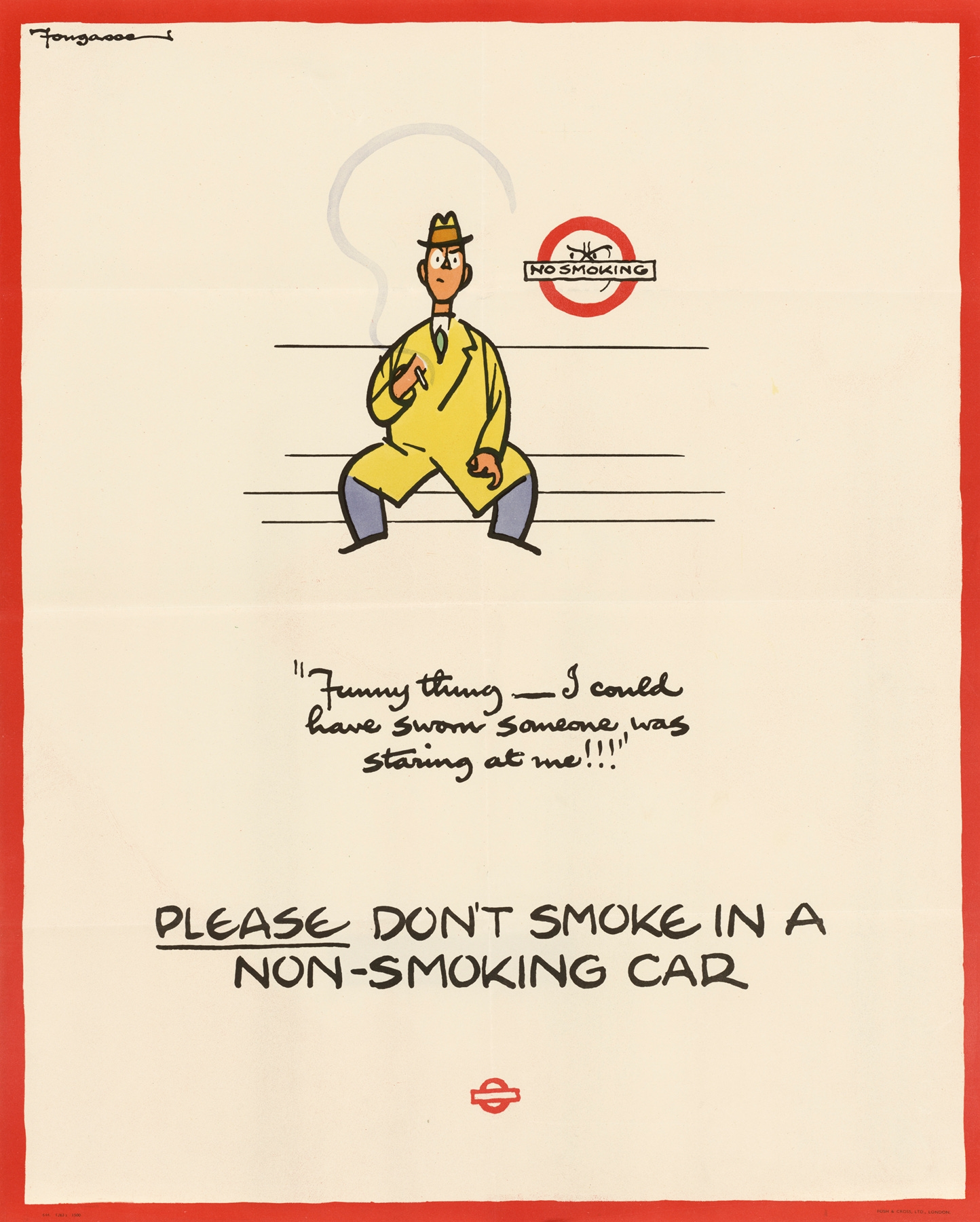
Over the course of two decades, smoke-free ceased to be merely a public-health slogan and became one of the most successful moral brands of our time. The phrase emerged from a concrete battle, grounded in robust evidence, against a product that killed on an industrial scale and exposed bystanders to risks they had never chosen to assume. In many countries, that victory changed the air and reshaped social etiquette, altering the very idea of coexistence. The cigarette lost its glamour and, with it, part of its cultural empire.
The problem begins when a victorious category stops being merely descriptive and starts operating as a reflex.
In his essay “On the Global Intensification of ‘Vapor-Free’ Policies (Part 1),” Roberto Sussman, a professor at UNAM, sets out to investigate precisely that shift. He asks how the logic that sustained the fight against cigarette smoke came to be extended almost automatically to vaping and heated tobacco products, even in open spaces, as if we were dealing with the same physical, chemical, and sanitary phenomenon.
His formulation is blunt. “The logic is crude and simple.” The reasoning, in essence, runs like this: if cigarettes are harmful to those who smoke and also to those who inhale the smoke, then any visible cloud exhaled in public should fall under the same principle. What Sussman disputes is not the idea of protecting shared air. It is the analogical short circuit that turns one problem into another without examination. “Passive vaping is not passive smoking.” And, more literally still, “e-cigarettes and HTPs do not emit ‘smoke.’”
This distinction, which may appear technical, is also political. Regulations do not arise from measurements alone. They emerge from discourse, from shared associations, and from images sedimented over time. And smoke carries a historical weight that vapor does not yet bear. Smoke evokes combustion, soot, and the smell that clings. It evokes known harm, decades of accumulated deaths, public campaigns, warning labels on cigarette packs, and darkened lungs. When vapor enters this imaginary by way of analogy, half the dispute has already been won before the comparison even begins.
Sussman’s effort is to interrupt precisely that automatism. His question is not whether vaping should circulate without rules. It is whether it makes sense to apply the same regulatory template designed for cigarettes to vaping and wholesale, without distinguishing risk, dose, context, and the nature of exposure.
Behind this lies a dispute that is less about nicotine than about method. What happens when public policy learns to respond by reflex?
When Science Stripped the Cigarette of Its Glamour
Sussman begins by acknowledging what worked, and rightly so. For much of the twentieth century, the fight against the conventional cigarette was not a hysterical crusade. It was a civilizational correction. There was a powerful adversary: wealthy and, on many occasions, profoundly dishonest. The constellation of interests surrounding tobacco normalized a lethal product through aggressive advertising, cultural capture, and the systematic denial of evidence. Against this, epidemiology, medicine, and public health played a historic role.
The story is familiar, but worth recalling.
Richard Doll and Austin Bradford Hill helped establish, with the growing weight of data (1950–1955), the causal link between smoking and lung cancer. Then came the reports of the Royal College of Physicians (1962) and the U.S. Surgeon General (1964), which helped consolidate the emerging public consensus. What had once been an elegant habit came to be recognized as a massive risk factor for cancer, cardiovascular disease, and respiratory illness.
Decades later, that institutional arc culminated in the Framework Convention on Tobacco Control. The treaty was adopted in 2003 and entered into force in 2005, becoming the first global public-health agreement of its kind.
That history matters because it lends legitimacy to what came next.
The authority earned in that battle was not gratuitous. It was deserved. But as Sussman suggests, every conceptual victory leaves behind an ambiguous inheritance. A cause that wins acquires not only historical vindication but also prestige, institutional apparatus, language, and confidence.
At some point, however, a risk appears. Evidence ceases to function solely as a criterion of correction and begins to operate as a form of identity.
From there, nuance may cease to sound like legitimate scrutiny. It is increasingly seen as infiltration, moral backsliding, or sabotage.
Consider the didactic formulation once promoted by Public Health England, that vaping is “95% less harmful,” which became both a marker of belonging and a target of criticism. Something similar happened with the Royal College of Physicians. Its institutional prestige helped legitimize the war against cigarettes. Later, when it endorsed harm reduction through vaping, the institution itself became the object of criticism, because part of the field rejects that strategy.
At that point, for Sussman, the problem ceases to be merely technical. It becomes a question of intellectual discipline. The question is no longer only what the data show. It is also: what does a field do when it becomes accustomed to being right?
When Virtue Acquires a Machine
In the genealogical reconstruction Sussman proposes, the turning point comes in the late 1990s and early 2000s, particularly in the United States. The political and financial ecosystem surrounding tobacco, once untouchable, had already been discredited and hemmed in by litigation.
Anti-smoking activism, which for many years had operated as a force of resistance, was beginning to move inside the institutional apparatus itself. The cause was shifting from frontal confrontation to the administration of power.
In Sussman’s reading, the 1998 Master Settlement Agreement marks this transition.
The agreement imposed billions of dollars in payments from tobacco companies to the states. It also introduced marketing restrictions and brought a kind of stabilization to the legal conflict. Sussman notes, without romanticism, that money publicly associated with anti-tobacco initiatives often ended up serving other fiscal purposes.
Indeed, reports from the Government Accountability Office indicated that a significant share of those revenues was used to balance state budgets or fund general priorities rather than tobacco-control programs. The point here is less accounting than politics. When virtue acquires a budget, it also acquires incentives to preserve itself.
There is nothing cynical about this observation. It is simply institutional sociology. Public health is not made by saints hovering above history. Institutions and coalitions make it. It is shaped by careers, struggles for influence, agendas, reputations, and resources.
None of this invalidates the cause. But it does prevent its idealization. And for Sussman, this is the blind spot in much of the debate: the belief that good intentions alone are enough to shield a field from the selective use of evidence.
The argument is uncomfortable because it strikes at a narrative the field itself holds dear, the narrative that being on the right side of history automatically protects it from methodological excess. But it does not. No field does.
The Moment the “Other” Enters the Equation
At this point in his reconstruction, Sussman introduces a Mexican recollection. In 1975, he writes, roughly forty percent of men in the country smoked. Among women, the rate hovered around three percent. The figures fit a broader regional pattern: across Latin America in the 1970s, male smoking prevalence often exceeded forty percent, while among women it generally remained below ten.
In popular culture, the association between cigarettes and cancer was already circulating strongly enough to produce a street nickname: “cancer tacos.” The detail matters because it shows that public awareness of tobacco’s risks preceded, to some extent, the tightening of regulations that came later. Science had already begun to exert a real cultural effect.
But the decline in smoking prevalence, Sussman argues, eventually slowed.
Even as Mexican legislation aligned itself with World Health Organization recommendations, smoking rates spent years oscillating around roughly the same levels.
Sussman’s reading is that information alone does part of the work, but not all of it. People do not smoke only out of ignorance. They smoke out of habit, pleasure, context, class, stress, routine, social bonds, and as a precarious form of self-management of distress. Public health speaks in probabilities about the future. The body, more often than not, decides under the pressure of the present.
It is on this terrain that secondhand smoke enters the picture as a decisive political device. As long as the message was that you harm yourself, regulation ran up against an important moral boundary: autonomy. Once the axis shifts to harming others, especially the innocent, the board changes.
Sussman locates a key moment in this shift in 1975, at a World Health Organization conference, recalling remarks by Sir George Godber, a pioneer of anti-smoking policy in the United Kingdom since the 1950s. Godber described smoking as a “preventable epidemic.” He criticized governmental passivity and advocated mass anti-smoking education, investment in primary care, and the need to foster the perception that smokers harm those around them—particularly family members, babies, and young children.
His perspective was embedded within a broader horizon shaped by the idea of “health for all,” which would later be formulated internationally at Alma-Ata.
That horizon combined tobacco control, the reduction of environmental risks, and community integration, and it would help shape the World Health Organization’s early resolutions on noncommunicable diseases.
It is not hard to see the political force of this shift. Once harm ceases to be merely self-imposed and is presented as something inflicted on others, especially vulnerable others, restrictions become more defensible, more intuitive, and more expansive. The smoker ceases to be merely someone who assumes a risk. He becomes someone who distributes it.
Consensus in Armor
At this point, Sussman revisits a study by James Enstrom and Geoffrey Kabat published in the British Medical Journal (BMJ) in 2003. The paper examined exposure to environmental tobacco smoke and mortality in a cohort of couples in California. He recalls the cautious wording of the article itself: the results did not support a robust causal relationship between environmental smoke exposure and tobacco-related mortality, though they also did not exclude the possibility of a small effect.
The point here is not to treat this single study as a refutation of the prevailing consensus. The paper itself must be read with that caution. Major health agencies maintain that, on the basis of a much broader body of evidence, environmental tobacco smoke causes significant harm, including cardiovascular and respiratory effects with meaningful population-level impact. That remains the dominant understanding.
Sussman’s point is different. He asks when a field stops tolerating the reexamination of specific points without interpreting it as heresy.
In his formulation, the subject of secondhand smoke has become “quasi-sacralized.” Not merely a strong consensus, but a consensus transformed into moral identity. And when that happens, disagreement ceases simply to be contested. It becomes suspect.
This may be the most useful passage in the essay, not because it resolves the dispute, but because it identifies a pattern that recurs across many fields: the ease with which public science, when it feels morally besieged, shifts from firmness to insulation.
From Chemistry to Political Reflex
This history matters because, for Sussman, it prepares the ground for the expansion of the smoke-free concept to contexts where the basis for comparison is far less obvious.
By the time e-cigarettes and heated tobacco products entered the scene more visibly—particularly over the past decade—an institutional repertoire was already in place: maximum precaution, absolute language, denormalization as a cultural strategy, and the protection of children as a highly resonant political justification.
The problem is that the object has changed. Conventional cigarettes involve combustion. Vaping does not. That does not make vapor harmless, nor “just water,” a caricature as simplistic as the one offered by the opposite side. But it does change the physics and chemistry of what is exhaled. And if the phenomenon changes, the yardstick should change with it.
It is in this context that Sussman also discusses so-called third-hand smoke, the residues from tobacco smoke that settle on surfaces and can react with compounds in the surrounding environment. He does not deny the phenomenon's chemistry. What he questions is the leap that turns laboratory plausibility into a sense of ubiquitous threat, without passing through the harder work of measuring dose, frequency, context, real exposure, clinical relevance, and the magnitude of risk.
Chemistry does not legislate on its own. What should guide regulation is the relationship between exposure and harm under real-world conditions.
In the same vein, Sussman criticizes the totalizing use of formulas such as “there is no safe level of exposure to ETS,” which functions less as scientific precision than as a language of political authorization.
The problem with absolutes is well known. They erase gradations and turn any residual presence into a potential justification for prohibition. Instead of governing risk, policy begins to govern through aversion.
It is in this climate that Sussman situates the expansion of bans to open areas and a variety of public spaces, often justified in the same terms used for conventional cigarettes.
His criticism is not that children do not deserve protection, nor that public life should be left unregulated. It is that protection can become a catch-all word. Once invoked, it seems to dispense with the need for more careful demonstration.
When Science Enters Campaign Mode
Sussman chooses an emblematic case: the study that linked the smoking ban in Helena, Montana, to an abrupt drop in the number of heart attacks treated at the local hospital.
The paper circulated quickly in the press and came to be presented, in many contexts, as a kind of portable proof of the immediate effects of smoke-free policies. The problem, he notes, is that the study design was far too small to sustain such sweeping conclusions without considerable caution. Statistical variability, temporal coincidence, and simple noise may have carried more weight than the narrative allowed.
Critics pointed to the small sample size, the high statistical variability, and the fact that a similar fluctuation had already occurred in 1998, when no smoking ban was in place. Subsequent commentary questioned the strength of the causal inference and the biological plausibility of such a large decline in so short a time, without accusing the authors of misconduct. Broader reviews later treated Helena as an early study with a striking effect but low precision, assigning greater weight to larger datasets and subsequent meta-analyses.
It is worth avoiding excessive accusatory language here. Terms such as “fraud” or “hoax,” used by Sussman, attribute intent and require a level of caution that serious journalism cannot abandon. A study does not have to be fraudulent to be absorbed into a narrative machine. But the broader point remains. When a public agenda enters campaign mode, studies with strong communicative impact tend to receive a selective advantage.
Not because they are necessarily false, but because they fit the story better.
This may be the most unsettling core of the genealogy Sussman proposes. What consolidates itself, he suggests, is not merely a body of results about environmental tobacco smoke, but an institutional style: one marked by a preference for maximalist language, a low tolerance for inconvenient contestation, the use of denormalization as a form of cultural engineering, and a readiness to convert uncertainty into an argument for tightening restrictions.
When this style encounters a new target—vaping—the transfer is swift. Sussman summarizes the operation almost verbatim: e-cigarettes and heated tobacco products come to be banned “in all public spaces, even open outdoor spaces, where smoking is prohibited,” under the justification of “health protection,” despite the “enormous differences between the environmental emissions.” His point is not that these differences eliminate every concern. It is that they make the problem, in comparative terms, more complex than policy tends to admit.
Taking the Other Side Seriously
At this point, it is necessary to resist any temptation to turn this critique into a pro-vape pamphlet. Bad science has no fixed side. If there are biases, overinterpretations, and shortcuts in the more orthodox wing of tobacco control, there are also conflicts of interest, indulgent formulations, and convenient framings in harm reduction. Studies funded by corporations, or linked directly or indirectly to their interests, deserve heightened scrutiny. That does not automatically invalidate them. It simply raises the standard of caution.
Taking the other side seriously does not weaken Sussman’s critique. On the contrary, it puts that critique under pressure.
The strongest arguments from the restrictive camp tend to organize themselves along two lines. The first is renormalization. Allowing vaping in spaces where smoking is prohibited could reintroduce into public space the visual choreography of the cigarette: the gesture, the pause, the cloud, the familiar aesthetic of the act. The second concerns the protection of children and adolescents. The aim is to reduce exposure, limit indirect advertising, and prevent certain behaviors from acquiring an aura of social normality.
None of these arguments is absurd. The problem lies in treating them as sufficient grounds for full regulatory equivalence. Because at that point, appearance and substance begin to blur. One thing is to debate public etiquette, contextual limits, marketing practices, and coexistence in enclosed or shared spaces. Another is to treat exhaled vapor as if it were, by definition, the same problem as cigarette smoke.
There is another point that the rhetoric of renormalization often sidesteps. If what becomes more visible in public space is not the combustible cigarette but an alternative of comparatively lower risk, that normalization should not automatically be read as a threat. In some contexts, it may represent precisely the kind of displacement that an evidence-oriented public health policy ought to recognize. To reduce it to a symbolic relapse may be a way of confusing cultural memory with the real hierarchy of harms.
A proportional response may lie less in general slogans than in contextual arrangements: where, when, under what conditions, with what standards of public information, and with what clear distinction between products of very different levels of risk. The key question isn't whether vaping is risk-free, but whether public policy has the right to overlook the relative scale of risks.
The Tragedy of Virtue
This is where Sussman’s essay touches a problem larger than vaping itself. Public policies can fail not only through omission but also through poorly calibrated moral excess. A rule designed to protect may end up protecting less than it imagines—or protecting the wrong target.
The study by Saffer and colleagues offers one example of this possibility. But it is not alone. Similar patterns have been observed in Abigail Friedman’s analysis of San Francisco, in recent studies of state-level flavor restrictions, and in research using large panels of young adults in the United States.
The designs vary. So does the scope. And the magnitude of the effects is far from uniform.
Even so, the convergence is enough to counsel caution toward any policy that treats sweeping flavor bans as an automatic benefit. When consumption migrates toward the more lethal product, the language of protection can no longer dispense with comparative accounting.
That is the difficult irony. A policy designed to steer young people away from nicotine may push some of them toward the form of consumption that kills the most. The good intention does not disappear. What disappears is its innocence.
Once policy begins to produce side effects of its own—some quiet, others cruel—the question changes. It is no longer enough to know which side someone is on. The question becomes another: how does one govern without becoming intoxicated by one’s own argument?
Sussman brings that question to the center. When does protecting become delegitimizing? When does prudence become standardization? When does uncertainty, which ought to call for measurement, monitoring, and revision, become the engine of total prohibition? These are not questions opposing regulation. They are questions about effective regulation.
In today’s communication environment, absolutes travel better than proportions. “Zero tolerance” is simple, marketable, and morally photogenic. Nuance sounds defensive. Revision looks like a weakness. But serious public policy cannot be designed to fit neatly into headlines. It has to fit the real world.
Ultimately, this highlights the value of Sussman's proposed genealogy. It doesn't settle the debate over vaping by itself. However, it offers a key institutional lesson. When fear is effective, it tends to be reused. When the word 'protection' is used to shield a policy from criticism, it often makes that policy more rigid. And when a field forgets that flawed science can come from all sides, it begins to lose the right to claim that rigor is a core principle.
The dilemma, therefore, is not about simply “to ban or to allow.” It is more complex and less satisfying than that. It involves creating regulations that are proportional to the risk, transparent in their criteria, and adaptable as new evidence emerges. Rules that protect without defaulting to automatic equivalence. Rules that differentiate without humiliation. Rules that don’t, out of rhetorical habit, turn vapor into smoke before understanding what is actually in the air.
Maybe the debate over vapor-free policies needs to move beyond its deadlock and focus on a simpler question: what exactly is public health willing to compare? And who answers when it chooses not to make that comparison?


Claudio, thanks a lot for having expanded and discussed the contents of my Substack essay. You explained many issues and subtle points better than I.
However, there is only a point where I disagree with you: the Helena Montana "miracle" was a hoax and a primarily example of fraud in science. It was not "excessive accusatory language", it is the most accurate account of this publication. Very weak data with dubious implications was found and was described as data with strong implications. It is irrelevant to find whether the authors (Prof Glantz and others) did it on purpose or "honestly" out of a deep flaw of their reasoning and training. The article is a fraud.
Notice that what I (and many others) call "hoax" or "fraud" refers to the publication, not to the authors. I did not call Prof Glantz a fraudster or any other name. But it is undeniable that he published a fraudulent study. Diplomatic talk only obscures this fact.
"Terms such as “fraud” or “hoax,” used by Sussman, attribute intent and require a level of caution that serious journalism cannot abandon". The only way to determine "intent" could have been to launch a legal investigation, which never happened, so it is no longer relevant. To find whether Prof Glantz intended a fraud or not is irrelevant, it is also a very tortuous issue that would not help clarifying matters. However, I emphasize that to determine that the study (not the author) is a fraud is necessary and fair.
"A study does not have to be fraudulent to be absorbed into a narrative machine." Yes, but we need to look at the scientific content independently, regardless of the political context and the narrative. In this case there is no doubt this study and the ones that followed up are fraudulent.