

Trump Logic
Tariffs, Algorithms, and the New Customs Wall
As the United States raises its tariff barriers against Chinese products, the e-cigarette industry—anchored in Shenzhen factories and routes that span continents—operates between two extremes: the strict compliance with increasingly costly regulations, or the ambiguous navigation of the gray channel, where legality blurs amid labels, algorithms, and customs codes.
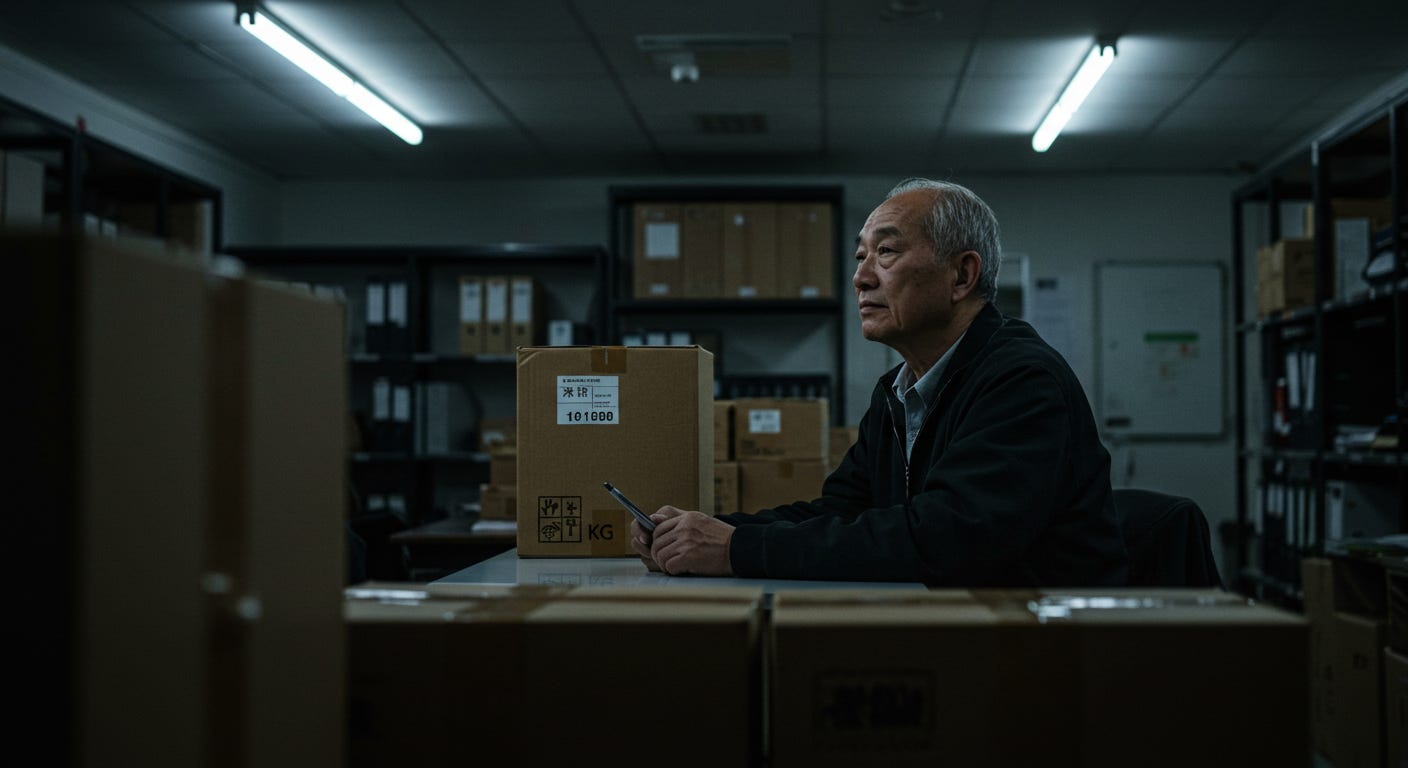
Under the cold glow of fluorescent lamps in an office in Bao’an District, southern China, a logistics industry veteran—identified only as “L”—watches as every kilogram of goods bound for the United States takes on a weight beyond the physical: it becomes a symbol and strategy.
It’s not just nicotine being shipped; it’s the pulse of an industry caught between regulation, evasion, and the tensions of an increasingly uncertain geopolitical chessboard.
On April 9, the U.S. government imposed a new round of tariffs on goods imported from China, part of a trade policy aimed not only at curbing the Asian giant's economic influence but also at redefining—through the blunt force of taxation—the rules of the global game.
The measure strikes directly at the heart of the e-cigarette industry—a sector already strained by regulatory battles, conflicting interests, and a global market in constant flux.
According to an exclusive report by 2Firsts, a media outlet specializing in the global vaping supply chain, the tariff adjustment has triggered an immediate surge in logistics costs. This has had a particularly sharp impact on cross-border routes to North America, which are now commercial arteries pulsing with the altered rhythm of new fiscal pressure.
A Subtle but Telling Increase
The figures provided by L offer a snapshot of the immediate impact: maritime transport—the backbone of large-scale trade—rose from 19 to 21 RMB per kilogram (from $2.66 to $2.94); air freight climbed from 55 to 57 RMB (from $7.70 to $7.98). The net increase hovers around 2 RMB per kilo, a blow partially softened by the seasonal drop in early-stage international transport costs.
“The e-cig industry isn’t as sensitive to these fluctuations as other sectors,” L explained in the interview with 2Firsts. “For high-value-per-unit products like vaporizers, a 2 RMB per kilo increase is still within the acceptable range.”
But the market’s apparent stability shouldn't be mistaken for inertia: beneath the surface calm, conflicting forces stir—forces that could ultimately reshape the industry’s balance.
Behind the scenes, the sector wages a less visible, yet potentially more decisive battle: choosing between the legal import channel—marked by surcharges and regulatory landmines—or the gray channel, that murky corridor of customs ambiguity that allows products in under evasive labels like “atomizer accessories,” with tariffs up to 10% lower than the standard rate, which can exceed 27%.
As 2Firsts detailed, this fork in the road has split the industry into two irreconcilable camps: on one side, companies that resort to gray channels to dodge tariffs; on the other, those striving to strictly follow U.S. regulations—and who, by bearing the full tariff burden, see their product costs increase by as much as 80% over the original value.
Though large-scale retroactive sanctions on gray-channel shipments haven't yet materialized, operators know the window is closing. A rise in U.S. customs inspections—or an aggressive push by Big Tobacco to defend its market share—could bring the whole system crashing down.
“The gray model isn’t sustainable in the long run,” L warned, hinting at a mix of certainty and resignation. “If customs tightens inspections, logistics companies could face tax bills greater than shipping profits. In that scenario, many would rather abandon the cargo, triggering economic losses and unavoidable clashes with clients.”
The Storm Hasn’t Hit… Yet
The modest increase may be the prelude to a more significant upheaval. Between April 10 and 14, market players anticipated a second wave of adjustments—this time based on actual invoicing. As high-demand events draw near—such as Amazon’s Prime Day in May and the holiday season ramp-up in September—air freight rates could exceed 70 RMB per kilogram, a surge of more than 20%. The sky, for now, remains overcast, but it's charged with electricity.
The most agile companies are already on the move. “If the products are ready, it’s best to ship them before mid-April,” L advised. That warning isn’t mere rhetoric: in an industry where time is as valuable as margin, moving early isn’t just an advantage—it’s often the only way to stay in the game.
At First Glance, the Impact May Seem Technical.
But beneath the surface, the ripples reach deeper layers of international trade. How do you regulate a transnational industry amid a relentless trade war? What incentive remains to operate legally if the price of legality is silent expulsion from the market?
E-cigarette companies are betting on a flexible supply chain—balancing air and sea transport—while monitoring U.S. customs codes almost in real time, as changeable as they are unpredictable. The more cautious ones diversify their routes and reclassify their tariff categories, seeking to minimize exposure without abandoning legality altogether.
This episode is just one facet of the global redesign of the nicotine economy.
What’s decided in a customs office or tucked into the folds of a logistics algorithm doesn’t just affect manufacturers in Shenzhen or retailers in New York. It cuts through to consumers—the final link and, paradoxically, a critical cog in the system. It touches public health systems and shifts the fragile balance of power between old monopolies and emerging digital brands, operating in a gray zone where legality and practicality blur.
But power’s essence, as is well known, lies in its invisibility. It isn’t always held or exercised overtly; it often dissolves into daily practices, embeds itself in institutions, and hides in language.
In the case of e-cigarettes, that invisibility takes shape in the tiniest details: a label on a box, a customs code, a declared value. And also in a decision that’s becoming increasingly intolerable for those moving goods across borders: to pay the full price of legality—or to cross, once again, the blurred line of the gray channel.