

The Purity Trap: A Brief Note on the WHO’s Prohibitionist Mirage
Is the WHO willing to sacrifice millions of adult lives in the name of a moral purity that neither science nor history supports?
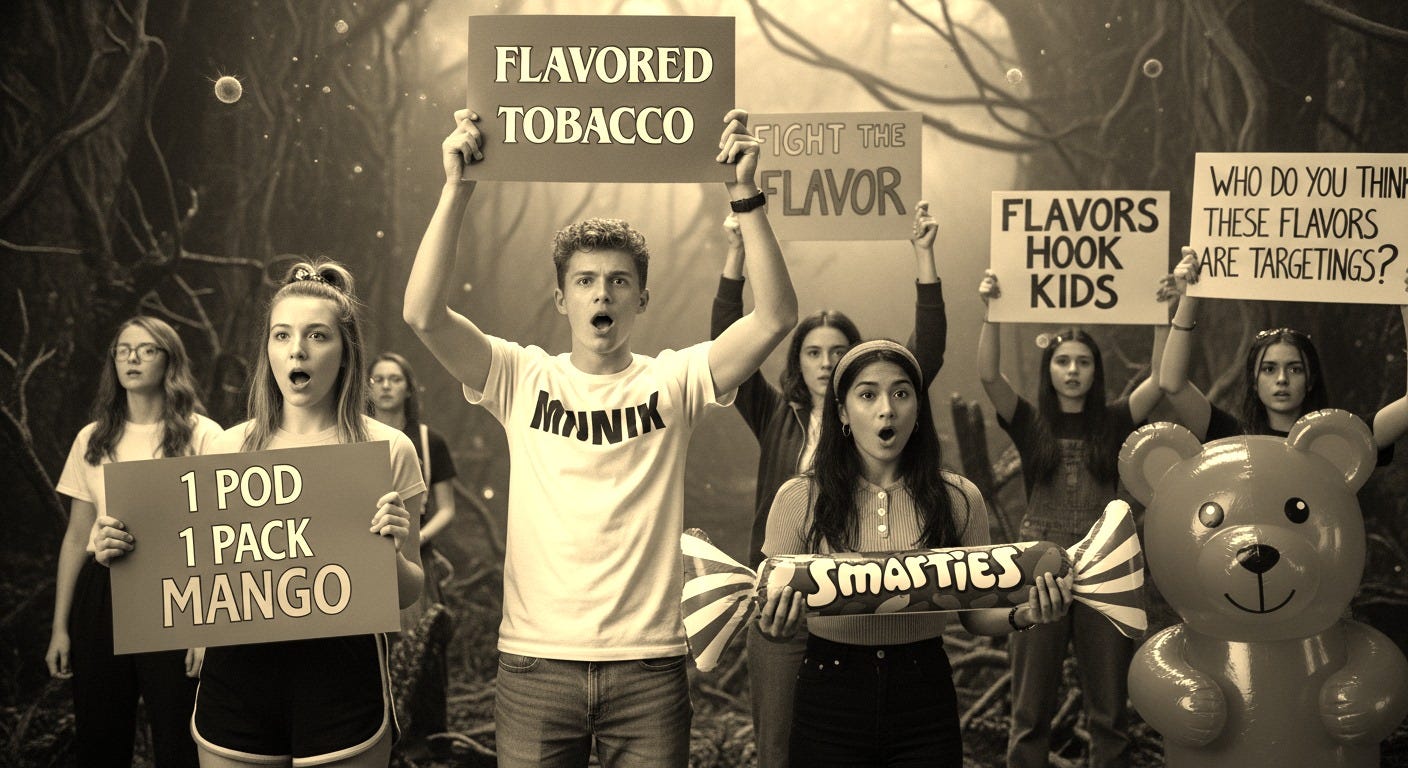
On World No Tobacco Day 2025, the World Health Organization once again showcased its unyielding dogmatism: demanding the absolute ban of all flavors in tobacco and nicotine products, from conventional cigarettes to electronic devices and heated tobacco. They frame their crusade as an unquestionable moral endeavor: flavors, they argue, entice the youth, mask the toxicity of nicotine, and perpetuate the chains of dependence.
But beneath this surface of good intentions and unassailable certainties lies a strategy that is simplistic and, ultimately, deeply harmful. Not all nicotine exposure is the same, just as not all dependence leads to the same devastation. Ignoring these nuances is not only intellectually dishonest — it is ethically irresponsible. Although nicotine is not harmless, the risks associated with its use can — and must — be mitigated. From a historical perspective, supported by decades of multidisciplinary research, banning flavors is akin to aiming at the wrong target: a measure unlikely to save lives but sure to condemn many more.
Nicotine, cast as a scapegoat for its addictive potential, is not the actual executioner in the tragedy of smoking. The distinguished gentlemen and ladies hiding behind the institutional facade know, though they remain silent, that the real enemy is combustion: that inexorable chemical reaction that turns the act of smoking into a slow, silent, daily poisoning. In contrast, technologies like e-cigarettes and heated tobacco, especially in their flavored versions, have proven effective tools in steering adult smokers away from the deadly ritual of conventional cigarettes, drastically reducing their exposure to carcinogens.
Banning flavors might indeed reduce the appeal of these products among the youth — a legitimate and urgent concern — but it would also undermine the efforts of millions of adult smokers seeking lower-risk alternatives. After all, aren’t flavors appealing to people of all ages? The evidence is stubborn: in countries like the United Kingdom and New Zealand, where harm reduction is public policy, flavors like mint and fruit are crucial in helping former smokers stay away from combustible tobacco, playing a decisive role in the historic decline of smoking rates.
More alarming still is the collateral damage the WHO chooses to ignore: banning flavors doesn’t eliminate demand; it merely pushes it into illicit markets, stripped of any health regulation, where risks not only increase but multiply and diversify. Shutting the door on safer alternatives flings open the gates to smuggling and unsafe consumption. This isn’t merely a strategic error in public health; it’s an assault on social equity, striking hardest at the most vulnerable populations — those where traditional tobacco still claims its mos’s most invisible victims.
History is a harsh teacher for those who refuse to learn: prohibitionist crusades fail because they substitute reason with dogma, science with moralism. People don’t need more repression. We need intelligent policies, grounded in solid evidence, capable of protecting the young without condemning those seeking escape from addiction — policies that offer real, pragmatic, and compassionate paths to redemption.
Defending the non-prohibition stance is not capitulating to industry interests, as some insinuate. It is embracing science. It is choosing pragmatism over ideology. It is, ultimately, a radical act of humanity. Protecting public health should not mean amputating options but rather opening safe pathways for those who, trapped in their frailty, still wish — and deserve — to survive.
Because ultimately, any public policy that denies human complexity condemns individuals to walk clandestine, shadowed paths.
And it is there — in the dimness of easy solutions — that public health loses both its name and its purpose. Defending science, pragmatism, and humanity is not capitulation; it is perhaps the last lucid form of resistance in a world that prefers comfortable certainties over uncomfortable truths.