The Purity Regime: Doctrine
(3/3): When risk becomes identity and control becomes virtue, the treaty no longer regulates — it preaches.
Here, control no longer requires evidence. Conviction is enough. When the language of proof yields to the rhetoric of virtue, the norm hardens into doctrine. The treaty no longer regulates — it preaches. This final part traces the moral circuitry of COP11: how risk fuses with identity, how protection codifies exclusion, and how control turns autonomic, all while the lives it claims to defend remain unheard, unseen, unresolved. The machine operates, now, on its own logic. Silence is its fuel.

The Machine Spins Before You Even Notice
Some clauses in international treaties are born to live in the footnotes. Article 2.1 of the FCTC seemed to be one of them. Drafted over two decades ago, it read like a gesture of diplomatic elegance and an encouragement for countries to go beyond the treaty text, so long as they respected international law. A short note of freedom: symbolic, harmless. The kind of sentence no one contests, mostly because no one expects it to matter.
But sometimes it’s the footnote that opens the passage. Article 2.1 began to operate as a side door: It allows the Convention’s reach to expand without altering a single word of the base text.
If Article 5.3 builds the bunker, filtering who matters and who gets to speak, Article 2.1 opens the corridor through which the regime advances, without ever needing to debate its own expansion. Closed to voices. Open to drift.
At COP11, that footnote became a conduit for normative expansion. In decision FCTC/COP11(5), the Conference “welcomes” a report of “forward-looking measures,” drafted by a group of experts and explicitly positioned beyond the treaty’s foundational scope.
The proposals, ranging from total bans and criminalization to commercial restrictions and extraterritorial norms, come wrapped in soft, seemingly optional language: “voluntary,” “enhancing,” “expansive.”
Light words. Heavy moves.
But the decisive gesture hides in a quiet administrative verb: the Secretariat is now authorized to disseminate these proposals through national reports, technical workshops, knowledge hubs, cooperation platforms, and support missions to “interested” countries.
The treaty text doesn’t change. But practice relocates.
International regimes rarely operate through explicit orders. They work through circuits of invitation and adhesion: the COP “invites,” the Secretariat “supports,” the hubs “implement,” countries “comply.”
What begins as a suggestion, driven by institutional loyalty, more royalist than the king, soon becomes the de facto standard of regulatory virtue. The official name remains. The substance, silently, is already something else.
“In practice, what’s being signed today isn’t exactly what was ratified years ago,” summarized my source, who has followed the Convention since its earliest COPs. “The language keeps saying everything is optional. But that’s just form.”
Pause.
Then, with the clarity of someone who’s seen the trick before: “They preserve the form to protect the change, you see?”
He didn’t use the term, but he was describing a well-known phenomenon in international law: treaty drift, the gradual shift in a treaty’s meaning or application, drifting from original intent without formal revision.
Sometimes the drift is functional: open clauses must adapt. Sometimes, it’s corrosive, reconfiguring the treaty from within, through administrative sedimentation, successive interpretations, and shifting consensuses.
There are mechanisms to contain it: joint authentic interpretations, formal amendments, revision protocols, sunset clauses. The theory is there. What’s missing is the brake.
In the FCTC, none of those mechanisms are currently active. And the drift continues, soft, steady, and perhaps already irreversible.
What COP11 reveals is a model of expansion that no longer needs to persuade. It only needs to institutionalize. To turn an idea into a guideline. A guideline into a workshop. A workshop into “best practices.” Best practices into expectation. Expectation into normative pressure.
No policing. No sanctions. Just something more effective: the diplomatic shame of the non-implemented.
And when this logic joins the shielding of Article 5.3, the structure becomes clear: a system that lowers its permeability to dissent while increasing its permeability to expansion.
A regime that shields itself from questions and grows through the footnote. A bunker with a side door inside an armoire. That’s how drift gains ground in the showcases of virtue: clauses once drafted for tobacco smoke and agricultural fields begin to shape an entirely different material world.
And from within, the treaty's scope is rewritten without rewriting the treaty.
Laboratories of Virtue
Article 8 offers a precise example of silent expansion. Originally designed to address exposure to smoke from the combustion of tobacco — a technically grounded, measurable risk, with decades of scientific consensus — Article 8 has become a platform for something else.
In decision FCTC/COP11(9), the COP extends its scope to include vapors and aerosols emitted by electronic devices, even in the absence of combustion. The shift occurs without altering the base text, and despite evidence that most scientific literature points to significantly lower risks than those associated with conventional cigarettes.
The textual foundation for this inflection lies in a single, vague, almost modest phrase, but one strong enough to shift the axis: “Emissions from electronic nicotine delivery systems may also pose health risks to non-users.”
In the plenary, the phrase does not arrive as controversy. It arrives as procedure. Cold light over long tables. Thin-stem microphones tilted toward trained mouths. Paper cups already crumpled. Headsets adjusted without eye contact. And there, low, square, and non-metaphorical, the “WHO FCTC LEGAL” nameplate reminds everyone that the text does not merely describe a risk. It draws a boundary.
With that sentence, the Conference calls upon the entire United Nations system to ban tobacco and nicotine products, whether combustible or not, from all its premises. This is Article 8 in expanded mode: it preserves the appearance of continuity while shifting the content. What was once a measurable risk now operates as symbol. “Setting an example” becomes method.
In practical terms, with this decision, the UN no longer acts solely as an employer protecting its staff. It acts as a showcase of virtue, a symbolic laboratory where nicotine use, in any form, is meant to become socially unacceptable.
Public policy no longer operates solely on the basis of harm. It begins to regulate the moral value of visibility.
This is where the metrics start to blur. What was once a risk scale is compressed into a single regulatory category. Different levels of harm, vastly unequal in real terms, are treated as a single category. Conflation of risk: the merging of distinctions.
Nuance disappears. Gradients collapse. And with them, the distinctions that, in some contexts, could save lives. You’re no longer comparing with what kills. You’re comparing with an abstract ideal: the nicotine-free citizen.
Precaution, here, is no longer a tool. It becomes doctrine.

The Umbrella of Repudiation: From Smoke to Disgust
Article 18 follows a different path, but arrives at a similar destination.
Originally designed to address the environmental impacts of tobacco cultivation — deforestation, pesticide use, soil degradation — it gains new scope in decision FCTC/COP11(10). The text pulls the issue out of the fields and brings it, without apology, into another material inventory: batteries, electronic components, devices, and waste that is difficult to dispose of or recycle.
The FCTC begins to speak the language of environmental conventions— such as the Basel and Stockholm Conventions —and aligns itself with the Sustainable Development Goals. As if changing neighborhoods to change jurisdictions. In the plenary, this doesn’t arrive with fanfare. It enters the way everything does there: through formal recall, through paragraphs that appear to be mere context. Cold, diffused light. The long table. Thin microphones. The same trained silence. And somewhere on the table, the plaque that doesn’t describe but demarcates: FCTC/LEGAL. The environment is no longer a topic. It becomes a track.
The decision notes the insufficient legal and regulatory infrastructure in many countries to deal with waste generated by tobacco and nicotine products, including related electronic devices. And it pushes the system toward a gesture that, though technical, is already political: to consider the possible classification of such waste based on scientific evidence, including waste containing nicotine, heavy metals, or other toxic substances.
This is where the scope truly stretches.
At the same time, it invites and encourages the COP to request that the Secretariat prepare a report with recommendations, including legal and institutional pathways for the possible classification of such waste under international environmental and hazardous materials conventions.
The phrasing is bureaucratic. The reach, potentially extraterritorial. An ecologization of prohibition.
Article 18 becomes a full-cycle umbrella: from pesticide in the field to battery disposal post-consumption. Waste rises to the center. And countries are now called to act “at home,” with the environmental banner raised as a lever of legitimacy.
Here, it’s worth noting the shift. Quiet, but profound: the health argument demands demonstration; the environmental one operates faster through image.
To sustain causal claims in public health, you must grind through data: longitudinal series, meta-analyses, biological plausibility, and confounder control. To sustain “environmental harm,” often a single discarded object in the right landscape is enough.
Aesthetics does the work of urgency.
The point is not to deny that the waste issue is real. It is. The text itself acknowledges that. The point is the asymmetry: the environmental frame becomes an efficient language for prohibition because it generates consensus with less evidentiary friction. And through that shortcut, the debate on relative risk gives way to a debate on repulsion.
There is also a tactical advantage: the FCTC extends its influence beyond the perimeter of “tobacco” and enters a terrain where environmental treaties and sustainability agendas already operate with high legitimacy and low tolerance for dissent.
The name remains FCTC. But its content already moves like a governance regime for materials, waste, logistics, and trade, a cross-border regulatory infrastructure.
Regimes such as the FCTC constantly require fuel. Here, that fuel comes in the form of disposal. Sanitary certainty gives way to aesthetic disgust. Policy is no longer grounded in evidence. It is grounded in trash.
The Politics of Deficit Is the Bunker’s Fuel
None of this happens in a vacuum. Normative expansion comes with ballast, structure, and budget. For the 2026–2027 biennium, COP11 approved a total of $19,946,395, a sum organized, as it should be, into two moral columns: Assessed Contributions, on one side; Extra-budgetary Contributions, on the other.
More than half comes from the voluntary layer: $11,145,302 in non-mandatory contributions, allocated to fund what moves: missions, workshops, hubs, platforms, technical assistance, materials, and replicable “tools.” The parallel treaty doesn’t need amendments. It needs flow. Money doesn’t just sustain the regime. It shapes it.
The architecture is asymmetric. The mandatory contributions from Parties were set at $8,801,093. The rest, about 56% of the budget, depends on voluntary fundraising. The decision does not name donors. It simply authorizes the Secretariat to “seek and receive voluntary Extra-budgetary Contributions” to implement the work plan.
Thus, the regime acquires a stable base and an expansive layer whose origin, in practice, escapes traceability through public documents. It’s in this zone, between the mandatory and the voluntary, that the parallel treaty finds room to grow.
And this is where a nearly invisible mechanism enters, with a predictable effect: VIPRS — Voluntary Implementation Peer Review and Support. In the work plan, it appears as a “voluntary” tool for peer review and support, with limited participation and a projected cost.
On paper, it’s acceptance. In practice, it’s a mirror: it induces alignment, discourages deviation, and reinforces orthodoxy without ever saying so outright. There is no formal coercion. The country “agrees” to be evaluated. The report “suggests.” The Secretariat “supports.” And orthodoxy consolidates through expectation: a normative constraint disguised as voluntariness.
This is where the machine reveals its engine: the logic of deficit.
Each new guideline justifies a mission. Each mission confirms that “it’s still not enough.” And the ‘still not’ becomes fuel.
The system feeds on its own insufficiency.
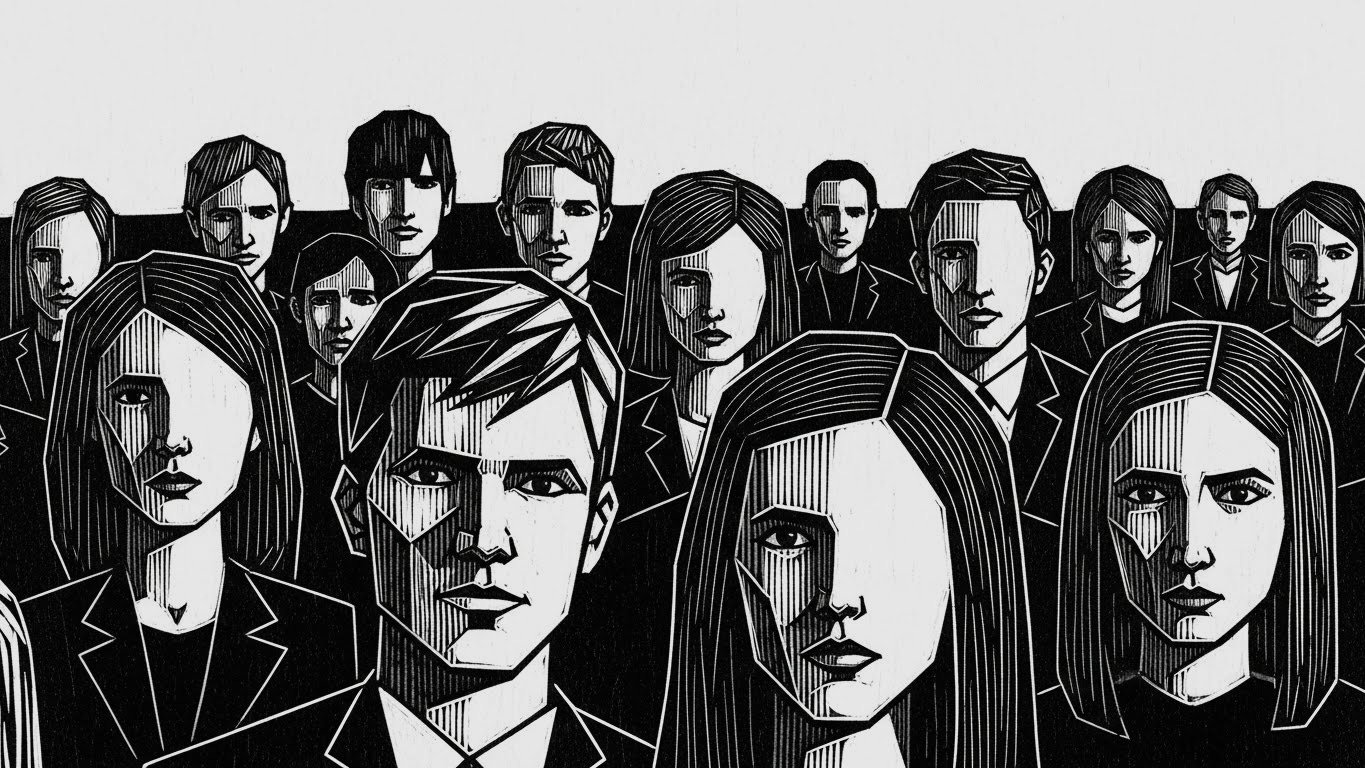
A Doctrine of Purity
In theory, all of this still fits under the discreet umbrella of “promoting public health.” In practice, the language that emerges from COP11 points to something else: purity.
Nicotine is gradually ceasing to be treated as a psychoactive substance consumed with varying levels of risk. It is assuming the status of a moral impurity. Something to be removed from social space.
Whether in combustible cigarettes, lower-risk electronic devices, or even nicotine replacement therapies used to quit smoking, it tends to carry the same mark: undesirable presence, presumed guilty by default.
Defenders of the Convention reject this interpretation.
To them, the conflation of risks is not a conceptual error; it’s historical prudence. They recall that, for decades, the tobacco industry used the rhetoric of “harm reduction” to delay regulation, sold “light cigarettes” as a safer alternative without solid evidence, and systematically targeted adolescents and vulnerable groups through marketing. In light of that history, they argue, treating any nicotine product with maximum suspicion isn’t distortion, it’s a vaccine against naïveté.
The argument is compelling. But it also has limits.
There’s a difference between distrusting a sector with a record of manipulation and treating every scientific or clinical nuance as a Trojan horse. The first is prudence. The second is dogma.
And when dogma becomes public policy, it produces a predictable effect: it turns the world into “yes/no” binaries and calls it “health” when, in practice, it operates more like moral discipline.
In Panama or Geneva, I heard the same sentence — with minimal variation — from doctors, researchers, and users of lower-risk products, all of them excluded from formal COP discussions: “We’re not here to defend the industry. That’s a ridiculous argument. We just want to talk about gradients of harm.”
On the other side, the plenary’s response was invariably the same: If there is risk, it is unacceptable. But when everything that is not harmless is treated as equally intolerable, the very idea of harm reduction becomes impossible.
The key question — compared to what? — almost never appears in the decisions.
A heated cigarette is not evaluated in comparison to a pack-a-day smoking habit. It is evaluated against an abstract ideal: the nicotine-free citizen. A vape, in the hand of a chronic smoker, is not weighed against a history of failed attempts with patches and gums, but against a hypothetical life without dependency.
Normative morality replaces epidemiology.
In the name of health, or more precisely, in the name of an ideal of health, we risk forgetting that, outside the walls of the COP, the world is made of imperfections: relapses, hybrid strategies, smaller survival bargains, attempts that fail before they succeed.
A policy that ignores this terrain becomes a policy for imaginary people.
Within the main auditorium, none of this appears to constitute open conflict. On the last day of COP11, the texts were passed in blocks. No amendment moved beyond the hallways. No dissenting voice rose with enough force to break the consensus.
“There was room for negotiation before… for months,” explained the Latin American delegate. “Once it gets to the plenary, what comes in is already set to pass. And anyone who tries to question it at that point risks being seen as obstructive.”
That’s how the machine maintains its efficiency: it moves the conflict backstage, before the plenary lights go on. By the time the public is let in, the script is already closed. The COP produces decisions, agendas, missions, and reports.
It works.
But its technical efficiency masks a political fragility: the more the regime shields itself from criticism and interference, the more it distances itself from listening, and without listening, public health ceases to be politics. It becomes a theater of virtue.
And then the text returns, inevitably, to the outside: to the bus stop, to the cigarette lit without permission, to the vape hidden in the palm of a hand, to the ashtray overflowing with cigarette butts at the building’s door. The regime can erase nuance on paper, but it can’t erase it from people’s pockets.
Life Goes On at the Margins of the Symbolic Ararat
And then the text returns, as it must, to the outside: to the bus stop, to the cigarette lit without asking permission, to the vape hidden in the palm of a hand, to the ashtray by the building entrance. The regime can erase nuance from the page. It can’t erase it from everyday life. What lives in pockets, lungs, and habits survives the page, and outlasts it.
When I left the building for the last time, the wind had picked up. It swept across the parking lot like someone wiping a chalkboard before the next shift.
I didn’t see the interpreters turning off the lights in their booths, or the barriers being removed, or the COP11 totem being dismantled. But I know how this ends: the screen goes dark. The consensus folds up. The final sentence becomes archive. And the city outside resumes its rhythm, as indifferent as Mont Blanc in the background.
Henri finishes another kitchen shift at the hotel. He’s on the sidewalk, cigarette between his fingers, waiting for the number 8. I know this because the world insists on repeating its simplest gestures. Smoke rises into the cold like a report that will never be filed.
We are not on the observer list for COP12.
We will not exist in the “needs assessment” missions.
In the next reporting cycle, our countries will send the Secretariat the usual: a clean package of percentages, prevalence rates, taxes, passed laws, and measures declared “implemented.” No room for doubt. No scent of the street.
The Secretariat will stack the responses.
Then will translate them. Turn lives into tables. Tables into spreadsheets. Spreadsheets into graphs. The graphs will reveal “gaps.” The gaps will become guidelines. Guidelines become workshops. Workshops, “best practices.” Best practices become expectations. Expectations become pressure. And the pressure, with a technical smile, is called voluntary. Beneficence. Benevolence.
The paper remains immaculate. The pocket, smudged. Somewhere between Henri’s cigarette ash and the sterile grid of an Excel spreadsheet, something slips quietly, irrevocably. Something will be lost.
Not a data point. A world. Relapses. Informal pacts of survival. Tentative, hybrid lives. The kind of decision no policy language can capture without amputating its truth.
The Convention is already preparing its next gathering, this time in Armenia.
In Yerevan, if all proceeds as announced, another glass fortress will rise to receive dark-suited delegates, light-suited experts, and a pre-approved civil society.
On some cold afternoon, decisions will scroll across giant LED screens and be adopted by consensus: the right language, gleaming with procedural virtue.
Outside, someone will light another cigarette.
Someone will try to replace it with a device hidden in the lining of a pocket.
Someone will stop trying.
Someone will simply stop.
It is between these two worlds, the calibrated lexicon of resolutions and the lungs and pockets that absorb the consequences, that the question returns, stubborn as a cigarette butt that won’t extinguish: Can a regime that governs without truly listening still be called a public health policy?
If the answer hesitates, the problem lies not only in what COP11 resolved. But in what has become acceptable to forget, and in what the regime must unsee in order to keep operating.
References:
All official documents, decisions, and supplementary materials from the Eleventh Session of the Conference of the Parties (COP11) to the WHO Framework Convention on Tobacco Control (FCTC), held in Geneva in November 2025, are publicly available on the WHO FCTC website.
COP11 Main page: https://fctc.who.int/convention/conference-of-the-parties/sessions/eleventh-session-of-the-conference-of-the-parties/
Decisions adopted at COP11: https://fctc.who.int/convention/conference-of-the-parties/sessions/eleventh-session-of-the-conference-of-the-parties/decisions
Main documents: https://fctc.who.int/convention/conference-of-the-parties/sessions/eleventh-session-of-the-conference-of-the-parties/main-documents
Supplementary information: https://fctc.who.int/convention/conference-of-the-parties/sessions/eleventh-session-of-the-conference-of-the-parties/supplementary-information
Key documents referred to in this article include:
FCTC/COP11(1) Adoption of the agenda
FCTC/COP11(2) Observer applications
FCTC/COP11(3) Election of Committee Officers
FCTC/COP11(5) Forward-looking tobacco control measures
FCTC/COP11(7) Assessed Contributions
FCTC/COP11(9) Smoke- and aerosol-free United Nations
FCTC/COP11(10) Article 18 – Environmental impacts
FCTC/COP11(11) Workplan and Budget 2026–2027
FCTC/COP11(14) Election of the President and Vice-Presidents
Complete list available at: https://fctc.who.int/convention/conference-of-the-parties/sessions/eleventh-session-of-the-conference-of-the-parties/decisions