The Invoice said Toys
Paraguay, Argentina, Brazil: Where Merchandise Loses Its Names
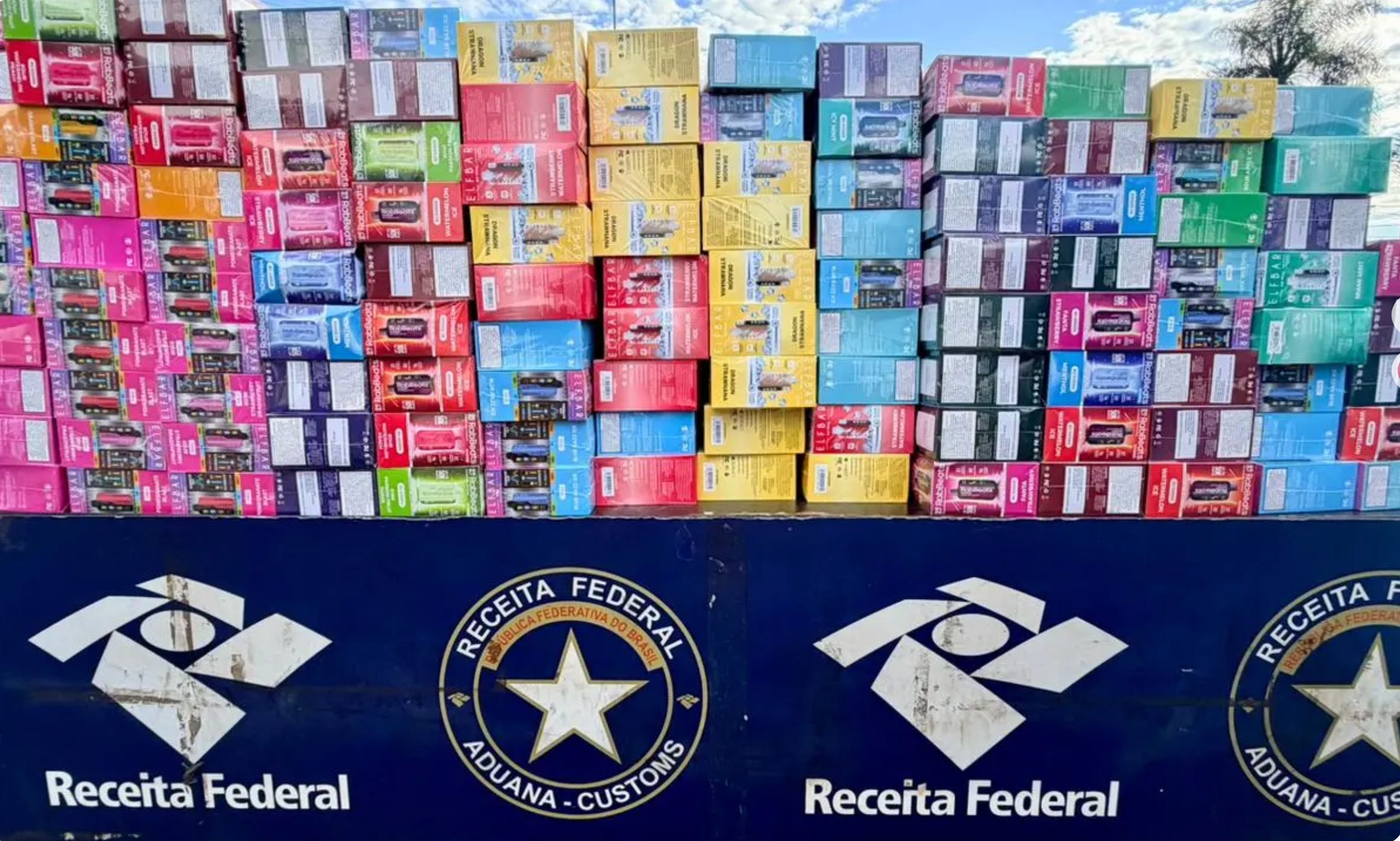
When customs inspectors opened two shipping containers at the Port of Santos, they did not find electronic cigarettes. At least, not at first glance. Not on paper.
According to the cargo manifests, the shipment contained something else entirely: toys, tools, computer accessories, auto parts, and musical instruments. Beneath that layer of bureaucratic disguise, however, lay roughly 450,000 e-cigarettes, stacked, packaged, and ready to move.
The shipment had not yet crossed the country, but it had already crossed a more consequential border: the border between prohibition and language. It had ceased to be called by its proper name.
That may be one key to understanding the new illicit nicotine trade in South America. Vapes do not disappear because no one can see them. Customs officers, federal police, users, and sellers see them. What disappears is something else: the chain of accountability: origin, importer, batch number, composition, customs classification, regulatory responsibility, and, above all, money.
The illicit vape trade did not have to invent its own map. It inherited one.
Along the borderlands where Brazil, Paraguay, and Argentina meet, certain goods seem to circulate before they officially exist.
Yet the new trade no longer fits the familiar geography of smuggling. It moves through rivers, bridges, warehouses, highways, and ports. It moves through the Port of Santos, the country’s largest logistics hub, which handled 186.4 million tons of cargo in 2025, nearly 1,000 kilometers from the Triple Frontier. And it moves across a border with no customs checkpoints at all: social media, where 144 million active users form a vast marketplace of storefronts, contacts, and deliveries.
Vapes inherited the road opened by conventional cigarettes. But they learned to travel it differently.
In the Triple Frontier, where Foz do Iguaçu, Ciudad del Este, and Puerto Iguazú face each other across the Paraná and Iguaçu rivers, that road was already there.
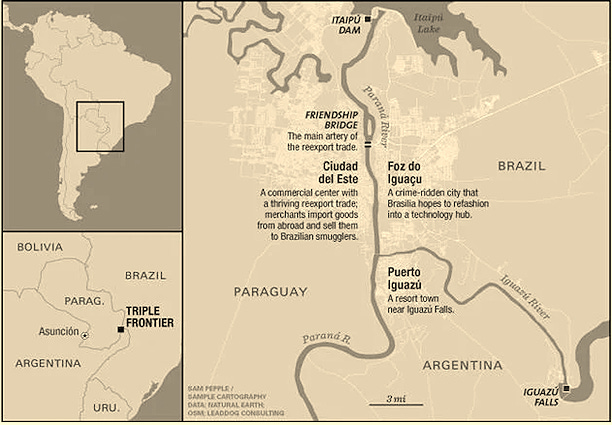
Before disposable pods and Instagram ads, conventional cigarettes knew the banks of the Paraná River, the warehouses of Ciudad del Este, the back roads, and the loose hours of inspection. They moved through the hands of scouts, loaders, drivers, middlemen, and bosses, inside an economy trained over decades to turn goods into movable categories.
This geography was never merely territorial. It reorganized the administrative, labor, and social life of the border: local tolerances, tax asymmetries, precarious workdays, selective enforcement, and small zones of ambiguity where the law loses its sharpness without disappearing altogether.
The problem, there, is not always a state’s absence. Often, it is a state that arrives late, arrives partially, or reaches only so far.
Along the Paraguay-Brazil-Argentina corridor, smuggling long ago ceased to be a simple clandestine flow of goods. It became a social, political, and economic infrastructure, inhabited by generations of officials, traders, and workers.
Within that machinery, Paraguay has for decades occupied the nerve center.
Throughout the 1990s, Paraguay ceased to function merely as a corridor for cigarettes produced by transnational companies and began developing its own capacity to produce and distribute them. What had once been a re-export system gradually evolved into an industrial enterprise, complete with factories, supply chains, production lines, surplus output, and regional distribution networks.
Cigarettes no longer simply passed through the borderlands. Increasingly, they were manufactured there, in an economy shaped by the border itself.
That precedent exposes an infrastructure of routes, warehouses, workers, codes of silence, inspection routines, local tolerances, and a quiet talent for turning regulatory gaps into margins.
Cigarettes cut the road first. Vapes followed the tracks.
At the border, this economy has names, hours, and functions. Work is split into roles: bosses, drivers, scouts, flaggers, loaders, and middlemen. Not an indistinct mass of “smugglers,” but a division of labor in which risk and profit rarely land on the same people.
Behind those roles are migration routes, survival tactics, informal jobs, and fragile attempts at social mobility. The border is not only a path for goods. It is a biography, a family strategy, and a way of staying upright where the official and the informal keep bleeding into each other.
Some spend the night watching police checkpoints on their phones. Others push boxes across the river in low boats, after dark. Some arrange payments and routes. Others carry the merchandise on their backs when the truck can go no farther. On certain roads, news of an inspection arrives before the patrol car does.
The local vocabulary is not folklore. It is operational language.
The patrão, for instance, works as an entrepreneur of the crossing: calculating losses, negotiating loads, distributing payments, sometimes from a plastic chair at the back of a hot warehouse.
Cigarreiro, by contrast, works almost like an administrative blur. The word compresses the whole chain into a single figure and erases the distance between those who control the flow and those who put their bodies in the way of seizure, cargo theft, and the diffuse violence of the border.
This market persists not only because the territory has gaps. It persists because it has learned to live inside the intervals of the law. Baggage allowances, traveler quotas, special circulation regimes, and tolerated forms of transport become partial channels of legality.
Through them, merchandise crosses without appearing entirely clandestine. Tourists, buyers, and smugglers shift positions within the same economy of circulation, sustained by that unstable strip between tolerance and infraction.
The Mercosur Common Nomenclature already has a technical name for the product: “electronic cigarettes and comparable personal electric vaporizing devices.” But in Brazil, a technical name does not open the market. Anvisa prohibits the importation, sale, distribution, storage, transportation, and advertising of these products. So when the merchandise enters illegally, it rarely travels under its proper name.
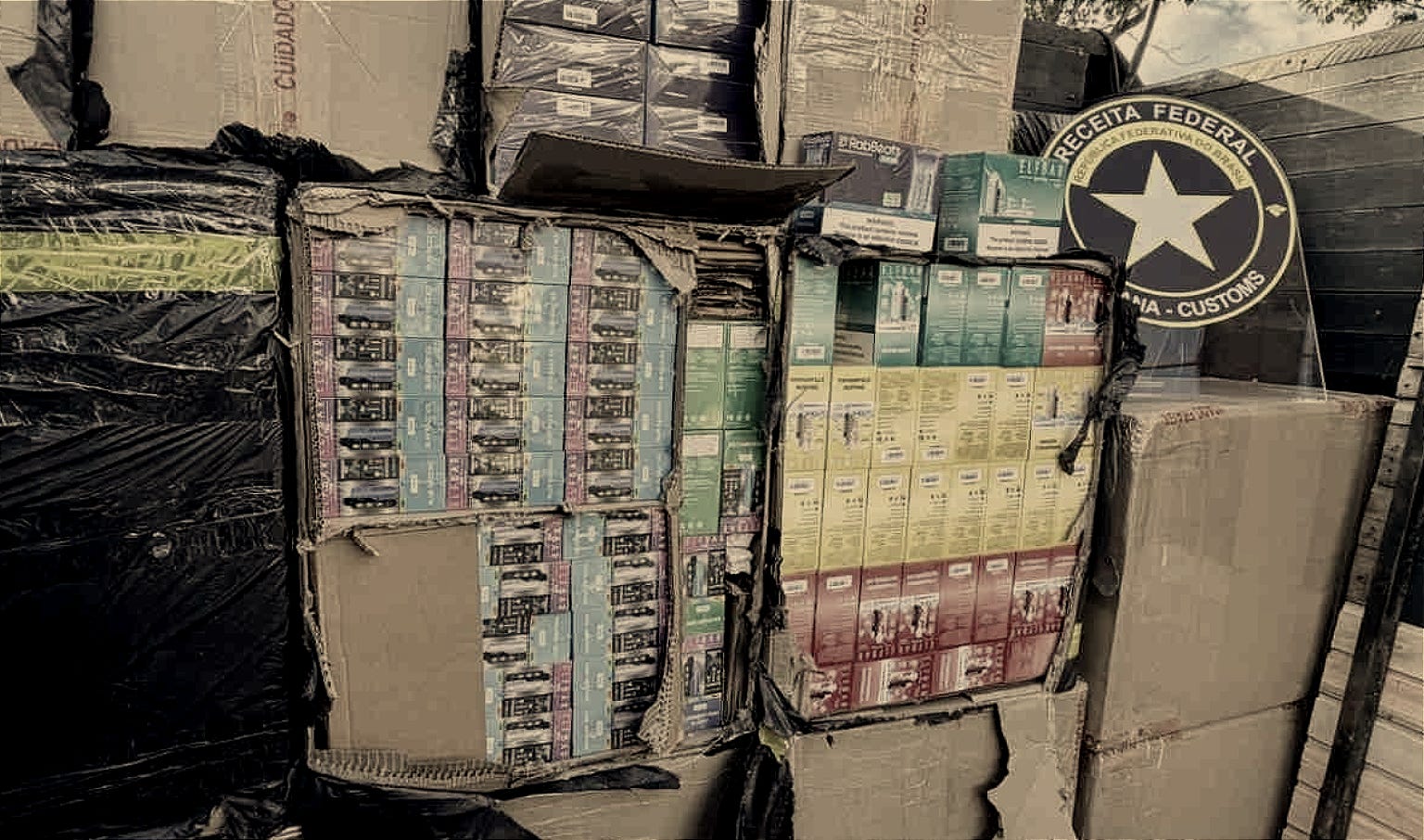
In the containers at Santos, vapes also appeared as beverages, perfumes, small electronics, and empty cell phone packaging. Document falsification was not a bureaucratic detail. It was part of the crossing.
The product disappeared first from the form. At this more sophisticated border, the law does not simply fail. It changes density.
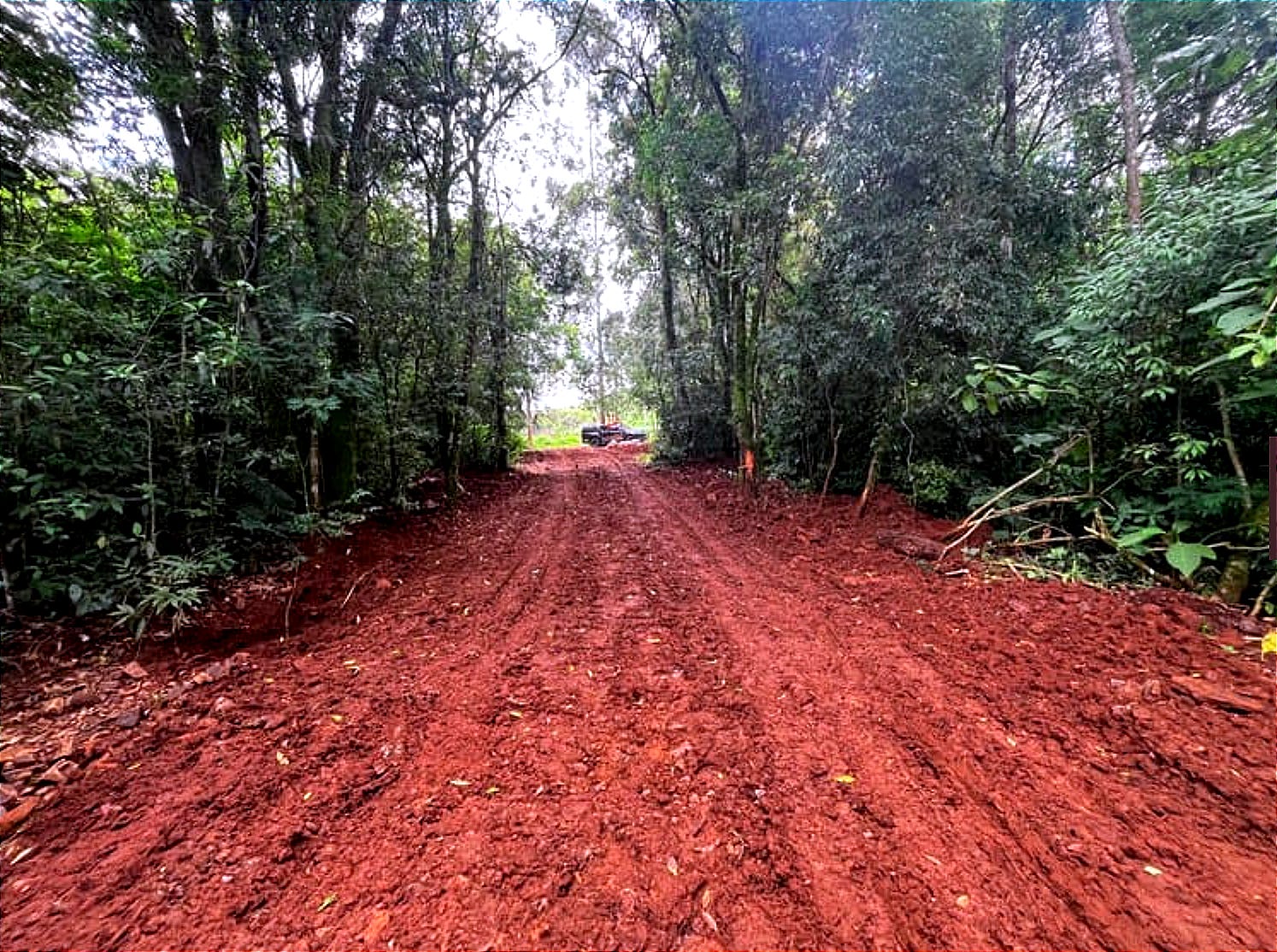
In Paraguay, the clearest trace often appears just before the crossing. If, in Santos, the merchandise vanished into paperwork, at the border it reappeared on the banks of the Paraná River.
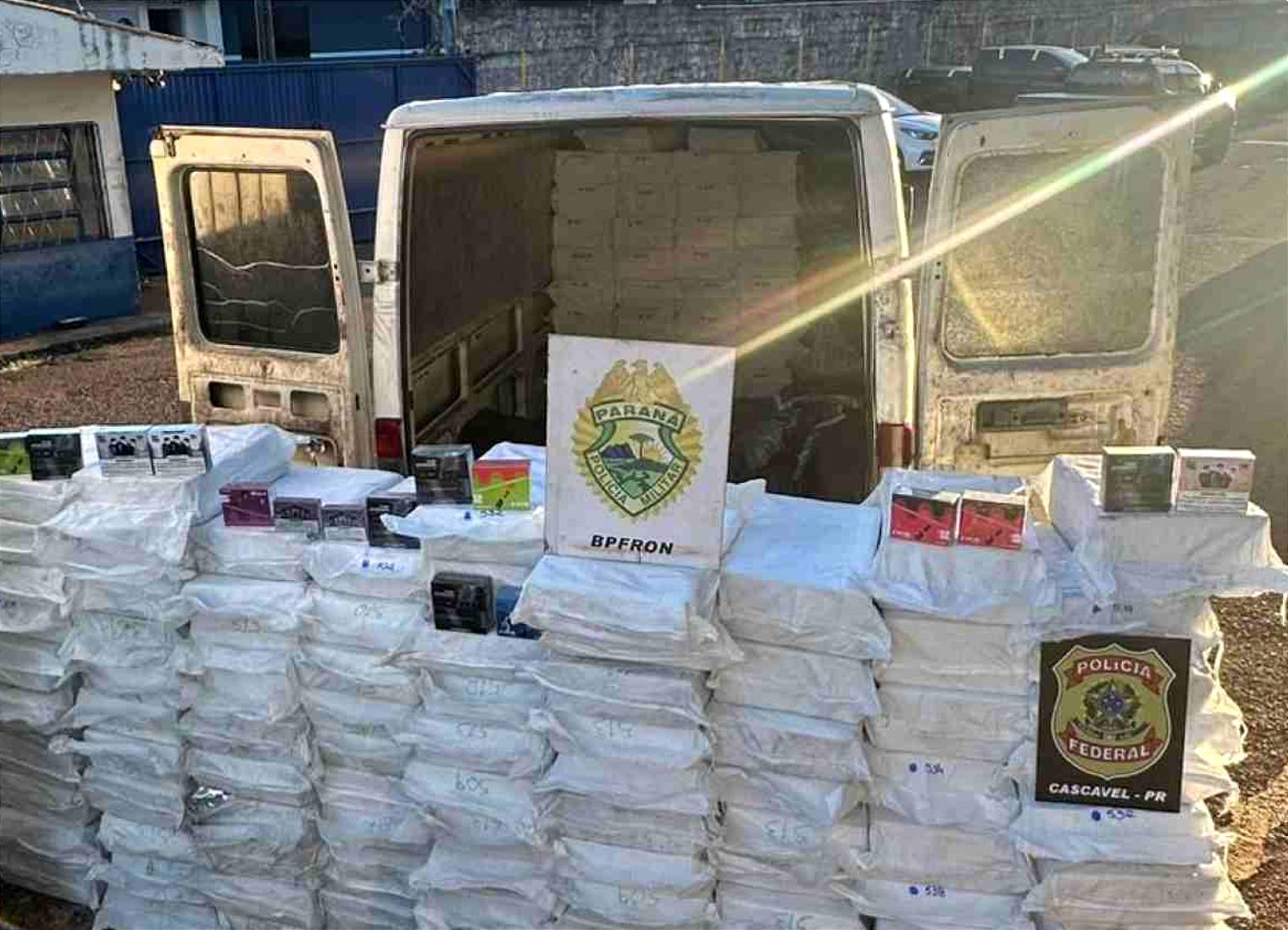
Two years ago, in Presidente Franco, Paraguayan authorities seized tens of thousands of counterfeit vaporizers in shipments valued at roughly $1 million. The boxes were near the river, packed, organized, and ready to move irregularly toward Brazil.
The scene suggests that the vape had already entered some point of the Paraguayan chain. The seizure did not reveal the full origin. It caught the antechamber of the crossing: the instant when stock becomes cargo, cargo becomes risk, and the riverbank stops being landscape and becomes passage.
On the other side, the Brazilian state of Paraná appears as an axis of internalization. According to Federal Highway Police statistics, the state accounted for the largest share of electronic cigarette seizures in 2024.
The data does not measure the real size of the market. It measures what enforcement managed to touch. Even so, it shows where the product most often meets the state’s road-bound arm.
Ciudad del Este remains an unavoidable character. Its history of re-export, e-commerce, warehouses, and cross-border circulation helps explain why vapes find a structure already waiting for them.
Still, in the case of electronic cigarettes, the strongest public evidence arrives in fragments: shipments in transit, seizures in Presidente Franco, on highways in Paraná, in tobacco shops, and in interstate operations. The city is part of the scenery. Naming its operators is harder.
In the Triple Frontier, the vape does not disappear all at once. It comes apart in stages. Before reaching the counter of a Brazilian shop, the seller’s Instagram feed, or the insulated backpack of a delivery driver, the device undergoes small metamorphoses. It leaves the global production chain as a nicotine product. It reaches a distributor as electronics. It is entered on a customs declaration as an accessory. It crosses the border as fragmented merchandise. It reappears in Foz do Iguaçu as retail. Finally, it fits in the palm of someone at a bus station.
It is not yet possible to reconstruct this chain with the clarity already achieved for conventional cigarettes. But that opacity is exactly what makes the corridor decisive. The Paraguay-Brazil-Argentina axis is not only a geographic passage. It is a translation machine.
There, what health regulations call an “Electronic Smoking Device” may reappear as a battery, a refill, an aroma diffuser, an electronic component, a parcel, or merchandise carried by a cross-border shopper. The material border matters: the Paraná River, the Friendship Bridge, the warehouses, the sheds, the adapted vehicles. But the more decisive border may lie in the paperwork, in the narrow space between the product’s technical name and the administrative names that let it move.
Recent seizures show that this logistics network is no longer limited to conventional cigarettes. Modified vans, false compartments, taxis, and trucks have begun carrying e-cigarettes hidden among cheap electronics, imported toys, and ordinary goods.
The difference lies in the object itself. Cigarettes left heavy traces: official factories, boxes, boats, trucks. Vapes leave scattered ones: small shipments, dispersed sellers, online platforms, and last-mile delivery circuits. They can be separated into parts, mixed with other cargo, reclassified on a form, and absorbed into the ordinary flow of commerce.
The chain may be less concentrated at the physical crossing than spread across the border, platform, and delivery. That hypothesis is strengthened by the authorities’ indication that Paraguay has become the main gateway for millions of vaping devices sold and consumed illegally in Brazil.
Vapes use the road opened by cigarettes, but they do not travel it the same way. They inherit part of the corridor and its logistical intelligence, but bring another materiality: smaller, lighter, more digital, harder to follow.
The product changes its name, scale, and handler before the state can recognize it as a whole. When it reaches the cities, the vape changes appearance again. At the border, it looked like cargo. In retail, it looks like convenience.
The same device that crossed a clandestine route, hidden among ordinary goods, reappears on a phone screen with promotional photos, same-day delivery, Pix payment, and a warranty promise. Smuggling stops looking like smuggling.
In clandestine shipments and storefronts, the vape rarely appears as a generic product. Recognizable global names surface: Elfbar, Lost Mary, Ignite, Vaporesso, and other brands popular among users. But the logo printed on the package does not answer the central question. It may indicate an original product imported illegally, a parallel import, a copy, a counterfeit package, or an unverified batch.
In a prohibited market, the brand becomes a signal of trust. For the state, however, it is rarely proof of origin. Without traceability, there is no way to know who manufactured it, who imported it, who stored it, what substances it contains, what nicotine concentration was delivered, or whether the batch corresponds to what the box promises.


The difference between a vape seized at the border and a vape sold in a Brazilian city is not necessarily chemical. It is logistical. At the border, it appears as volume: container, truck, box, riverbank, highway. In the city, it reappears as service: flavor, price, same-day delivery, a seller’s recommendation.
One seller who advertises pods on social media, and who spoke on condition of anonymity because he operates in a prohibited market, described instability as part of the business:
“If the police tighten up, I will change the profile name. In two hours, the customer already knows how to find me.”
It may be the same batch that goes to a regulated market, merely broken up. It may be another batch. It may be an original product, a parallel import, or a counterfeit. What is certain is that it is merchandise without a verifiable origin.
And that is precisely the problem: between the wholesale shipment and the unit sold by message, the chain atomizes. The object remains visible. Its history and provenance disappear.


Recent operations show that the chain does not end at the border. In 2024, Operation Vapor Digital identified suspects, tobacco, and pop-up shops, and points of sale on social media. Other actions, in states such as Amazon, Tocantins, Mato Grosso, São Paulo, Rio Grande do Sul, and Santa Catarina, pointed to distribution networks, front shops, cash, frozen assets, and documents used to disguise shipments.
In the city, the vape no longer behaves like illicit cargo. It enters the ordinary life of consumption: gallery shops, tobacco stores, Instagram and TikTok profiles, closed groups, app-based delivery, and instant payment.
Prohibition does not necessarily interrupt the phenomenon.
More often, it reorganizes it.
In Brazil, the internet is no longer just a display window; it has become the corridor itself. A qualitative study of Brazilian users suggests that while the ban makes physical purchases more difficult, online channels have become the main route of access. There, influencers do more than advertise. They test liquids, review brands, compare devices, turn the product into an aesthetic routine, convert it into merchandise, and then quietly DM a link.
What disappears in this passage from contraband to convenience is not only the trail of the product. It is the possibility of public control.
In a regulated market, the state can demand composition, labeling, traceability, age restrictions, manufacturing standards, toxicological limits, and accountability. In an illegal market, none of that is guaranteed. The user may receive a recognizable logo, a sealed box, or a promise of origin. But the promise is not a certificate. The package may say nicotine. It may say flavor. It may say brand. It cannot say, with public authority behind it, what the person is actually inhaling.
This is where the question leaves customs law and enters the realm of bioethics. A prohibition that fails to prevent access but succeeds in destroying oversight produces a peculiar moral inversion: it claims to protect the people while abandoning them to opacity. The consumer is not made safer by ignorance. Nor is autonomy meaningful when the available choice is between combustible cigarettes, an illegal device of uncertain provenance, or no credible information at all.
The paradigm of harm reduction begins precisely at this point. It does not require innocence from the product, nor purity from the user. It starts from a less theatrical premise: people do risky things; public policy should reduce the probability that those risks become injury, disease, or death. In this view, the central question is whether the state can tolerate a situation in which millions of people use nicotine products without quality control, without stable information, and without any reliable mechanism to distinguish a less harmful alternative from a counterfeit hazard.
For Brazil, Mexico offers a warning, not a mirror. Research has revealed an increase in the number of e-cigarette sales points despite a formal ban. Associated Press reports described a harsher landscape: in some regions, traditional drug cartels have begun competing over distribution, intimidating shopkeepers, and taking over sales points.
The Mexican case should not be mechanically translated to the Triple Frontier. But illuminates a risk: when a persistent market is pushed outside regulation, someone else begins to regulate it.
We know the device circulates. What remains far less visible is the machinery that moves it:
Who pays for the lots?
Who controls the capital?
Who assumes the risk, and who later cleans the money?
What role does the formal banking system actually play?
How do banks, money changers, and currency exchange operators arrange the flow of funds beneath the surface of legality?
And to what extent are investment funds, family offices, and otherwise respectable asset-management structures exposed, directly or indirectly, to companies tied to smuggling, whether by financing working capital or by purchasing real estate, warehouses, and equity stakes that may serve as laundering infrastructure?
In practice, the market survives in the gap between intermittent enforcement, widespread availability, and unstable information. The user hears that the product is prohibited, yet finds same-day delivery on popular platforms. He reads health warnings, then watches influencers sampling flavors. He knows there is no formal oversight, yet receives assurances of brand, warranty, and provenance. Doubt does not stop circulation. It becomes part of the cargo.
The vape does not inaugurate a new criminal frontier. The state does. And when it arrives, it enters a terrain already disciplined by cigarettes. The routes, warehouses, middlemen, and operational vocabulary of conventional smuggling predate the device. Brazilian Federal Police operations against e-cigarettes in the Triple Frontier mention structures for manufacturing, storage, loading, and distribution. The overlap is organized. The command structure is not.
Based on publicly available sources, it remains unclear whether the same financiers, factions, or operators who control conventional cigarette smuggling also control the vape market. The hypothesis is plausible. It remains unproven.
The board, however, has changed. The Triple Frontier no longer simply pits countries that prohibit goods against a country that allows goods to pass. Brazil maintains its health ban. Paraguay has rules governing sales, advertising, nicotine, and minimum age. In 2026, Argentina moved away from prohibition and created a registry for nicotine products.
The same object now lives under three legal regimes. In Brazil, the largest market, it is prohibited as merchandise. In Argentina, it may become a registrable product. In Paraguay, it circulates under specific regulation, in a commercial environment historically oriented toward re-export.
The border changes the product without changing its matter: legal here, prohibited there, reclassified a few kilometers ahead.
Argentina’s regulatory shift may bring part of the local market out of the shadows.
It may also create a new gray zone. A vape registered in Argentina remains prohibited the moment it crosses into Brazil. A cheaper product, unregistered or sold in an unauthorized flavor, may continue to enter from Paraguay. A legal market, when expensive, narrow, or weakly enforced, can coexist with a second one that is cheaper, faster, and more opaque.
Where it is prohibited, the vape circulates as contraband. Where it is regulated, registration and a responsible party are required. Where enforcement thins out, it reappears under other names: an electronic device, an accessory, a fragmented parcel absorbed into the daily flow of the border.
In this scenario, prohibition does not necessarily eliminate risk. More often, it displaces risk into the places where the state sees less, tests less, knows less, and protects less.
“I buy from someone I trust. But I don’t know who he buys from. I know there’s no control… that it can be harmful… but regular cigarettes are worse, right?”
The sentence contains the entire ethical impasse. Trust replaces verification. A seller stands in for a regulator. Rumor takes the place of a label. The user is left to perform the risk assessment alone and informally, in the very space where public institutions have refused or failed to organize it.
Those with money, passports, and access to regulated foreign markets can buy products with health controls, recognizable brands, and more reliable channels. Those without such access more often rely on cheap disposables, liquids of unclear origin, uncertain concentrations of substances, and sellers converted into their main source of health information.
The ban, then, does not distribute protection equally. It stratifies exposure.
Within this framework, Argentina becomes a kind of regulatory laboratory for the corridor. Not because it has solved the problem, but because it has chosen to recognize it. Brazil, by contrast, insists on a formal prohibition in the face of a market that is digital, visible, and already partly normalized. Paraguay remains the logistical hinge, sustained by a border historically trained to convert goods into movable categories.
Prohibition creates a margin.
Whoever can move the product across the border, erase it from the paperwork, and make it reappear at retail captures the risk premium. The money enters at the final point as ordinary consumption: a Pix transfer, a credit card charge, a cash purchase, a delivery arranged by message, or an invoice issued for another product. Then it travels back up the chain: retailer, distributor, wholesaler, logistic operator, border supplier, investor.
Investigations have already uncovered cash, frozen assets, companies under scrutiny in distant jurisdictions, and networks moving millions through the formal financial system.
But the hardest layer remains barely visible: who finances the large batches, who absorbs the loss when a shipment is seized, and how the money returns to the border, or leaves the country again.
It is tempting to reduce the market to factions. In conventional cigarette smuggling, documents and investigations have pointed to the involvement of organized and cross-border criminal networks. With vapes, that hypothesis still has to be proved case by case.
What can already be said is that the chain rewards opacity: clandestine importers, distributors, illegal retailers, logistic operators, and possible facilitators. Who captures the largest share remains one of the central questions.
In Santos, inspectors found 450,000 e-cigarettes in a shipment whose documents listed toys, tools, computer accessories, auto parts, and musical instruments. Perhaps this is the most precise image of the market today. The merchandise was there. What was missing was its name.
The law had not disappeared. It was present enough to prohibit, porous enough to let the shipment pass, and, afterward, too fragile to reconstruct its full history. Not only where it came from. Not only who paid for it. But what, exactly, would enter someone’s lungs.