

The Invisible Weight of a Manufactured Epidemic
Beneath the sleepless gaze of sociologist Amelia Ruby Howard, The Narcotica Podcast Unveils the Dissolved Truth, the Fractured Reality, and the Constructed Fear in the Summer of 2019
By the summer of 2019, as the United States staggered under the weight of its chronic crises —inequality deepening like an open wound, political polarization fracturing the social fabric, climate change advancing as an invisible threat— a new unease began to emerge, discreetly, from the technological mist: a mysterious pulmonary syndrome associated with the use of electronic cigarettes. What initially appeared to be a limited clinical anomaly quickly evolved into a perfect storm: incendiary headlines, rushed public policies, and a panic-driven narrative that, like many other manufactured moral crises, seemed more interested in fueling ancient fears than in clarifying the facts. As usual, the first victim of this frenzy was the truth.
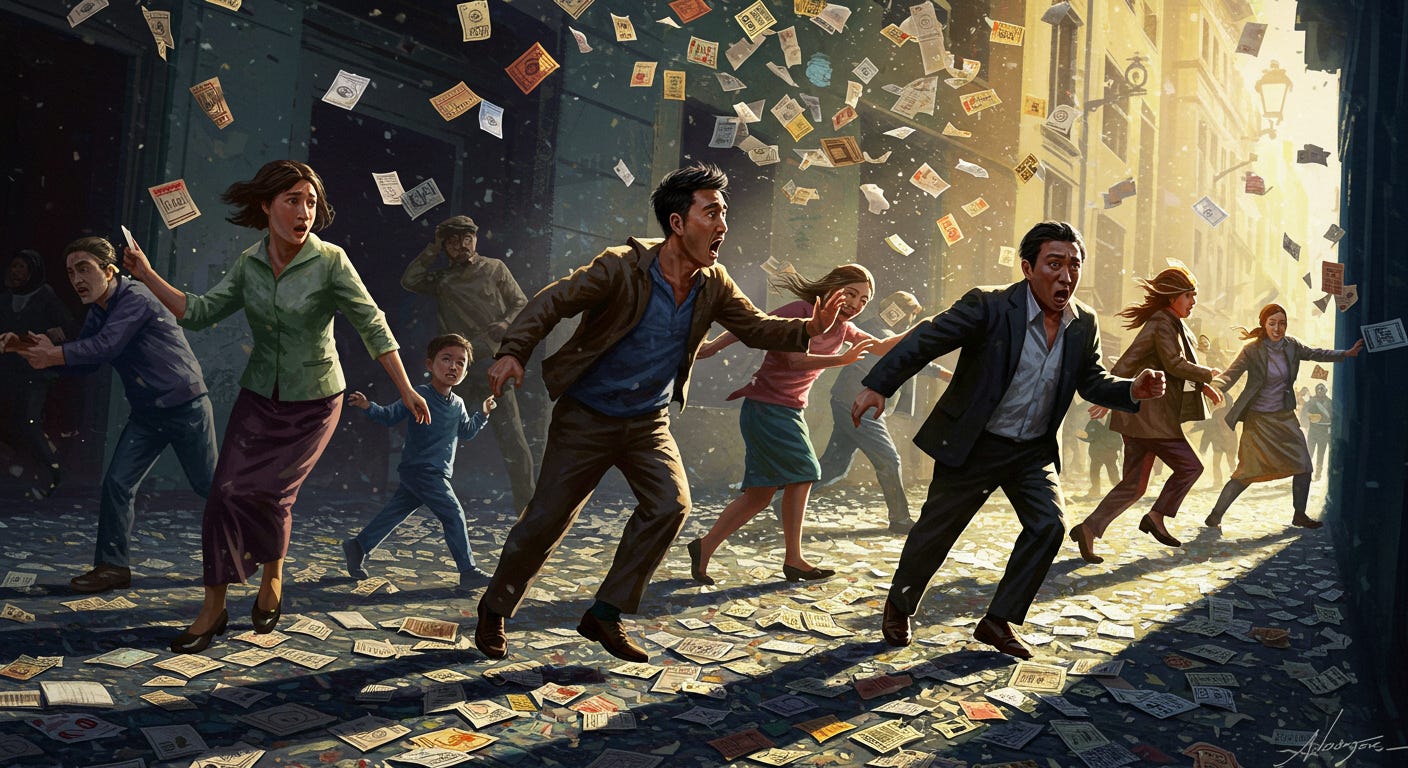
In 2019, the United States witnessed the outbreak of a public health crisis that quickly made international headlines: a series of severe pulmonary injuries associated with the use of vaporizers, prematurely dubbed EVALI (E-cigarette, or Vaping, Product Use-Associated Lung Injury).
The panic, fueled by imprecise official communications, alarmist media coverage, and institutional reports, soon generalized fear around all vaping devices. However, timid and slow investigations conducted by the CDC quietly revealed, several months later, that the root of the problem did not lie in regulated nicotine vaporizers, but rather in the presence of vitamin E acetate in illicit THC cartridges — a substance used as an adulterant.
Despite these findings, public risk perception was deeply affected: the number of people who began to consider electronic cigarettes more dangerous than conventional tobacco increased. The EVALI case thus became an emblem of the consequences of misinformation in health crises — an example of how the lack of nuance in public communication can generate lasting collateral damage, such as former smokers returning to traditional cigarettes.
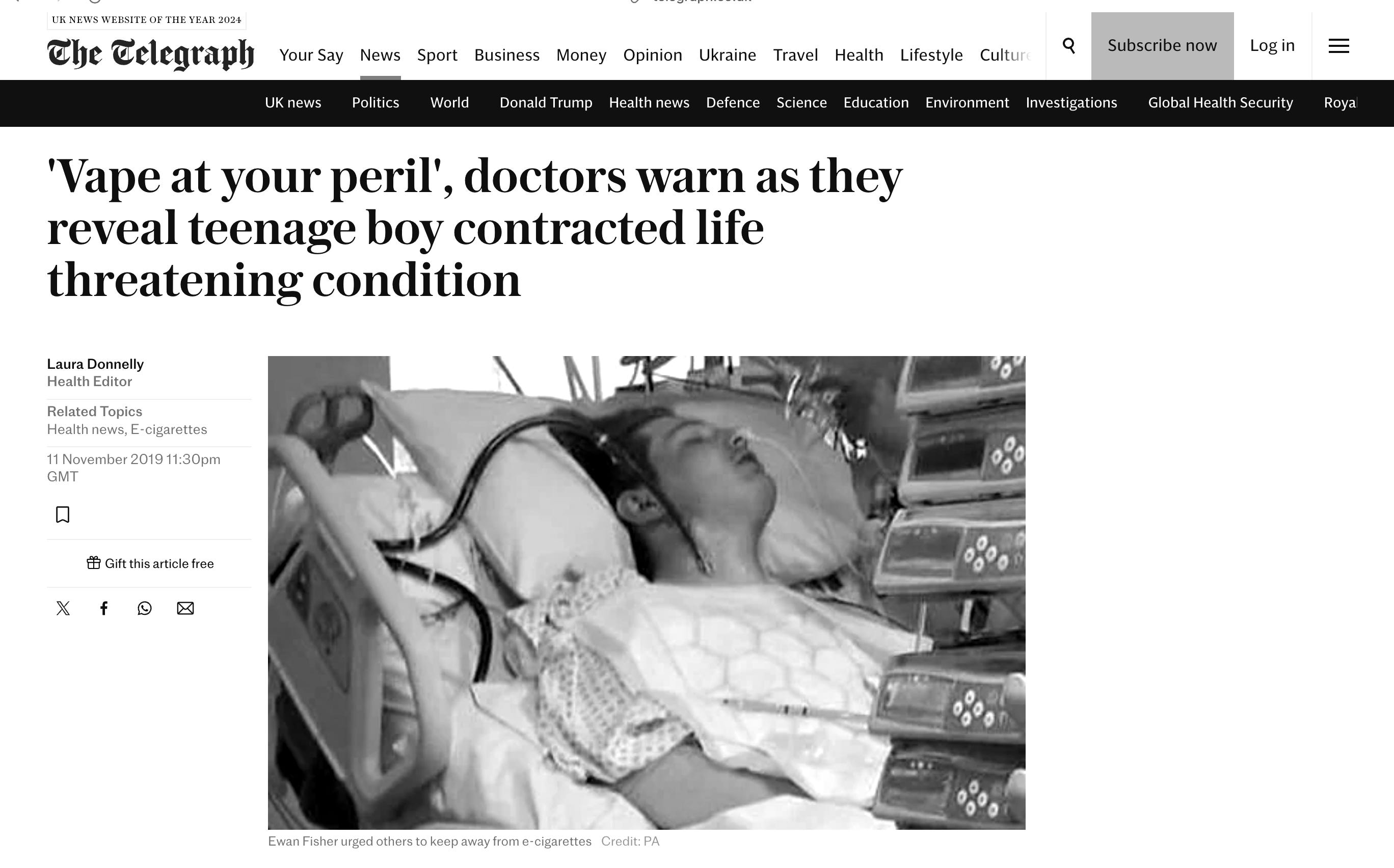
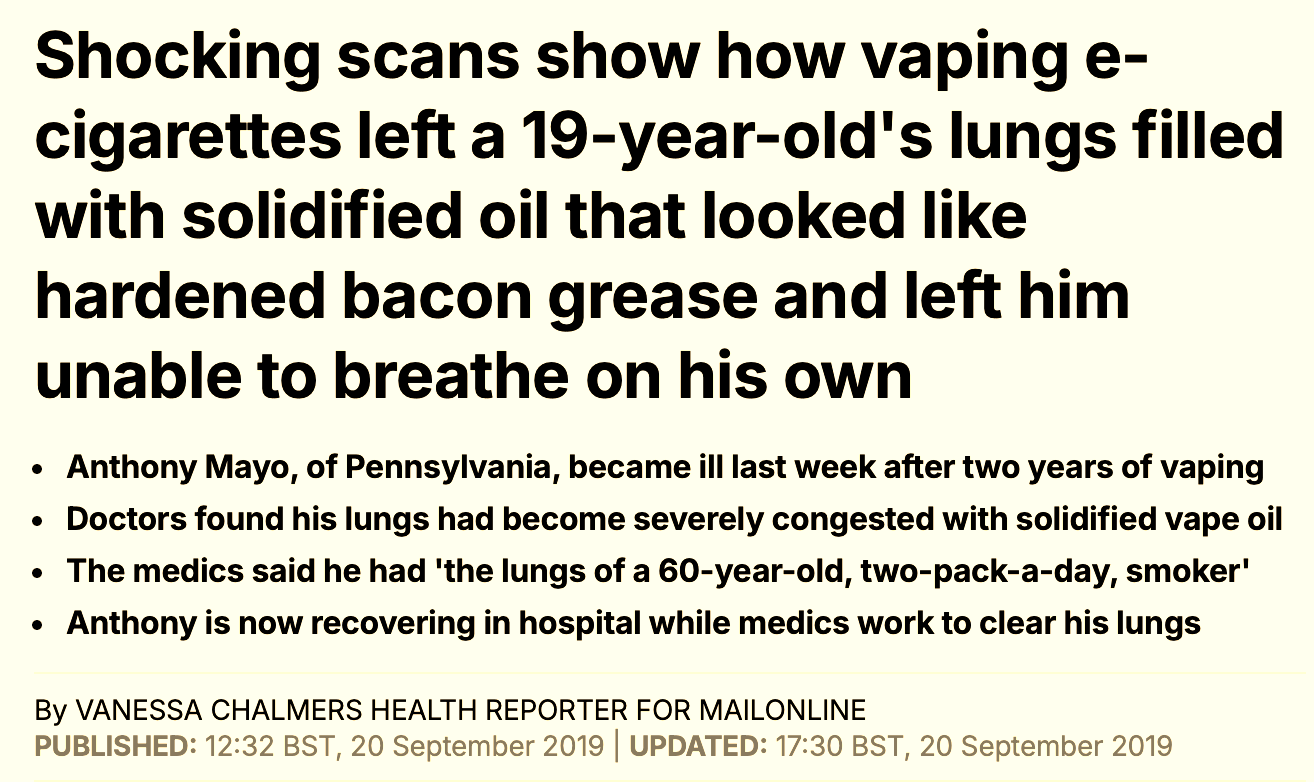
It is in this noise- and fear-laden context that the episode "Darth Vaper: The Panic Strikes Back" of the Narcotica podcast emerges.
In it, journalists Christopher Moraff, Troy Farah, and Zachary Siegel delve with surgical precision into this phenomenon, weaving together rigorous reporting and sharp social critique to dissect what they do not hesitate to call a moral panic in its most classic form.
Alongside them, as a special guest, sociologist Amelia Ruby Howard—an expert in the intricate relationships between science, technology, and society—guides the audience through the thick vapors of misinformation, illuminating, with rare lucidity. These shadowy zones form when fear supplants understanding.
Hysteria, Howard observes, did not arise in a vacuum. It is the product of an alliance as improbable as it is strategic between anti-tobacco and anti-drug movements, which found in vaporizers a common —and timely— enemy. In a country where tobacco control is intertwined with robust financial interests and where public health campaigns are, paradoxically, largely funded by the very industries they are supposed to regulate, the emergence of a potentially less harmful alternative —electronic cigarettes— was perceived as an existential threat, not just to a market, but to an entire moral and economic architecture built around the war on addiction.
The epicenter of the crisis lay in cases of severe pulmonary illnesses associated with the use of THC cartridges —many of them sourced from the illegal market— contaminated with vitamin E acetate, an additive used to mask the dilution of cannabis oils, giving them the illusion of purity and the viscosity needed for consumption in vaporizers.
The severity of the clinical cases, including deaths, is unquestionable. However, as the hosts point out, the absolute number of victims remains negligible when compared to the hundreds of thousands of annual deaths caused by traditional tobacco. The disproportion between the real risk and the collective hysteria thus became a symptom as alarming as the disease itself.
Behind the smoke screen raised by alarmist headlines, a reality with much more complex contours emerges: the reported cases involved users of THC cartridges acquired on the black market, lacking any form of sanitary control or regulation.
In contrast, commercial nicotine vaporizers —such as the popular Juul devices— showed, up to that point, no direct correlation with the reported illnesses. Nevertheless, it was they who bore the crushing weight of public and political blame, in an inversion of responsibilities that seemed less concerned with discerning the real causes than with finding convenient scapegoats.
Howard precisely outlines the predictable choreography of a moral panic: an emerging threat, inflated by sensationalist media coverage and followed by rushed political responses, almost always anchored in preliminary data and hasty interpretations.
The Anatomy of Panic and Moral Blindness
The anatomy of this panic includes the recurring figure of the "moral entrepreneurs": public figures who, driven by conviction or opportunism, instrumentalize the crisis to push their own agendas.
In the case of vaping, actors such as the anti-cannabis lobby saw in the pulmonary epidemic a golden opportunity to revive prohibitionist discourse and further inflame the already controversial debate over marijuana legalization.
The parallels with past crises are inevitable: from the Prohibition era to the war on drugs in the 1970s, through the heroin panic of the 1980s and the media-driven crack terror of the 1990s, the United States has cultivated a long tradition of responding to social dilemmas with moralism and repression, while relegating the structural causes that fuel them to oblivion.
History repeats itself as farce and tragedy: public policies based on immediate fear, incapable of addressing the deep fractures —inequality, exclusion, lack of access to healthcare— that make certain bodies more vulnerable than others.
The Narcotica episode does not stop at dismantling the prevailing panic; it goes further, exposing its most insidious side effects: the risk that hasty measures —such as the ban on flavored electronic cigarettes— might compromise effective harm reduction strategies, pushing users back to conventional cigarettes or toward even riskier products from the black market. For Howard, nicotine vaping, although not without risks, represents a significantly less harmful alternative to combustible tobacco —a silent revolution in public health, now threatened by the tide of misinformation and the resurgence of moralism.
The episode concludes with a call for lucidity and critical discernment: for consumers to seek quality information, resist alarmist narratives, and demand from legislators policies grounded in scientific evidence, not in outbursts of collective panic. Amid the dense fog of misinformation, science emerges not just as a beacon but as the last bastion against the old temptations of moralism and repression disguised as public concern.
Perhaps the greatest service Narcotica provides is precisely this: demystification. In an environment saturated with noise and fear, its approach — investigative, critical, empathetic — stands as an uncomfortable reminder that truth rarely resides at the extremes. And that, as always, is the ordinary human being who silently bears the weight of the wars waged in the name of morality.
Narcotica is more than a podcast; it is part of a critical trench erected amid the deafening noise of the war on drugs. Under the guidance of journalists Christopher Moraff, Troy Farah, Zachary Siegel, and Aaron Ferguson, the program dismantles hegemonic narratives. It peels back the invisible layers of drug policies in the United States, revealing, with investigative precision and rare social sensitivity, the collateral effects of that war —effects not measured in statistics, but imprinted, with silent brutality, on the bodies and lives pushed to the margins.
To fully understand what happened:
Katchmar, A., Shafer, P. & Siegel, M. (2022) Analysis of state portrayals of the risks of e-cigarette use and the cause of the EVALI outbreak. Harm Reduction J 19, 112 .
Clive Bates. (2021). The outbreak of lung injuries often known as "EVALI" was nothing to do with nicotine vaping. Qeios. doi:10.32388/ZGVHM7.3.
Dave, D. M., Dench, D. L., Kenkel, D. S., Mathios, A. D., & Wang, H. (2020). News that takes your breath away: Risk perceptions during an outbreak of vaping-related lung injuries. (Working Paper No. 26977). National Bureau of Economic Research.
Blount, B. C., Karwowski, M. P., Shields, P. G., Morel-Espinosa, M., Valentin-Blasini, L., Gardner, M., Braselton, M., Brosius, C. R., Caron, K. T., Chambers, D., Corstvet, J., Cowan, E., De Jesús, V. R., Espinosa, P., Fernandez, C., Holder, C., Kuklenyik, Z., Kusovschi, J. D., Newman, C., … Pirkle, J. L. (2020). Vitamin E acetate in bronchoalveolar-lavage fluid associated with EVALI. New England Journal of Medicine, 382 (8), 697–705
Newton, J. (2019, October 29). Vaping and lung disease in the US: PHE’s advice. GOV.UK.