

The Double Standards of Tobacco Control: The Case of Mexico
In March 2021, the Mexican Parliament became embroiled in a heated controversy after it was revealed that a draft bill proposing a nationwide vaping ban had been authored by Gianella Severini, an Argentine lawyer and advisor to the Campaign for Tobacco-Free Kids (CTFK). This non-governmental organization, funded by billionaire Michael Bloomberg, is widely recognized for its aggressive anti-vaping stance. The disclosure ignited a broader debate about the influence of foreign actors on domestic legislation. It raised critical questions about the ethical boundaries of private foundations shaping public health policies in Latin America.
This revelation, uncovered through the metadata embedded in the official document circulating within Parliament, triggered surprisingly little debate over the ethical and political legitimacy of foreign influence in Mexico’s domestic policy-making. Despite the clear implications of external actors shaping national legislation, the public and institutional response remained muted, raising uncomfortable questions about the permeability of democratic processes to transnational lobbying interests.

Ironically, Gianella Severini Chiappe, a 32-year-old Argentine lawyer, was one of the awardees of the 2024 World No Tobacco Day Awards for the Americas. This recognition, granted by the World Health Organization (WHO), honors individuals and organizations that have made outstanding contributions to tobacco control.
The recipients of this prestigious award reveal its inherently ideological character. Far from being a neutral recognition of public health efforts, the award underscores the persistent tension between celebrated international achievements in tobacco control and the glaring absence of inclusive dialogue with all relevant stakeholders. Notably absent is a nuanced debate on the regulation of alternative nicotine products aimed at reducing risks and harms compared to traditional combustible cigarettes. This gap exposes the limits of current global health narratives.
Furthermore, it highlights the controversies over sovereignty and ethics in formulating national policies to prevent smoking. Many awardees, such as Vital Strategies and Campaign for Tobacco-Free Kids, are transnational organizations funded by Bloomberg Philanthropies.
These organizations mainly focus on promoting the prohibition of cigarette alternatives in low—and middle-income countries.
A Bit of Context
It is essential to recognize that 1.1 billion people around the world continue to smoke — a figure that has stubbornly persisted for the past two decades. In stark contrast, only 120 million individuals have gained access to lower-risk alternatives that could mitigate the health consequences of tobacco consumption. This imbalance reflects a technological or regulatory gap and a profound failure in global public health strategies.
A significant proportion of those who smoke live in vulnerable and precarious conditions. Premature deaths attributable to smoking are not merely a health statistic; they reveal the contours of inequality and social injustice. Approximately 80% of the world’s smokers reside in low- and middle-income countries (LMICs), while in wealthier nations, tobacco use remains disproportionately concentrated among disadvantaged and marginalized groups. Here, smoking becomes a marker of socioeconomic exclusion, perpetuating cycles of vulnerability.
Within this context, the individuals and organizations honored by prestigious awards often champion policies that, guided by their convictions, actively obstruct access to less harmful alternatives for hundreds of millions of nicotine users who either cannot or choose not to quit. Such positions raise serious ethical and strategic questions, particularly when these policies disregard the complex realities of affected populations.
A striking example is the funding of ostensibly anti-tobacco campaigns in LMICs by entities such as Bloomberg Philanthropies. These initiatives have been increasingly criticized for promoting prohibitionist approaches that fail to consider local socioeconomic contexts and the potential of harm reduction strategies. By imposing rigid models detached from on-the-ground realities, such interventions risk perpetuating, rather than alleviating, smoking prevalence. One must ask: could this well-intentioned strategy paradoxically sustain the very problem it seeks to eradicate?
Civil society organizations traditionally play a vital role in democratic systems, acting as bridges between citizens, governments, and economic forces. They are essential in fostering development, advocating for rights, and amplifying voices often ignored by institutional power structures. Yet, their influence becomes problematic when exercised through a selective imposition of ideologies and agendas, backed by strategically curated resources, data, and studies designed to legitimize predetermined positions.
This practice not only distorts public and political perceptions of complex issues such as smoking but also erodes the principles of democratic pluralism. The unilateral and exclusionary enforcement of these agendas—often without seeking dialogue or consensus with key stakeholders, including consumers and segments of the local scientific community—deepens the asymmetry of power and narrows the scope of legitimate debate. However, this interference extends even further, reaching into the mechanisms of policy-making and shaping the global discourse on health in ways that merit urgent scrutiny.
Recalling the Events of March 2021
The Campaign for Tobacco-Free Kids (CTFK) is a transnational organization with a notable footprint across Latin America. Over the years, it has been systematically accused of exerting undue influence over governments and national civil society entities, steering public policies to align with its ideological interests. These allegations point to a pattern of interference that transcends mere advocacy, edging into the territory of policy imposition without genuine dialogue or respect for local autonomy.
Experts interpret this unilateral imposition of ideas and agendas as a power struggle that systematically silences alternative perspectives and erodes democratic plurality. Marginalized in this dynamic are consumers and segments of organized civil society and the state itself, whose capacity to design and implement sovereign health policies becomes compromised under the weight of external pressures.
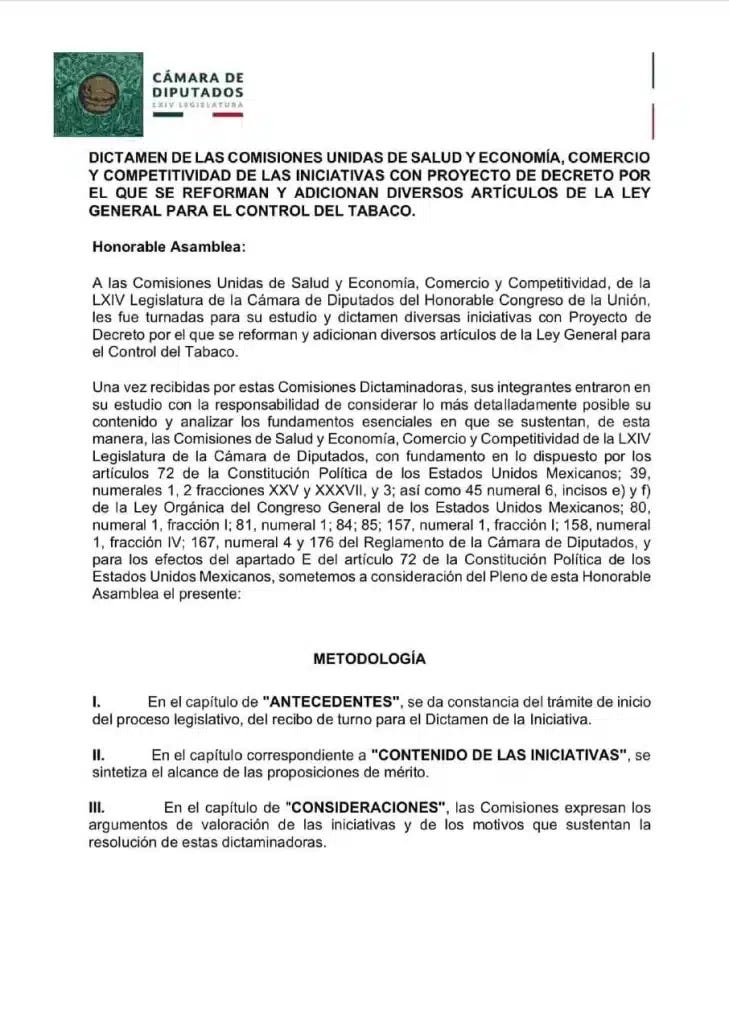
Mexico presents a paradigmatic case of this phenomenon. In April 2020, Deputy Ruth Salinas Reyes introduced a legislative initiative to ban the importation, distribution, and sale of vaping products, alongside other restrictive measures. This prohibitionist proposal swiftly attracted support from a politically diverse coalition of deputies, including Arturo Escobar and Vega (Ecologist Green Party of Mexico, PVEM), José Salvador Rosas Quintanilla (National Action Party, PAN), Ximena Puente de la Mora (Institutional Revolutionary Party, PRI), Juan Martín Espinoza (Citizens’ Movement Party), and, most prominently, Carmen Medel Palma of the ruling Morena party.
To justify her proposal — formally titled “Prohibition-Regulation of Novel and Emerging Nicotine and Tobacco Products” (a document reportedly removed from the official Gaceta de Diputados but still accessible via the WayBackMachine)— Carmen Medel Palma echoed, almost verbatim, the prohibitionist rhetoric of the Campaign for Tobacco-Free Kids. The proposal exclusively referenced initiatives favoring outright bans, developed without consultation or participation from Mexican society, thereby excluding critical local perspectives.
At the time, it was reported that Deputy Medel Palma unreservedly cited CTFK to legitimize her position. Furthermore, she incorporated the principles of “Where Bans are Best”, a document published by The Union, which advocates for prohibitionist measures in low- and middle-income countries — precisely where, according to the World Health Organization (WHO), 80% of the world’s combustible tobacco consumers are concentrated. Instead of promoting nuanced regulatory frameworks, these recommendations urge blanket bans on smoking alternatives, disregarding the complex socioeconomic realities of these regions and the potential of harm reduction strategies.
The Scandal of the Draft Authorship
The controversy ignited when Mexican advocate Antonio Toscano uncovered that the PDF document submitted by the deputies bore the name Gianella Severini as its author. This revelation emerged from the document’s metadata—hidden technical information embedded within digital files that, while invisible to the casual reader, contains crucial details such as authorship identifiers and document origin. The metadata indicated that the draft had been created in Microsoft Word format, leaving a clear digital fingerprint.
Gianella Severini, legal coordinator for the Campaign for Tobacco-Free Kids (CTFK) and affiliated with the Global Health Advocacy Incubator (GHAI) — both initiatives funded by Bloomberg Philanthropies — plays a prominent role in advising on tobacco control legislation and coordinating lawsuits against the tobacco industry. Beyond her work with CTFK, Severini leads the Global Tobacco Control Alliance in Latin America and co-founded CREA, a network of young Latin American advocates.
Although Toscano’s discovery, first reported by The Vaping Today, has not yielded repercussions in the institutional or legal arenas, it raised profound ethical and legal concerns regarding foreign interference in Mexico’s legislative processes. The incident brought to light uncomfortable questions about the permeability of national policy-making to external actors with vested interests.
Article 33 of the Mexican Constitution, which explicitly prohibits foreigners from intervening in the country’s political affairs, is at the heart of the controversy. Severini’s direct involvement in drafting a legislative proposal contravenes this constitutional safeguard, violating Mexican sovereignty and legal principles. The absence of official consequences only deepens the sense of institutional complacency, suggesting a troubling tolerance for external interference in matters of public governance.


Irregular Procedures Without Consequences
At the height of the scandal, Juan José Cirión Lee — lawyer and professor at the Faculty of Law of the National Autonomous University of Mexico (UNAM) — offered a critical assessment of the events. He acknowledged that it is not unusual for deputies to seek expert advice when drafting legislative proposals; however, the crux of the problem lay elsewhere. The controversy, he argued, stemmed from the involvement of a foreign advisor in drafting a bill that, by legislative norms, should have been the product of deliberation and consensus within the relevant parliamentary commission. The combination of this external interference with irregular legislative procedures ignited the scandal.
Cirión Lee, consulted recently for an update on the matter, was unequivocal when asked whether any institutional or legal measures had been taken to address the ethical and sovereignty concerns arising from the incident: “It had no consequence beyond the withdrawal of the predraft,” he affirmed.
Despite the gravity of having a foreign advisor co-author a legislative predraft on vaping — an act with clear implications for national sovereignty — Cirión Lee expressed little surprise at the lack of significant response from Parliament and other Mexican institutions. His diagnosis was blunt: “This government covers up all kinds of corrupt practices by its supporters.”
He further emphasized that the attempt to impose a legislative predraft without adhering to proper parliamentary procedures laid bare the extent of international NGO interference at the highest legislative and executive power echelons. In his view, Deputy Carmen Medel Palma acted not in isolation, but as a political operator for Dr. Hugo López-Gatell, the government’s Undersecretary of Health and a central figure in national tobacco control policy.
The Persistence of Foreign Influence and the Erosion of Sovereignty
In his analysis, Cirión Lee also pointed to other legislative parallels, notably the cases of food labeling regulations in Chile, Argentina, and Mexico. These initiatives, he noted, followed a strikingly similar pattern: promoted by Gianella Severini and subsequently presented as legislative proposals by figures like Deputy Carmen Medel Palma. Such coincidences, far from being isolated, suggest a broader strategy of transnational advocacy networks advancing their agendas through aligned political operators within national legislatures.
When questioned about the underlying causes of institutional inaction in the vaping predraft scandal — whether rooted in the weight of transnational interests or the absence of robust oversight mechanisms — Cirión Lee was forthright: “We know clearly that López Gatell imposed all the prohibitions promoted by the president.” He further remarked that López Gatell has been repeatedly scrutinized in the press for alleged conflicts of interest stemming from his ties to the Campaign for Tobacco-Free Kids and Bloomberg Philanthropies.
Addressing the path forward, Cirión Lee’s outlook was notably pessimistic. When asked about the necessary reforms to safeguard transparency and integrity in public policy-making, he lamented: “Unfortunately, with the corrupt government we currently have, which seeks to hide information from citizens at all times, we do not see a scenario that allows us to combat these national and international acts of corruption.” His conclusion reflects a critique of current governance and a broader disillusionment with the structural deficiencies of political accountability in Mexico.
Cirión Lee’s testimony, revisiting the almost forgotten case of Gianella Severini’s involvement in the Mexican vaping predraft, underscores the urgent need for a renewed commitment to transparency and ethical rigor in public policy formulation. While international organizations can contribute valuable expertise and resources, their interventions must operate within the boundaries of respect for national sovereignty and foster genuinely inclusive, representative dialogues. Influence should never become imposition; collaboration must not morph into coercion.
In any democratic society, the delicate equilibrium between global expertise and local realities is essential. Public policies, especially those with significant social impact, must be crafted through processes that genuinely reflect the diverse interests and needs of the population. Ignoring this balance — as in the case of Severini’s interventions — risks marginalizing vulnerable sectors and distorting the very objectives of public health initiatives.
Ultimately, one must ask: Are transparency, ethical governance, and respect for sovereignty not indispensable pillars for constructing public policies that serve the common good and fortify democratic life? Without these principles, even the most well-intentioned policies become suspect, and democracy is left vulnerable to the creeping influence of unaccountable powers.