

The Dissolving Cloud
Why Banning Vaping in Open Spaces Is an Antiscientific Mistake—and Harmful to Public Health
The Spanish government wants to ban vaping in open spaces as well. The Ministry of Health has proposed treating electronic cigarettes the same as conventional tobacco, prohibiting their use not only indoors but also on terraces, in plazas, and at outdoor cafés.

The vapor vanishes in seconds. The ban endures. In Spain, the Ministry of Health has decreed that electronic cigarettes will share the same fate as tobacco: they will be forbidden not only indoors, but also on terraces, in public squares, and at outdoor cafés. The announcement was delivered with solemnity, wrapped in the rhetoric of public health—a banner that sometimes waves less as a scientific compass than as an unyielding creed.
It is not merely about silencing the exhale in windowless rooms. The crusade now stretches into the open air, as if each puff of vapor carried the power to stain even the sky.
The paradox is that the scientific evidence itself sketches a far less apocalyptic landscape. In poorly ventilated rooms, it is true, vaping can double the level of airborne particles; yet even then, the figures remain light-years below those produced by a cigarette.
And it is not only a matter of quantity. Tobacco smoke is a dense brew of toxic, lingering compounds, while the vapor of an e-cigarette consists almost entirely of droplets of glycerol, propylene glycol, and nicotine that vanish quickly. A toxic cloud versus a fleeting trail: the difference between breathing combustion and breathing a vapor that dissolves.
Outdoors—where the wind acts as an invisible ally—those wisps disperse within seconds, lost in the murmur of the very air we breathe.
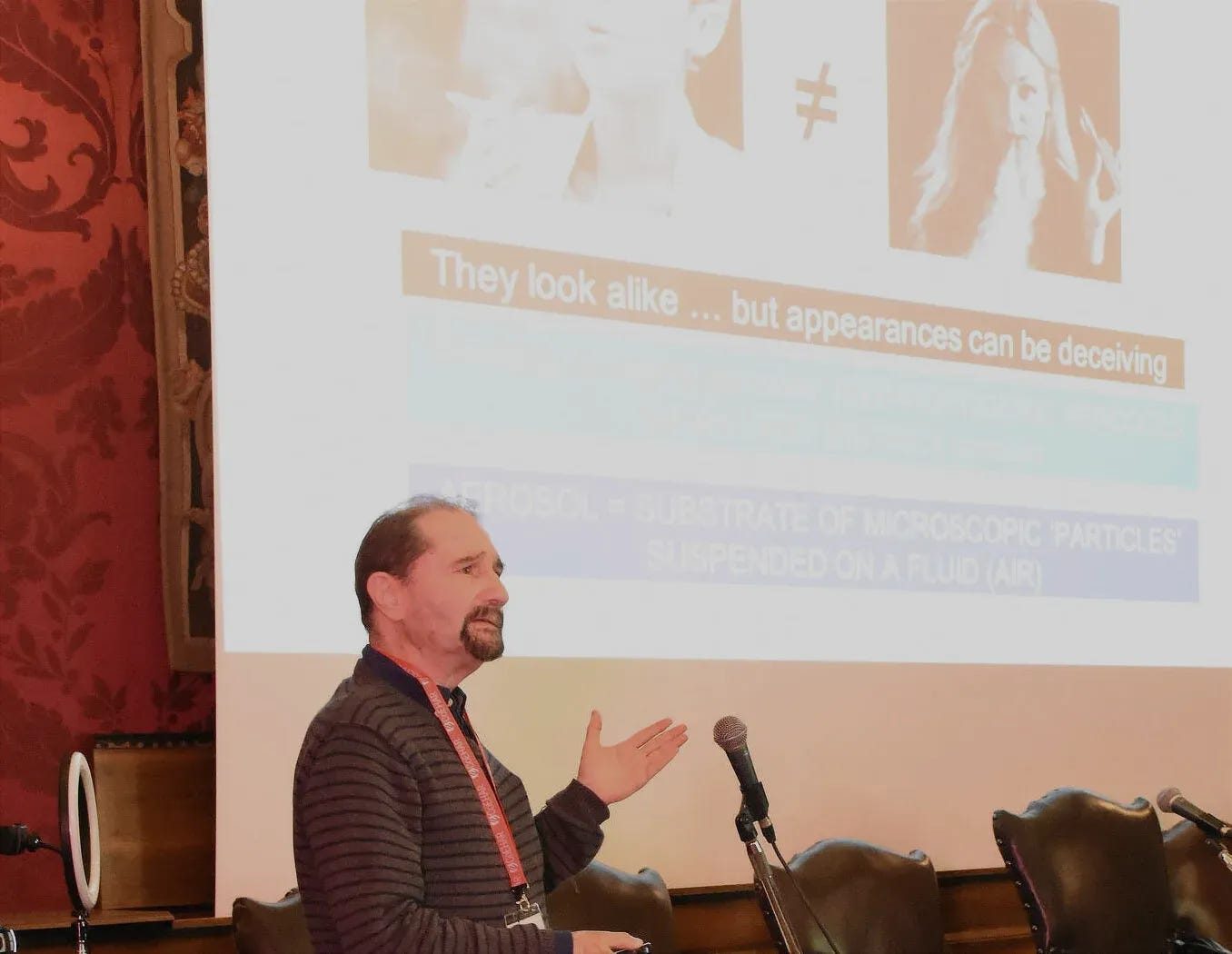
It is at this juncture that the voice of Dr. Roberto Sussman breaks in. Speaking from Mexico City, the physicist at the Institute of Nuclear Sciences at UNAM—long a specialist in atmospheric emissions—has become a meticulous critic of blanket bans. Sussman argues that the Ministry’s initiative rests on shaky foundations. What is paraded as prudence, he warns, is nothing more than the polished face of sanitary authoritarianism: the power to forbid, disguised as the virtue of protection.
Sussman’s warning is blunt: banning vaping outdoors is a crusade that protects no one. And science, far from contradicting him, lends support. Even restrictions on smoking in open spaces have been called into question, since natural air currents dilute contaminants to the point of near imperceptibility. If this is true of smoke—thick, lingering, saturated with toxins—it is all the more so of vapor, whose added trace is fainter still, vanishing until it becomes practically undetectable.
What political discourse frames as a defense of the common good is, in reality, a symbolic gesture of denormalization. Here Sussman’s lessons echo: this is not about protection, but about discipline. Vapor ceases to be merely a chemical aerosol that vanishes in seconds and becomes instead a social marker that the authorities seek to erase from the urban landscape.
The ban functions less as public health policy than as a ritual of stigmatization—a pedagogy of fear that teaches us to dread and reject the other, the one who smokes differently, all under the soothing mantle of precaution.
Scientific Evidence: What Do the Data Say?
When the air is observed without prejudice, and with proper instruments rather than intuition, the landscape ceases to be mythic and becomes measurable.
Where political rhetoric summons vague dangers, numbers draw sharp contours. And it is along those contours—measurable, verifiable, replicable—that, as Sussman reminds us, any serious public health policy ought to be grounded.
In an experiment led by Barend van Drooge and Joan Grimalt, five volunteers spent twelve hours vaping in a sealed, unventilated room, using their own devices without restraint. A kind of vapor marathon, designed to push the limits.
The result: particle concentration in the air doubled compared to a day without electronic cigarettes. Yet even under such extreme conditions, nicotine and formaldehyde levels remained well below regulatory thresholds. The most revealing finding, however, emerged in the non-vapers: no significant changes were detected in their breath and exhalations. In other words, passive exposure was virtually nonexistent.
Put another way: while vaping does introduce particles into the air of a closed room—a measurable reality—the toxic load of those particles is nowhere near the scenario painted by alarmism.
The study by Van Drooge and Grimalt had a double merit. First, they did what almost no one had paused to do: they analyzed not only how many particles hovered in the air, but what those particles were made of. Then they compared that chemical profile with the very same room on a day without vaping.
The finding was telling: yes, the mass of particles had doubled, but that difference came almost entirely from a slight rise in glycerol and nicotine. The rest of the compounds remained virtually untouched. In other words, the only trace of vaping was its own basic ingredients. And even that trace was minuscule: nicotine in the air reached barely 16 nanograms per cubic meter, compared to 0.1 when no one vaped—insignificant amounts when set against what we breathe every day in any city.
A classic study by Maciej Czogala and his colleagues measured airborne nicotine concentrations ranging from 0.82 to 6.23 micrograms per cubic meter during the use of e-cigarettes. Those figures were far below the levels recorded with conventional tobacco, which averaged 31.6. Yet there was a catch: the aerosol was not produced by real people but by machines, a method that tends to exaggerate results.
Under human conditions, the concentration would be lower, since users retain between 80 and 90 percent of the nicotine and other compounds when they inhale. Even with that overestimation, the finding remains clear: exhaled vapor does release nicotine into the environment, but on a minute scale compared to the dense cloud of tobacco smoke.
These data do not erase the risks. Health science demands caution under any circumstance, since anything inhaled or absorbed into the body can carry particular effects—especially for vulnerable groups such as chronic allergy sufferers, the immunocompromised, or those with certain cardiovascular diseases.
What the data do provide is perspective. They place the risks in their proper scale.
Fear of vapor finds no support in actual measurements—least of all when compared with the pollutants we inhale daily in our cities, or with the dense clouds of tobacco that for decades we tolerated as part of the landscape, with scarcely a moral shudder.
Along the same lines, O’Connell’s team gathered several volunteers in a conference room to measure the air during hours of vaping. The instruments barely registered any compounds: emissions were so scant that they could hardly be considered a problem. The contrast became even clearer when compared with international air-quality guidelines and existing occupational limits. What political rhetoric casts as a threat, the data reduce to an irrelevant shadow.
In the domestic sphere, a study by Fernández and his colleagues measured fine particles—known as PM2.5, smaller than 2.5 microns and capable of reaching the deepest recesses of the lungs—during vaping sessions inside a home.
The sensors registered spikes at the very moment of each puff, but once the cloud dissipated, median concentrations returned to levels equivalent to those of a smoke-free home: around 9 to 10 micrograms per cubic meter.
The contrast with combustible tobacco is striking. Not only does it generate more particles, but they are also far more toxic chemically and do not evaporate, leaving levels that remain constantly high—enough to saturate a home until it feels like an extension of the smokiest bar of the 1980s.
Physicist Roberto Sussman adds an important caveat: the raw number of PM2.5 particles is not enough to grasp the risk. What matters is their chemical and physical nature.
The particles from tobacco smoke and those from vaping may travel equally deep into the respiratory system, but they are not the same.
While those from tobacco are products of combustion—solid, persistent, and saturated with toxins—the particles from vaping are liquid droplets of propylene glycol and glycerol that evaporate quickly. What Fernández and his team measured, without quite underscoring it, was precisely this: the extra cloud from vaping vanishes, and the air reverts to the same state as a smoke-free space.
Two recent studies, conducted under realistic conditions and published in respected journals, point in the same direction. Their findings reinforce Roberto Sussman’s critical reading: passive exposure to vapor is minimal, so slight that it is hard to sustain as a public health threat.
The first, already mentioned, was carried out in Barcelona in 2019 by Van Drooge, Marco, and Grimalt. Five volunteers were gathered in a sealed room for twelve hours of intensive vaping. When the air was analyzed, the researchers found a telling result: apart from faint traces of glycerol and nicotine, the chemical composition of the particles was virtually identical to that of a day without vaping. The only noticeable change was a slight rise in formaldehyde in the gaseous phase, but still well below the World Health Organization’s safety thresholds and the levels routinely recorded in European schools and homes.
The second study, coordinated in 2023 by Amalia and her collaborators in Athens, Milan, Barcelona, and Edinburgh, compared households with and without vapers. The analysis revealed slight increases in certain biomarkers among non-using cohabitants: cotinine and 3′-OH-cotinine—classic indicators of nicotine exposure—along with traces of propylene glycol and glycerol, the usual ingredients of vaping liquids, and a marginal rise in cobalt in urine.
It was precisely this last finding that Sussman challenged. In the study’s own supplementary results, non-exposed participants showed the same cobalt levels as active vapers—making it biologically implausible to attribute the rise to passive exposure. Yet the article failed to report this with clarity.
Despite those caveats, the overall conclusion was unequivocal: all detected values remained within the range typical of non-smokers.
Taken together, the two studies sketch the same horizon: even indoors, with limited ventilation, passive exposure to e-cigarette aerosol proves minimal, almost negligible. Against the dense, lingering cloud of tobacco, the trace of vaping appears like a ghost—barely perceptible, impossible to uphold as a public health threat.
And outdoors, where natural dispersion works like an invisible solvent, the risk evaporates into nonexistence. It is precisely in this contrast between numbers and prohibitions that Roberto Sussman’s warnings gain force: to legislate against a phantom harm is not to protect, but to stage a ritual of fear.
Faced with a nuanced, complex, and difficult-to-explain landscape, politics prefers the chiaroscuro of simplification.
The precautionary principle, a valuable tool when uncertainty is real, is invoked here as if the only legitimate science were that of absolute risk. What is banned is not the harm but the gesture. What is erased is not the emission but the social sign: the wisp of vapor recast as a public enemy.
Where the data show increases barely measurable and exposures almost indistinguishable from background air, a rhetoric of hygienic purity takes root. It invokes an ideal of perfect health that, instead of protecting, normalizes the denormalization of the other: less prevention than discipline, less care than a pedagogy of fear.
That is the true blind spot. When prudence mutates into ornamental prohibitionism, public health edges toward sanitary despotism—more concerned with the aesthetics of purity than with the effectiveness of reality.
The Inheritance of Anti-Tobacco Campaigns Now Turned Against Nicotine
The real problem, as Roberto Sussman insists, does not lie in a misread statistic or a technical error. It resides elsewhere—more diffuse, yet more decisive: in the battle to control the public narrative.
The shift of smokers toward lower-risk products—e-cigarettes, heated tobacco, nicotine pouches—does not unfold solely in the intimate sphere of each user. It also depends on the social legitimacy that accompanies, or refuses to accompany, that move.
And when public policies erase the differences—between tobacco and nicotine, between smoke and vapor, between combustible and non-combustible products—they do not create clarity but confusion. They reinforce myths, erode trust in evidence, and ultimately undermine one of the few tangible advances in the history of tobacco control.
Instead of fostering education and underscoring the hierarchies of risk, an elementary principle of contemporary public health, these homogenizing bans do just the opposite. They do not illuminate; they darken. And in that twilight, misinformation flourishes, moving faster than vapor and spreading, without borders, on a global scale.
Out of that twilight emerges a distorted perception, visible in international surveys: a growing majority now believes that vaping is as harmful—or even more so—than combustible cigarettes. Science measures particles and compounds; public opinion, by contrast, breathes symbols.
But that perception has no scientific foundation. From the early studies of Fernández and O’Connell to the more recent work of Van Drooge and Amalia, the conclusion remains the same: passive exposure is minimal, often indistinguishable from the air of a smoke-free space. And yet public opinion feeds less on such data than on the symbolic gestures of regulation, which weigh more heavily in the collective imagination than any figure replicated in realistic studies.
The push now driving outdoor bans in Spain has a history. It sinks its roots into the classic tobacco-control campaigns, those crusades that, long before the arrival of e-cigarettes, demanded the expulsion of smokers from plazas and terraces.
At the time, the argument had an obvious foundation: the dense, acrid, persistent smoke of tobacco, a gray cloud born of combustion that invaded common spaces and imposed itself as a social intruder. To transfer that logic to vaping, however, protects neither health nor environment. It answers instead to an ideology, a moral leap, not a sanitary one.
What once served as a tool of social pressure has now morphed into moral vigilantism: a pedagogy of purity that ignores the data and edges toward the imposition of an idealized behavior.
Thus vapor—described by scientific evidence as a minor contaminant, comparable to countless others in everyday life—becomes, in the political narrative, a symbol to be eradicated: not a risk, but a heresy against purity.
And the citizen who vapes, rather than being recognized as a former smoker who left behind combustible cigarettes for a less harmful product, is downgraded to the condition of a hygienic pariah.
Policy, instead of informing, dictates; instead of differentiating, it flattens; instead of opening a nuanced debate, it imposes a binary script: every risk is absolute, every vapor guilty.
In that simplification, something deeper is at stake: the right to a public health guided by evidence versus a public health held hostage by fear.
The Foundations of Spain’s Ministry of Health: Evidence or Ideology?
Science should serve as a compass, not a shield. An instrument to guide us through complexity, not a pretext for building trenches of purity.
When public policies ignore solid, replicable evidence in the name of a supposed zeal for collective health, risk is not reduced—it multiplies. Misinformation spreads, stigma hardens, and the blow lands squarely on those who most need support to leave tobacco behind: the smokers searching for a way out.
Thus, as Dr. Roberto Sussman teaches, banning the use of e-cigarettes in open spaces protects no one. It merely perpetuates a ritual of fear.
On the contrary, it undermines the principles of harm reduction, discredits science, and reinforces a moralizing logic that, in the long run, serves ideology more than public health. What should be an informed debate about relative risks is degraded into a symbolic crusade, where purity ceases to be a health goal and becomes instead a political fetish.
The epidemiologist Geoffrey Rose put it clearly: the essence of public health is not to eliminate all risk, but to reshape norms and structures to reduce it proportionally.
The lessons of Roberto Sussman point in the same direction. A policy that ignores evidence not only loses technical rigor; it also erodes social trust and denies former smokers one of the few effective tools for reducing harm.
To apply the logic of criminalization to a far lower-risk product, especially in open spaces, where there is no evidence of harm to others, is to betray the principle Rose and Sussman share: reducing risk in proportion. It is to turn policy into a moral mirror, where the gesture outweighs the data and what is punished is not the real danger, but the cultural discomfort provoked by vapor.
In that turn, public health risks losing itself in the labyrinth of its own dogma: more attentive to the aesthetics of purity than to the effectiveness of reality. The question, then, is not whether vaping is harmless—the science treats that with caution—but whether we can accept policies that, in the name of precaution, renounce evidence and transform health into a ritual of faith.
If the scientific literature shows that passive exposure to vapor is minimal—almost indistinguishable from indoor air, and even more so outdoors—what justification, beyond dogma, sustains its prohibition?

To Understand It: Smoke vs. Vapor, According to Roberto Sussman
Dr. Roberto Sussman summarizes the differences between tobacco smoke and e-cigarette vapor. At first glance, they may look like similar clouds, but in reality they behave in very different ways.
Origin of the Emission
Smoke: It comes not only from the smoker’s exhalation but also from the lit tip of the cigarette (sidestream emission), which continuously releases toxins. Between 50% and 70% of ambient smoke originates from that burning ember, exposing others in a constant and prolonged way.
Vapor: There is no “lit tip.” All the ambient aerosol comes from the user’s exhalation. Exposure to others is intermittent, brief, and quickly dissipates.
Nature of the Particles
Smoke: Contains both solid and liquid ultrafine particles. Tobacco combustion releases between 10 and 100 times more particles than a puff of vapor. But the decisive factor is not only the quantity, but also the chemistry: carbonaceous compounds, volatile organics, and metals—many toxic, several carcinogenic.
Vapor: The particles are exclusively liquid. Ninety-nine percent of their mass consists of just four compounds: propylene glycol, glycerol, nicotine, and water. The user retains about 90% of what is inhaled, and almost 100% of the most toxic compounds (such as aldehydes). What is exhaled is a diluted aerosol and, in relative terms, far “cleaner.”
Physical Properties
Smoke: Its particles are semi-volatile or non-volatile, which means they remain suspended for long periods, cling to clothing, walls, and furniture, and disperse only slowly.
Vapor: The droplets are volatile; they evaporate and quickly pass into the gaseous phase. They dilute within seconds and vanish without leaving odor or trace.
Dispersion in the Air
Smoke: Expands in all directions, with constant sidestream emissions. Even when the smoker does not exhale, the burning tip continues to pollute the environment.
Vapor: Behaves like a small directional “jet.” It leaves the user’s mouth and dissipates quickly, both in time and distance. Only a person positioned directly in its path, and at close range, would receive any significant exposure—the equivalent of someone “vaping in your face,” something rare and socially unacceptable. At one or two meters, even in a closed space, the aerosol is already imperceptible.
In summary: while tobacco smoke is continuous, toxic, and persistent, e-cigarette vapor is intermittent, chemically simple, and volatile. A bonfire versus a fleeting cloud.
For Further Reading:
Fernández, E., Ballbè, M., Sureda, X., Fu, M., Saltó, E., & Martínez-Sánchez, J. M. (2015). Particulate matter from electronic cigarettes and conventional cigarettes: A systematic review and observational study. Current Environmental Health Reports, 2(4), 423–429. https://doi.org/10.1007/s40572-015-0072-x
A systematic review and household study confirmed that e-cigarettes emit toxic compounds, including fine particulate matter (PM2.5), though at concentrations far below those of conventional tobacco. In vapers’ homes, median PM2.5 levels (~9.9 μg/m³) were virtually the same as in smoke-free homes (~9.4–9.5 μg/m³), with brief spikes tied to inhalation. The particles are ultrafine and require more study, but current evidence suggests that passive exposure to vapor is dramatically lower than to tobacco smoke.O’Connell, G., Colard, S., Cahours, X., & Pritchard, J. D. (2015). An assessment of indoor air quality before, during and after unrestricted use of e-cigarettes in a small room. International Journal of Environmental Research and Public Health, 12(5), 4889–4907. https://doi.org/10.3390/ijerph120504889
Researchers observed that indoor vaping increases particles and volatile compounds, but at low levels far below safety thresholds—indicating reduced risk of passive exposure under typical conditions.van Drooge, B. L., Marco, E., Pérez, N., & Grimalt, J. O. (2019). Influence of electronic cigarette vaping on the composition of indoor organic pollutants, particles, and exhaled breath of bystanders. Environmental Science and Pollution Research, 26(6), 5989–6000. https://doi.org/10.1007/s11356-018-3975-x
In a controlled exposure experiment, van Drooge and Grimalt found that indoor vaping doubled concentrations of fine particles (<10, <5, and <1 μm), increased volatile organics, and altered the composition of pollutants in bystanders’ breath. Participants reported mild irritation (dry throat, nose, and eyes). The study concluded that while vaping affects indoor air quality, levels and effects remain modest compared with conventional tobacco.
Amalia, B., et al. (2023). Exposure to secondhand aerosol from electronic cigarettes at homes: A real-life study in four European countries. Environmental Research, 229, 115967. https://doi.org/10.1016/j.envres.2023.115967
Comparing homes with and without vapers, Amalia and colleagues detected low levels of nicotine in most households with users (~0.01 μg/m³), with PM2.5 and PM1.0 concentrations similar to control homes. Non-vaping cohabitants showed slight increases in biomarkers (cotinine, 3′-OH-cotinine, 1,2-propanediol, and cobalt), confirming some passive exposure. The study concluded that while non-smokers do absorb small amounts of compounds, indoor particle levels remain low and comparable to smoke-free homes.
Czogala, J., Goniewicz, M. L., Fidelus, B., Zielinska-Danch, W., Travers, M. J., & Sobczak, A. (2014). Secondhand exposure to vapors from electronic cigarettes. Nicotine & Tobacco Research, 16(6), 655–662. https://doi.org/10.1093/ntr/ntt203
In controlled chambers, scientists compared passive exposure to e-cigarette vapor and tobacco smoke. Nicotine concentrations ranged from 0.82 to 6.23 μg/m³ (≈3.32 μg/m³ on average)—about ten times lower than with cigarettes (≈31.6 μg/m³). Both generated fine particles (PM2.5), but e-cigarettes produced no carbon monoxide or other combustion-specific toxins. The study concluded that while indoor vaping exposes bystanders to nicotine, it does so at much lower levels than tobacco and without combustion pollutants—highlighting the need to study effects in vulnerable groups.
Sussman, R. A., Sipala, F. M., Ronsisvalle, S., & Soulet, S. (2024). Analytical methods and experimental quality in studies targeting carbonyls in electronic cigarette aerosols. Frontiers in Chemistry, 12, 1433626. https://doi.org/10.3389/fchem.2024.1433626
Sussman and colleagues reviewed analytical methods used to measure carbonyl compounds in e-cigarette aerosols—formaldehyde, acetaldehyde, acrolein, crotonaldehyde—produced by thermal degradation. Most studies relied on DNPH derivatization and HPLC-UV following CORESTA protocols (CRM 74 and 96), though this method suffers interference from aromatic compounds. LC–MS chromatography offers greater sensitivity and selectivity, allowing detection of a wider range of carbonyls. The review underscores the importance of standardized protocols and methodological rigor for producing comparable, reproducible results.
Sussman, R. A. (2023). Review of “Carcinogenic and non-carcinogenic health risk assessment of organic compounds and heavy metals in electronic cigarettes. Qeios. https://doi.org/10.32388/OUZMMZ
In a critical review, Sussman challenged Zhao et al.’s risk assessment of organic compounds and metals in e-cigarettes. While the calculation methods were standard, the core issue lay in data quality: of 28 studies used, several dealt with outdated first- and second-generation devices or contained methodological flaws that overestimated exposure doses. Zhao et al. also selectively cited studies reporting high toxin levels while ignoring more comprehensive reviews (such as OHID, Soulet, and Sussman). The critique stressed that risk evaluations based on flawed data produce inflated conclusions unrepresentative of current devices.