

Part II — The Moral Geography of Smoke
Between risk and relief, global health turns into a moral battlefield — where science, politics, and the human body collide.

Nicotine is a psychoactive stimulant. It is not synonymous with “tobacco,” nor with “cigarettes.” And certainly not with “cancer.”
What kills, above all, is combustion — inhaling for decades a cocktail of particles, carbon monoxide, nitrosamines, and hydrocarbons that, repeated thousands of times, tears at lungs, vessels, and DNA.
It is the fire and its residue, not the molecule itself, that is the true killer.
Since 2015 — reaffirmed by an independent review commissioned by the British government in 2022 — the technical consensus has been clear: vaporizing nicotine is substantially less harmful than continuing to smoke. It is not harmless, but its risks are orders of magnitude lower than those of combustible smoke.
The most realistic argument, then, is not “total liberation,” but risk hierarchy — and respect for real-life quitting trajectories. If a chronic smoker, after multiple failed attempts, manages to stop burning tobacco by switching to vaping — and gradually lowers the nicotine dose — there is a net health gain.
To deny that path in the name of ideological purity is to push people back toward the most lethal product.
The literature on smoking cessation offers no simple answers — nor does it solve the youth dilemma. Both things can be true at once: protecting young people and caring for dependent adults. A mature public policy must hold both truths, even when they collide.
The WHO, for its part, speaks to 194 countries — navigating disparate regulatory systems, fragile laboratories, and decades of pressure and direct influence, embedded in its own genealogical branches, from multimillion-dollar private entities.
It is no surprise, then, that it adopts a precautionary tone: “close loopholes,” “regulate new products,” “raise taxes,” “ban advertising,” “expand cessation services.” This is the core of the MPOWER framework lexico, translated into the urgency of the twenty-first century.
That tension — between harm reduction for those who already smoke and prevention for those who never have — is both ethical and political. Care is based on four principles: informed autonomy, beneficence, non-maleficence, and justice.
Between a teenager who has never smoked and a 54-year-old man with COPD, the answers should not be the same. Banning marketing that seduces the young makes sense; making access to simple, clearly labeled, and supervised devices easier does too.
Bioethics is not a field of purity. It is a field of hard choices. And tobacco — in all its forms — remains the mirror of those choices.

Who Smokes, Why, and Where
Tobacco consumption, when compared with the use of lower-risk nicotine products, is really a map of inequality. Nearly 80 percent of the world’s 1.3 billion tobacco users live in low- and middle-income countries — where roughly one in seven cigarettes is illicit.
The molecule is the same; the context is not.
Tobacco is global, but unequal; economic, but cultural; individual, yet structural.
As early as 2008, the WHO Commission on Social Determinants of Health had already stated the essentials: health equity depends on three fronts — improving daily living conditions, confronting the unequal distribution of power, money, and resources, and measuring in order to correct.
Smoking is not merely a personal choice; it is the outcome of environments that structure choices. Look closely at the map of tobacco and the determinants rise from the page.
Precarious labor and chronic stress increase the likelihood of nicotine use as a form of self-care. Low levels of education limit access to reliable information and weaken resistance to marketing.
Housing and urban design shape passive exposure: those who live in crowded spaces breathe other people’s smoke more often.
Regulation and taxation shape both price and access. Excise taxes should reflect relative harm: products that burn tobacco deserve the highest rates, while less harmful alternatives should remain more affordable. When taxes are low or poorly structured, cigarettes get cheaper — and when mass campaigns lack nuance and clinical support, they fail.
According to the WHO, there is robust evidence that high, targeted taxes are the most effective tool for reducing consumption and generating revenue. The World Bank agrees: the policy is progressive in health, even if regressive in income. Once you account for the health gains and the drop in catastrophic household costs, taxation turns from punishment into protection.
But the model, however solid it appears, dissolves in the materiality of real life.
The rising price of legal cigarettes — often driven by the same control policies — pushes part of the population toward the illicit market. Among low-income groups, price weighs as heavily as chemical dependence: the choice becomes economic before it becomes moral.
Taxation, therefore, is no silver bullet — at best, it’s an agreement. It would be enough to track how those revenues are actually used. In countries plagued by endemic smuggling, porous borders, and weak institutions, raising taxes without tackling illegality simply shifts consumption into unregulated markets. The solution demands more than collection: it requires strengthening customs, tracking production, regulating substitutes, and standardizing devices.
In the legal arena, battles are also symbolic.
In 2016, Uruguay defeated Philip Morris in international arbitration — a landmark case that affirmed a nation’s sovereign right to demand plain packaging and larger health warnings. The victory didn’t end litigation, but it changed the board: small countries learned they could win.
The industry, long reliant on power asymmetry, learned the cost of resistance.
Yet the Uruguayan victory revealed something deeper: why are only some industries treated as epidemics?
The tobacco industry has long played the role of the perfect villain — demonized, rightly, for lying, manipulating science, and buying silence in the past; accused, also rightly, of carrying millions of deaths on its back.
But over time, it has become an uncomfortable mirror: how do we distribute morality among the industries that kill?
Tobacco is watched with moral suspicion, while alcohol and ultra-processed foods move through the world under the respectability of culture. Nicotine has become the symbol of vice; sugar, fat, and ethanol — the symbols of pleasure.
A glass of whiskey, a soda, a bag of chips: small daily deaths, sold with music and light.
The moral paradigm tangles in its own absolutism.
By fighting the historical enemy with the same good-versus-evil rhetoric, public policy risks becoming hostage to its own language.
When the tobacco industry tries to migrate toward lower-risk products — not out of altruism, but survival — it is treated as if every transition were a trap. And perhaps some of it is. But refusing to discuss harm reduction on the basis of evidence and regulation only keeps the tobacco economy anchored to its most lethal form.
Demonizing the interlocutor may feel morally satisfying, but it is epidemiologically inefficient. It is possible — and necessary — to demand restitution, taxation, and transparency from corporations without denying the potential of less harmful technologies.
If nicotine is going to exist — and it will — the question is no longer who profits, but how people die.
And yet, the same scrutiny is rarely applied to the conglomerates that produce ultra-processed food or alcohol — industries responsible for comparable volumes of chronic disease and preventable death.
The difference lies not only in the numbers but in history, visibility, and the kind of guilt. The cigarette was turned into an icon of personal sin; sugar and alcohol into emblems of pleasure and social grace.
Of course, there are nuances. Not all tobacco companies act the same, nor do all nicotine products behave alike. The same could be said of the food and alcohol industries, operating in gray zones between freedom, dependence, and aggressive marketing.
The moral contrast endures: the cigarette became a public sin, while the shot of vodka, the candy, and the cookie — pure sugar disguised as comfort — remained private indulgences.
Behind that asymmetry lie power, lobbying, and aesthetics — and the old argument about who gets to define what is addiction and what is culture.
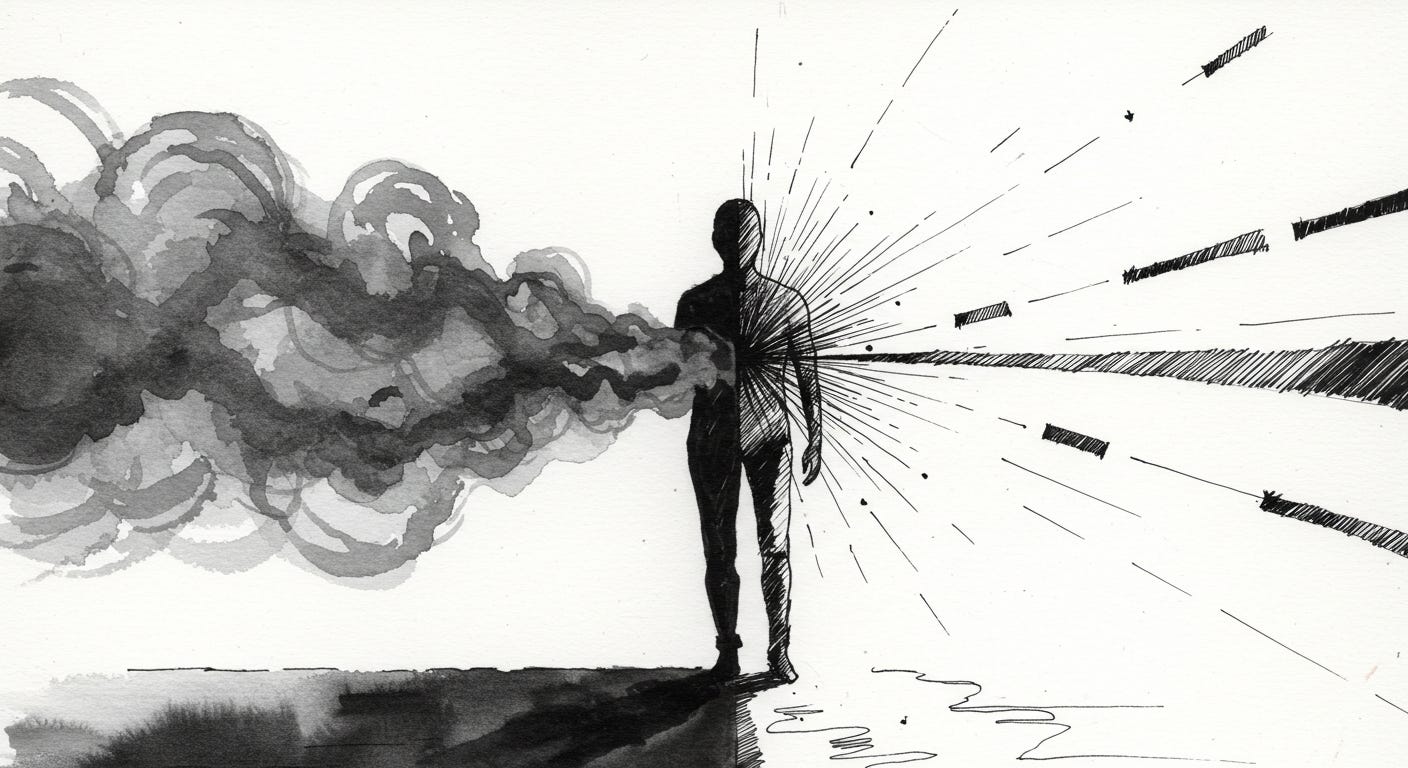
And behind all those numbers and disputes, what remains are the bodies that don’t fit into the graphs. In 2025, the WHO still projects more than seven million deaths a year attributable to tobacco. Most from cardiovascular disease, cancer, and COPD. Another 1.6 million die from passive exposure — other people’s smoke, breathed in as destiny. The IHME/GBD (Institute for Health Metrics and Evaluation/Global Burden of Disease) confirms the scale of the tragedy.
But the number, so vast, has lost the sound it should have.
The Voice — and the Silence — of a Press Release
As important as the report itself is what lands in journalists’ inboxes. In the rhythm of the mainstream press, few have the time — or the permission — to read a hundred pages of raw data, cross-check sources, or question methods. The news cycle runs on the urgency of the moment.
Within that machinery, the press release becomes both compass and anchor — the source text, short, polished, ready to be reproduced.
The WHO’s version fulfills its role with rigor: it frames the historic decline in smoking, warns about new products, organizes the regional map, reaffirms the MPOWER package and the Framework Convention, and reminds us, too, of the fifty million people still missing from the 2025 target.
But what’s left out is also news — and sometimes more eloquent than what is said.
First, the difference between use and dependence.
The statement claims that fifteen million adolescents use e-cigarettes. But it does not distinguish between the one who experiments, the one who vapes once a month, or the one who does so every day; between the one who mixes vaping with cigarettes and the one who has replaced smoking entirely. For prudent policymaking, that difference is decisive: frequency is destiny.
Second, the ambivalence toward harm reduction.
The release rightly recognizes the marketing reinvention of Big Tobacco. But it omits that this market began with small manufacturers and shopkeepers — most of them former smokers — and that the tobacco giants, who arrived later, still face rejection among many vapers.
And above all, it remains silent before the clinical evidence that e-cigarettes can increase quit rates among smokers. To ignore that data does not protect — it impoverishes.
This is not about adopting the corporate narrative; it is about speaking to real adults, in real clinics, where every percentage point of cessation means fewer hospital beds, fewer morgues.
Third, the absence of inequality.
The press release mentions regions but not anatomies: class, gender, race, employment, housing, and social protection.
By reducing the phenomenon to products and prevalence, it erases the daily lives of those who smoke or use nicotine to make it through the day — the cigarette, the pod, the pouch under the lip as a gesture of relief, not defiance.
Fourth, the confusion between “nicotine” and “tobacco.”
Throughout the text, the terms blend as if they were synonyms. They are not. From toxicological, legal, and clinical standpoints, they belong to different worlds.
That semantic imprecision creates regulatory noise — and ethical confusion.
Naming well is a form of care.
None of this undermines the WHO’s core warning — quite the opposite. Scientific transparency does not weaken the fight; it makes it more human, more faithful to what truly matters: lives, not numbers.
Voices in Confrontation (and in Dialogue?)
The WHO speaks as the guardian of global health. It identifies trends, population risks, moral hazards, and industry dynamics. It speaks the language of governments: taxation, enforcement, advertising bans, cessation therapies. It asks for resources, political density, and speed of response.
The world, it says, moves too slowly for the death that chases it.
The industry, by contrast, speaks a different language — one of innovation and choice. Of capital and consumption. It promises “less harmful products,” quality protocols, and its own science — and, inconveniently for its critics, it often delivers.
It often navigates regulatory loopholes — not because they protect it, but because they protect interests that reach far beyond it. It operates in the gray zones of digital marketing, exploiting the asymmetry between nations that regulate, those that can afford to do so, and those that merely react — or are forbidden to.
Clinicians live the dilemma in their offices, not in reports. For some, the vape is a door out of smoking; for others, a door into nicotine — and a still uncertain risk in the long run. Their terrain is the case-by-case: the patient, the relapse, the doubt.
How to maximize benefit in a chronic adult and minimize harm to a generation that has yet to choose? Guiding them requires honest information, combined therapy — including pharmacological, behavioral, and substitute products — and continuous follow-up. It is the thinnest line of medical ethics: to care without condescension, to warn without humiliation.
Young people inhabit a different ecosystem: one of curiosity, design, algorithms, and belonging — and the inheritance of a world that keeps smashing their dreams awake.
The vape fits in the palm of their hand and in the collective imagination. What was once rebellion is now aesthetic. And within that aesthetic, curiosity and risk are part of social learning — rehearsing the world, testing its limits. If it weren’t the vape, it would be something else: a different ritual of initiation, the same desire.
Policies deemed effective seem obvious enough: ban advertising, control sales, regulate access, restrict and denormalize use in adolescent settings — without criminalizing either youth or products.
The problem here is less chemical than semiotic, ideological, and political-economic.
And the ex-smokers who switched to vaping stand as living reminders that harm reduction is not cheating the statistics — it is rewriting a clinical story. Every cough that disappears, every flight of stairs climbed again, is an empirical argument. They remind us that demonizing nicotine may be both unscientific and ineffective. The ethics of care require less guilt and more viable paths.
In public discourse, it is not uncommon to see health authorities appear on major media platforms wearing the white coat of care, while in private offices, they keep the suit and tie of profit.
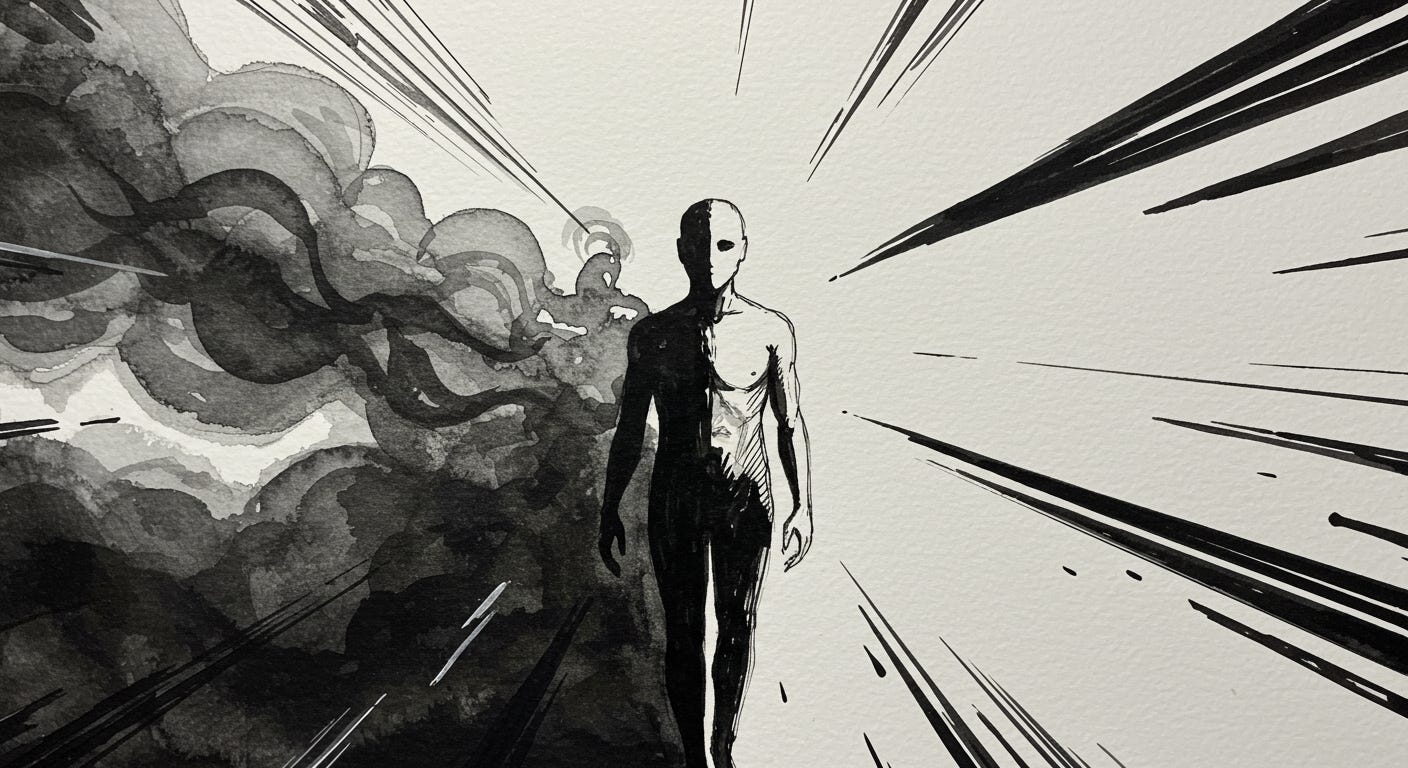
Ultimately, these voices do not cancel each other out; instead, they mirror one another. All speak of power — but also of fear. And what is at stake, between one and another, is not merely a molecule: it is the idea of who deserves to be saved, and who deserves to breathe better.
And perhaps the most unsettling question of all is this: who decides, and from where, that right to breathe.
Before: In Part I — The Smoke We Still Breathe, the WHO’s new report revealed a world smoking less, yet still trapped between science and morality, fear and desire.
Next: After decades of war on tobacco, perhaps the next frontier of public health is not purity, but proportion — learning how to care without condemning.
Part III — What To Do With the Smoke (or With Ourselves)

From a realistic, bioethical standpoint, there are at least six moves that can help nations and health systems confront nicotine without reproducing moral panic. This is not about absolving a molecule, but about reducing harm while preserving autonomy, equity, and truth.
Part III — What To Do With the Smoke (or With Ourselves)
World Health Organization. (2025). WHO Global Report on Trends in Prevalence of Tobacco Use, 2000–2024 and Projections, 2025–2030 (6th ed.). World Health Organization.
Brother, your articles are so good. Thanks for sharing these. I’m inspired.
"According to the WHO, there is robust evidence that high, targeted taxes are the most effective tool for reducing consumption".
Personally I would not trust anything coming out of WHO these days. For anyone who might be interested here is a paper looking at the evidence of Tobacco Control measures: https://coreiss.com/file/display/publication/27/2022_phillips_glover_echoes.pdf
"Between a teenager who has never smoked and a 54-year-old man with COPD, the answers should not be the same. Banning marketing that seduces the young makes sense; making access to simple, clearly labeled, and supervised devices easier does too."
One consideration you have neglected is how many youth may be diverted away from smoking (the much more harmful option), to vaping/nicotine pouches (the much less harmful option)? In other words, how many teenagers now vaping would otherwise been smoking? The neat division between teenager and adult access to these products is not at all as straight forward as allowing access to adults whilst restricting access to teenagers.
Sure, I agree we should restrict access to teenagers, but to get too caught up with that question is to do a disservice (and harm) to both adults and teenagers.
Also may I ask, what do you mean by 'supervised' devices?