Five Points Between Two Days
Between ‘World Vape Day’ and ‘World No Tobacco Day,’ Skip and Kurt Yeo’s letter offers a way to return the person to the center of a conversation captured by statistics, moralism, and power.
The cabin lights were dim when I realized I wasn’t simply on my way home.
I was arriving too late.
On the morning of March 2, 2020, the phone rang while I was having coffee in a hotel in Mexico City. It was my brother. Our mother, seventy-four years old, was being placed in palliative care.
After the call, an odd silence remained, pierced by practical noises: canceling commitments, closing my suitcase, calling a cab, getting to the airport, finding a seat on the next flight.
For nearly eighteen hours, between Mexico City and Porto Alegre, I thought about the smell of tobacco that had clung to her clothes for years. Minister. Chanceller. Free. More than four decades of smoking cigarettes had carried her into the terminal stage of cancer.
The following dawn, I found myself in the waiting room of the intensive-care unit at Santa Casa Hospital, looking at my mother unconscious behind the glass walls of a small isolation room.

For a long time, that image remained in me without theory. There was the glass, the artificial light, the old smell of tobacco, and, later, the cigarette my brother lit. He, too, fit inside that correct and insufficient word: smoker.
In my memory, the smoke said something about my mother, but not enough.
It did not tell the story of her life. It did not say what the cigarette had occupied, what it had promised, what it had taken away — nor what, in it, continued to resist, even when we all knew the risk.
The death of Nina Rosa, my mother, left me facing a failure of language.
So when I came across the symbol created by Kurt Yeo, I did not first see it as a brand. I recognized in it another attempt to give that absence a name.
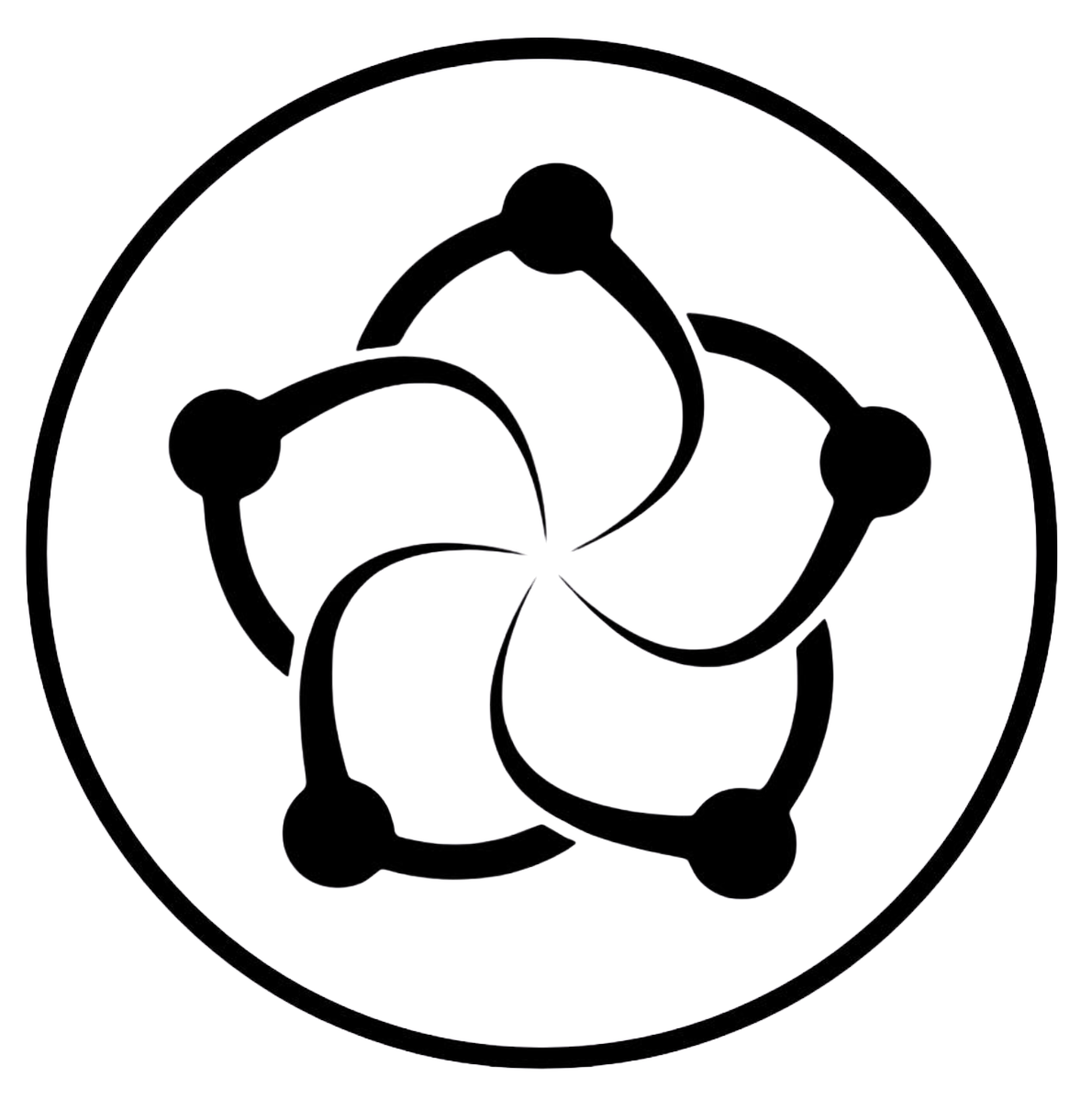
Five points gravitate at the ends of a hollow elliptical curve, circling an empty center, somewhere between a ribbon, a flower, and an orbit.
At first glance, it seemed simple: a reversible mark, capable of surviving equally well in black or white. But a symbol is never only what is drawn. It is also what it teaches us — or forces us — to see.
And if the design itself appeared simple, the accompanying letter was not.
Skip and Kurt Yeo’s letter does not merely present a logo. It tries to free a movement from any single owner, precisely because so many wish to claim it. More than that, it restores complexity to people whom official discourse so often reduces to cases, failures, addictions, or numbers.
There, Kurt and Skip were not speaking only about tobacco products or campaigns. They were speaking of people: those who had tried to quit; those who could not; those who had lost someone; those who had sought a less harmful way out while still carrying guilt, ambivalence, and memory.
In the symbol, the gaze shifts: it begins with the person, not the cigarette; with life, not the industry, the campaign, or the statistic. The ribbon breaks isolation. The orbit sustains movement.
The five principles Yeo inscribed in the symbol — respect for the person, commitment to evidence, harm reduction, autonomy, and sociocultural sensitivity — do not form a doctrine; they reorient the gaze.
The first principle is the simplest.
Perhaps that is precisely why it is also the most neglected: respect for the person.
No one is only what they consume. Nor what they tried to leave behind and could not. Nor what illness made of their body. My mother smoked for more than four decades. But she did not fit inside the word “smoker.” My brothers do not fit inside it either. No one does.
The anthropologist Simone Dennis helps name the world against which this principle stands: the atmosphere. Not merely the physical air, threaded with smoke, but the moral air in which the person who smokes comes to exist as a nuisance, a threat, a failure, or as the leftover residue of a public-health pedagogy that failed to persuade.
Dennis describes this atmosphere as air made of legislation, campaigns, glances, prohibitions, shame, warnings, good intentions, and discreet punishments.
It is this air that Skip and Yeo’s letter breathes — and refuses. It does not merely ask why someone smokes; it asks what world that gesture comes from, and under what circumstances the cigarette begins to seem like the only thing possible.
Where that air says, “you are a mistake,” the letter replies: you are a living person, shaped by contexts that also helped make you who you are.
Respecting the person does not mean turning every individual experience into a general rule; that would merely replace one simplification with another. This is why Skip and Yeo inscribe a second decisive principle: commitment to evidence.
In the letter, evidence does not appear as a weapon to end the conversation, but as a discipline for making it more honest. It brings together reliable information, structured data, and lived experience.
These three forms of knowledge are not equivalent, nor do they serve the same function. Data help measure risks; studies compare harms. The experience of those who smoke helps explain why a recommendation, even when correct, can fail in the face of fear, dependence, pleasure, grief, cost, shame, or lack of access. Without data, harm reduction becomes wishful thinking. Without experience, it becomes an order handed down from above.
It is here that the third principle ceases to sound technical and reveals its most human moral claim: harm reduction. Its strength lies in refusing the theater of purity. Between quitting completely and remaining exposed to maximum harm, there are lives trying to survive imperfectly.
Harm reduction is born in that interval. It neither demonizes nor romanticizes; it does not deny illness; it does not turn an alternative into absolution. It simply recognizes that, when the ideal way out does not happen, a less destructive path can still save something. It recognizes that you, or someone you love, matters.
Once we accept that harm can be reduced, the question is no longer merely a sanitary one. It becomes political: who has the authority to define the risk another person may take?
It is here that Didier Fassin helps us recognize morality as a form of governance. In his work, care and control often move together: one protects, informs, restricts, and corrects. The problem begins when protection starts speaking for the person, and calling it care while taking away their voice.
Autonomy, in this context, is not abandonment disguised as freedom. It is the opposite: offering information, alternatives, and real conditions so that someone can take part in the decision about their own life.
For years, my mother was told to stop smoking. No one ever asked why she smoked, what the cigarette gave her, or what alternatives were actually within her reach. The autonomy that Skip and Yeo’s letter claims is the right to access the knowledge that makes choice possible.
Autonomy, however, never takes place in neutral space. No one makes decisions outside a home, an income, a language, a belief, a routine, a solitude, or a community.
For this reason, the fifth principle — sociocultural sensitivity — may be the one that keeps the other four from becoming abstractions. In criticizing the narrow view of human nature that guides certain forms of public health, the anthropologist Andrew Russell shows that people who smoke are not ‘defective calculators’. They are complex, situated beings, crossed by pleasure, habit, attachment, desire, loss, anxiety, belonging, and ambivalence. A policy that ignores this may be technically correct — and humanly blind.
Consistent with this ethics, Yeo’s final gesture is to do with the symbol what the principles ask us to do with people: remove ownership, open space, restore agency.
Michael Lambek, in studying the ethics revealed in everyday acts — and not only in formal codes — reminds us that morality is embedded in action, in speech, and in the responsibility we assume before others.
Yeo could have protected the symbol as a signature, a brand, or moral capital. Instead, he relinquishes it. And that relinquishment does not decorate the letter; it sustains its deepest argument.
Perhaps this is why the symbol works. Not because it resolves the dispute over tobacco, nicotine, industry, politics, or public health. It does not. But because it shifts the point of departure.
Before the campaign, the person. Before the statistic, the life. Before condemnation, listening. Five points at the edges of a circular form: not a closure, but a reminder that no one should be excluded from the conversation about their own survival.

The symbol remains open because the story it tries to represent has not ended either. There are still those who smoke, those who try to quit, those who relapse, those who seek a less harmful way out — those who need evidence without contempt, and care without tutelage.
Five points save no one. But perhaps they show where a decent conversation must begin: with the person who is still there.
The letter functions like a small lantern: it does not illuminate the entire field, but it shows where we can still place our feet.